Fibonacci Sequence Explained: A Complete Guide for Crypto Traders in 2026
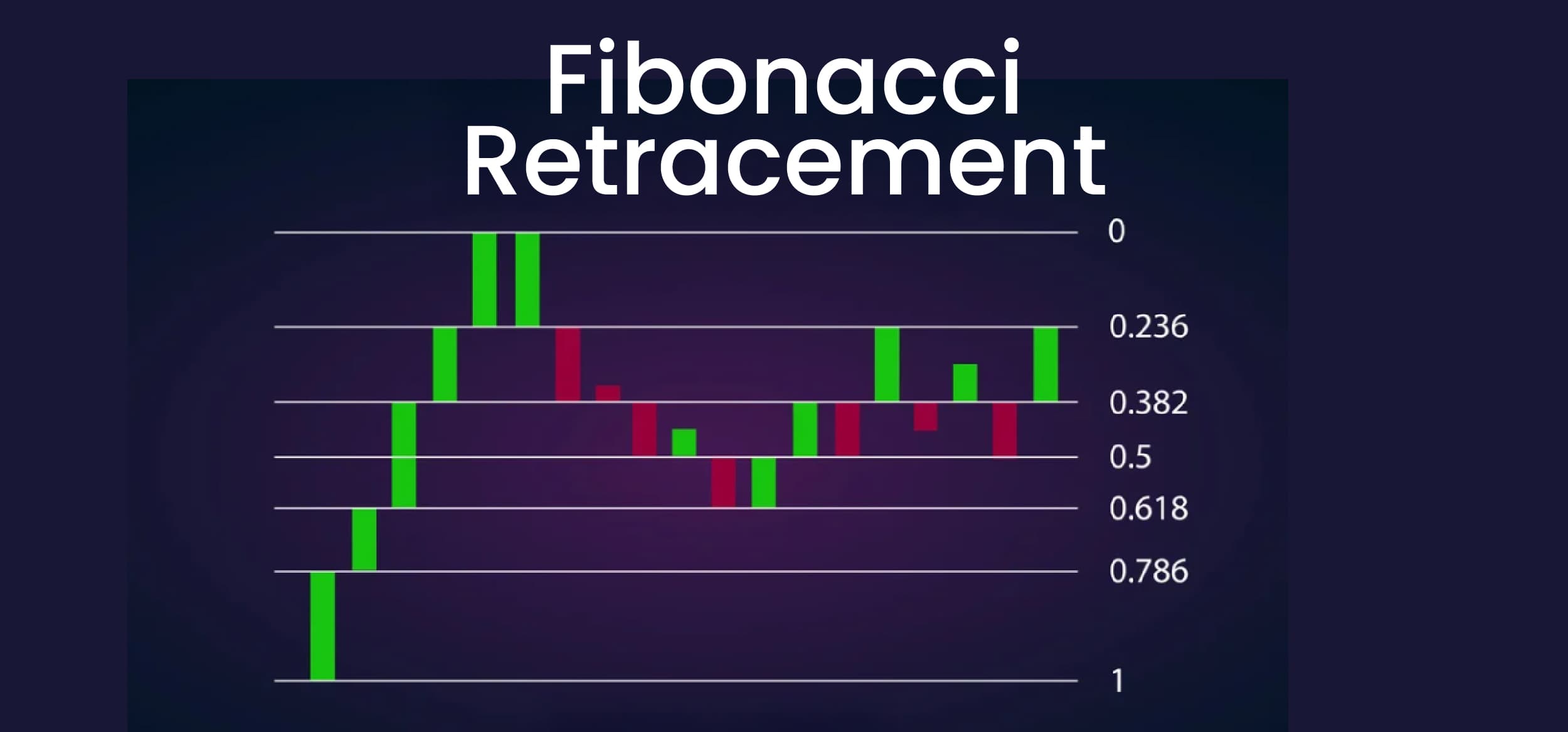
The Fibonacci sequence is a mathematical pattern where each number is the sum of the two preceding it. In crypto trading, these numbers create specific ratios that help identify where price might bounce or reverse. Traders use the Fibonacci retracement tool to find support and resistance levels during market pullbacks. The most critical level is the 61.8% ratio, which is known as the Golden Ratio. While the math behind it is deep, the application is straightforward. You draw the tool from a major low to a major high to see where the price might pull back before continuing its trend. The tool is best used alongside other indicators.
Key Takeaways:
- The Fibonacci sequence provides the mathematical foundation for the 0.618 Golden Ratio used by most trading algorithms.
- Retracement levels like 38.2% and 61.8% are primary zones for finding entry points in a trending market.
- Extension levels project where a price might go after breaking past a previous all-time high.
- The 50% level is a psychological midpoint rather than a mathematical Fibonacci number, but it remains highly effective.
- Fibonacci tools work best on higher timeframes like the 4-hour or Daily charts where noise is reduced.
- Always wait for a confluence of signals, such as a Fibonacci level lining up with a previous support zone or an RSI reversal.
What Is the Fibonacci Sequence?
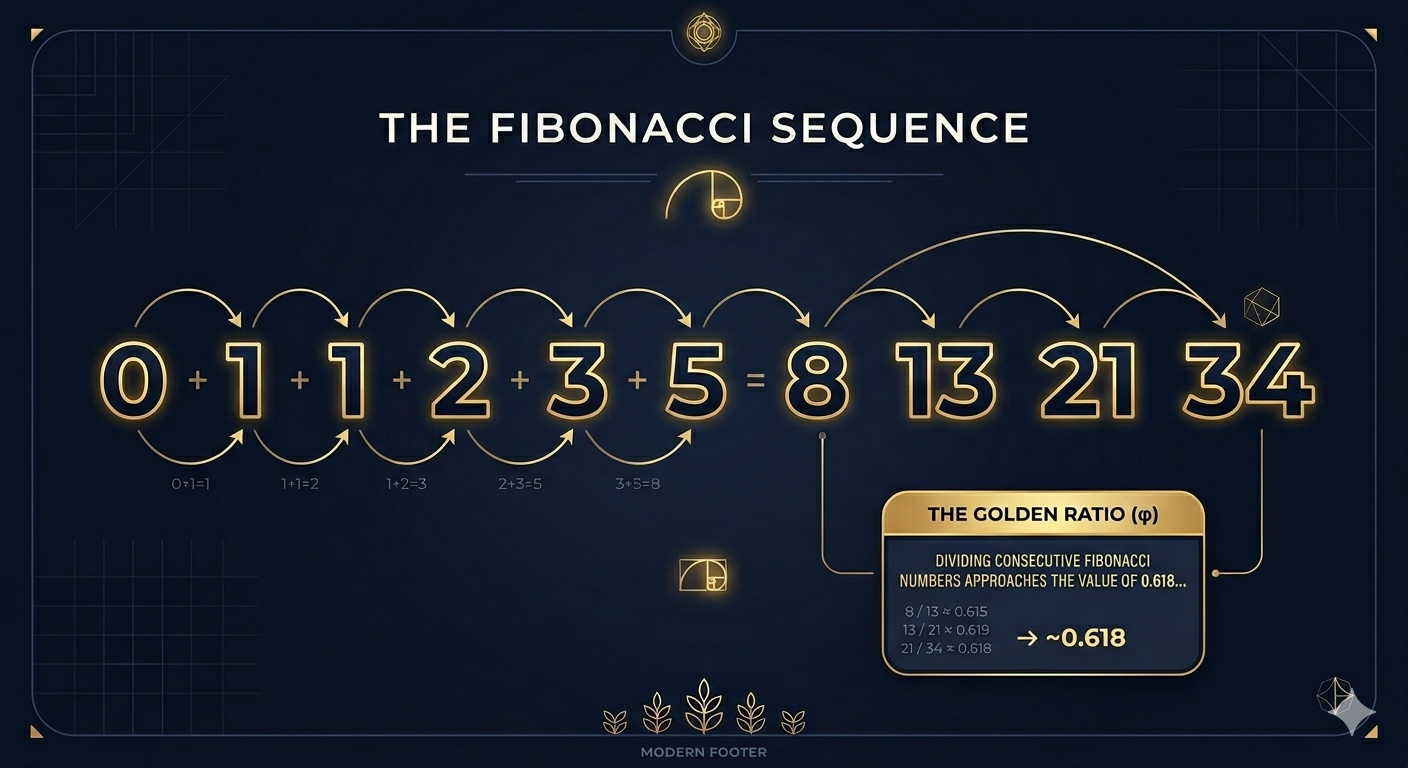
The Fibonacci sequence is a series of numbers that starts with 0 and 1. Every number that follows is the result of adding the two numbers before it. This creates a string that looks like this: 0, 1, 1, 2, 3, 5, 8, 13, 21, 34, 55, 89, and so on.
It was introduced to the West by Leonardo Fibonacci in the 13th century, though it appeared in Indian mathematics much earlier.
The sequence is useful because of the mathematical relationships between the numbers. As the sequence progresses, dividing any number by the one that follows it results in a ratio of approximately 0.618. Dividing a number by the one two places to the right results in 0.382. These ratios are found throughout nature and architecture.
In financial markets, they represent a collective human psychology that often causes price to pause or reverse at these specific intervals.
In the context of crypto, these numbers are more than just theory. Because many high-frequency trading bots and retail traders use the same tools, these levels often become self-fulfilling prophecies. When Bitcoin or Solana approaches a major Fibonacci level, the market reacts because thousands of buy or sell orders are sitting at those exact coordinates.
How the Ratios Drive Technical Analysis
Crypto markets require a nuanced look at these ratios because of the extreme volatility involved. Pullbacks in crypto are often deeper than those in traditional markets. The primary ratios you will use on your charts are 23.6%, 38.2%, 50%, 61.8%, and 78.6%.
The 61.8% level is the most vital. If a price rally is healthy, it will often pull back to this level before making a new high.
If the price falls below the 78.6% level, it usually suggests the previous trend is dead and a full reversal is likely.
Traders also look at the Golden Pocket. This is the small zone between the 0.618 and 0.65 levels. In crypto, wicks often dip into this pocket to hunt for liquidity before the price moves back in the original direction.
You do not need to do the math yourself. Modern charting software handles the calculations for you. However, you must understand that these lines are not magic barriers. They are areas of interest where you should look for specific price action like hammer candles or engulfing patterns.
Drawing the Fibonacci Retracement Tool Correctly
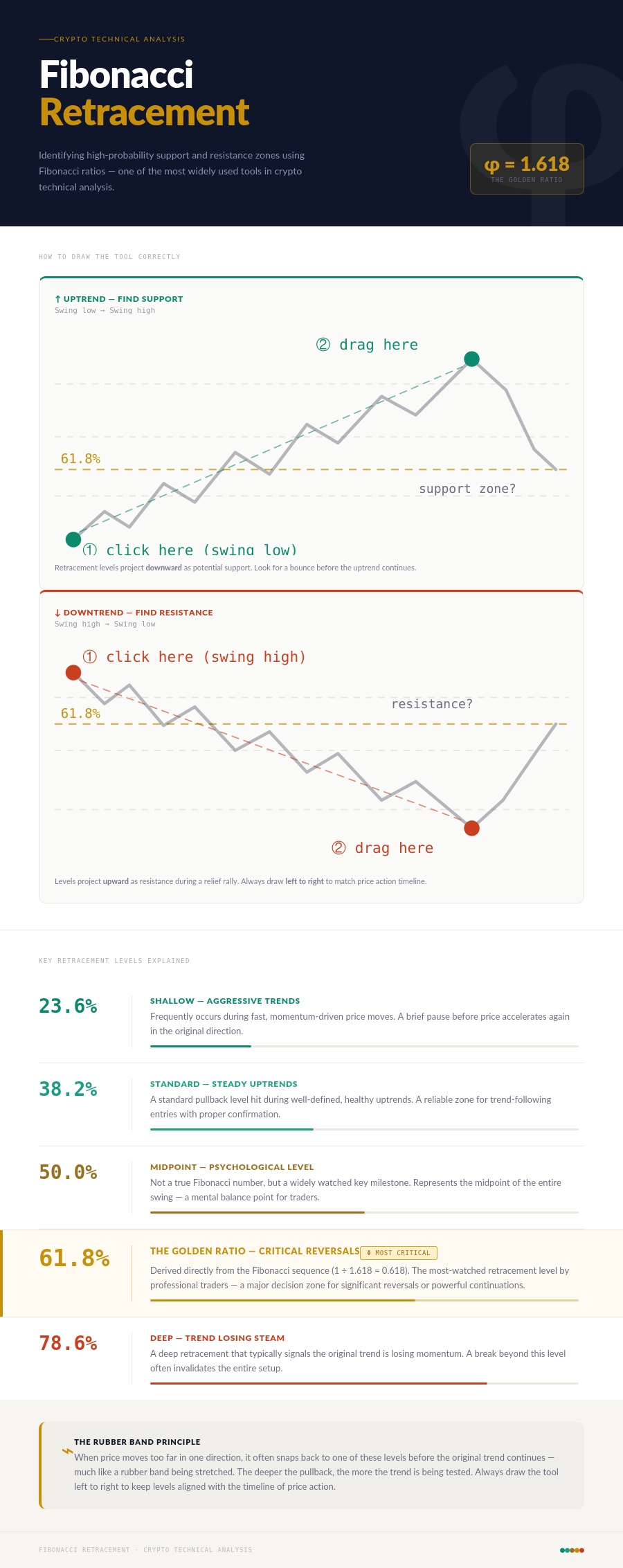
The biggest mistake beginners make is drawing the tool incorrectly. To get accurate levels, you must identify a clear swing high and swing low. A swing high is a peak followed by lower highs. A swing low is a valley followed by higher lows.
- In an uptrend, you select the Fibonacci tool and click on the swing low. You then drag it up to the swing high. This will project the retracement levels below the current price. You are looking for where the price might find support.
- In a downtrend, you do the opposite. You click on the swing high and drag the tool down to the swing low. This projects the levels above the current price. This helps you identify where the price might run into resistance during a relief rally. Always draw the tool from left to right to ensure the levels align with the timeline of the price action.
Retracements work like a rubber band. When the price moves too far in one direction, it often snaps back for a quick correction before the original trend continues.
- 6%: Frequently occurs during aggressive price movements.
- 2%: A standard level often hit during steady uptrends.
- 0%: While not part of the Fibonacci sequence, it serves as a key mental milestone for traders.
- 8%: Known as the Golden Ratio, this is a critical area for major reversals.
- 78.6%: A deep pull back that typically indicates the original trend is losing steam.
The Role of Fibonacci Extensions
Retracements tell you where to buy, but extensions tell you where to sell. When an asset like Bitcoin enters price discovery, meaning it is at a price it has never reached before, there are no historical resistance levels to guide you. This is where Fibonacci extensions come in handy.
Extensions use the same ratios but apply them beyond the 100% mark. The most common extension levels are:
- 2% - First major extension
- 8% - Golden ratio target
- 8% - Major long-term target
These levels act as targets for take-profit orders and are frequently used by whales to exit large positions without crashing the market instantly.
Combining Fibonacci with Other Indicators
Using Fibonacci levels in isolation is a recipe for getting trapped. The most successful traders look for confluence. Confluence occurs when multiple independent indicators point to the same price level.
One effective strategy is to combine Fibonacci with Horizontal Support and Resistance. If the 61.8% retracement level happens to be at the same price as a major peak from three months ago, that level is significantly more likely to hold. You can also look at the Relative Strength Index or RSI. If the price touches a Fibonacci support level and the RSI shows an oversold reading at the same time, the probability of a bounce increases.
Volume is another crucial factor. If the price is falling toward a Fibonacci level on low volume, it suggests the sellers are exhausted. If it hits the level and volume suddenly spikes, it indicates that big buyers are stepping in.
Common Mistakes to Avoid
- Selecting the wrong swing points: This is the most common error. If you pick a minor price fluctuation on a 5-minute chart, the levels will likely be ignored by the broader market. You want to use points that are obvious to everyone.
- Ignoring the overall trend: In a strong bear market, Fibonacci support levels will often fail one after another. Do not try to catch a falling knife just because the price hit a specific ratio. Wait for the market structure to shift.
- Using Fibonacci in isolation: Never enter a trade based solely on a line on the chart. You must wait for price action confirmation, such as a bullish candlestick pattern or a momentum shift, before committing capital.
- Cluttering your charts: It is tempting to add every possible Fibonacci ratio, but this creates a mess of lines that makes decision-making harder. Stick to the core levels like 38.2, 50, 61.8, and 78.6 to keep your analysis clear.
- Failing to account for wicks: In crypto, price often wicks through a level to hunt liquidity. If you set your stop loss exactly at the Fibonacci level, you will likely be stopped out right before the price reverses in your direction.
Top Tools for Fibonacci Analysis in 2026
|
Platform |
Best For |
Level of Customization |
|
TradingView |
Technical Analysis |
High (Custom ratios and alerts) |
|
CoinGlass |
Liquidity Analysis |
Medium (Shows liquidations near Fibs) |
|
Exocharts |
Order Flow |
High (Professional grade for scalp traders) |
|
Bybit/Binance |
Execution |
Low (Basic tools for quick trades) |
Most traders use TradingView for their analysis because it allows for high levels of customization. You can change the colors of your levels and save different templates for retracements and extensions.
For those who are serious about technical analysis, using a tool like CoinGlass alongside your Fibonacci drawings is helpful. It allows you to see if there is a cluster of liquidation orders near a Fibonacci level. This can help you predict wick events where the price briefly dips below a level before snapping back.
Summary of Market Math
The Fibonacci sequence is a reflection of the natural rhythms and psychological patterns that govern financial markets. While it might seem intimidating at first, it is one of the most objective tools a trader can use especially in crypto markets.
The key to mastering Fibonacci is patience. You must be willing to sit on your hands and wait for the price to reach your designated levels. Chasing the market leads to poor entries and emotional stress so always be patient. Start by practicing on historical charts to see how often these levels have acted as turning points in the past. Once you see the pattern consistently, you can begin applying it to your live trading with confidence.
Get started on WEEX with a simple 40 USDT reward. Deposit 100 USDT, make your trade, and claim the bonus.
Frequently Asked Questions
Is the Fibonacci sequence a guaranteed way to predict prices?
No, it is a tool for identifying probabilities. It shows you where the market is likely to react, but it cannot account for sudden news events or massive liquidations that can override technical patterns.
Why do traders care about the 50% level?
Even though 50% is not a Fibonacci number, it is included in the tool because markets often revert to the mean. It represents a psychological equilibrium where buyers and sellers are often balanced.
Which timeframe is best for Fibonacci?
The Daily and 4-hour timeframes are usually the most reliable. The levels identified on these charts are watched by more people and have more capital flowing through them compared to 1-minute or 5-minute charts.
Can I use Fibonacci for memecoins?
Yes, but it is much riskier. Memecoins often have low liquidity and can be easily manipulated. This causes price to ignore technical levels entirely. Use Fibonacci for major assets like Bitcoin, Ethereum, or Solana for better results.
What should I do if a level fails?
If the price closes a candle decisively below a Fibonacci support level, that level is now invalidated. You should look to the next level down or reassess your trade thesis. Always use a stop-loss to protect your capital when a level fails to hold.
How do I identify a true swing high?
A true swing high is a point on the chart that is significantly higher than the price action on either side of it. It should represent a clear turning point in the market trend.
Disclaimer: All content on The Moon Show is for informational and educational purposes only. The opinions expressed do not constitute financial advice or recommendations to buy, sell, or trade cryptocurrencies. Trading involves significant risk and may result in substantial losses. Always seek independent financial advice before making investment decisions. The Moon Show is not responsible for any financial losses or decisions made based on the information provided.
Please view the full disclaimer at: https://themoonshow.com/disclaimer
Find Lost Crypto Wallets – A Step-by-Step Recovery Guide
Losing a crypto wallet does not always mean losing access to assets. Recovery may be possible i...

How to Buy Bitcoin for Beginners – A Step-by-Step Guide
When you are new to crypto, buying Bitcoin (BTC) can feel complicated. In practice, the process...

How to Choose a Crypto Exchange in 2026: Fees, Security, Regulation
Over the years, cryptocurrency exchanges have evolved considerably. What first began as simple ...