A Beginner’s Guide to Bitcoin Rainbow Chart
The Bitcoin rainbow chart is one of the most visually simple yet insightful indicators that traders and investors use. It is designed to help investors understand the long-term price trends of Bitcoin without getting lost in complicated technical analysis. The Bitcoin rainbow chart offers a colorful and intuitive way to interpret market sentiment.
Instead of focusing on short-term fluctuations, it provides a broader perspective of where Bitcoin’s price may stand within its historical growth pattern. In this blog, we will discuss what is a Bitcoin rainbow chart, how it works, and how it can be used to better understand the crypto market.
Let’s begin!
Your $30,000 bonus + 10% discount are waiting on Bybit! Sign up and claim these rewards before they're gone. Time's ticking!
What is the Bitcoin Rainbow Chart?
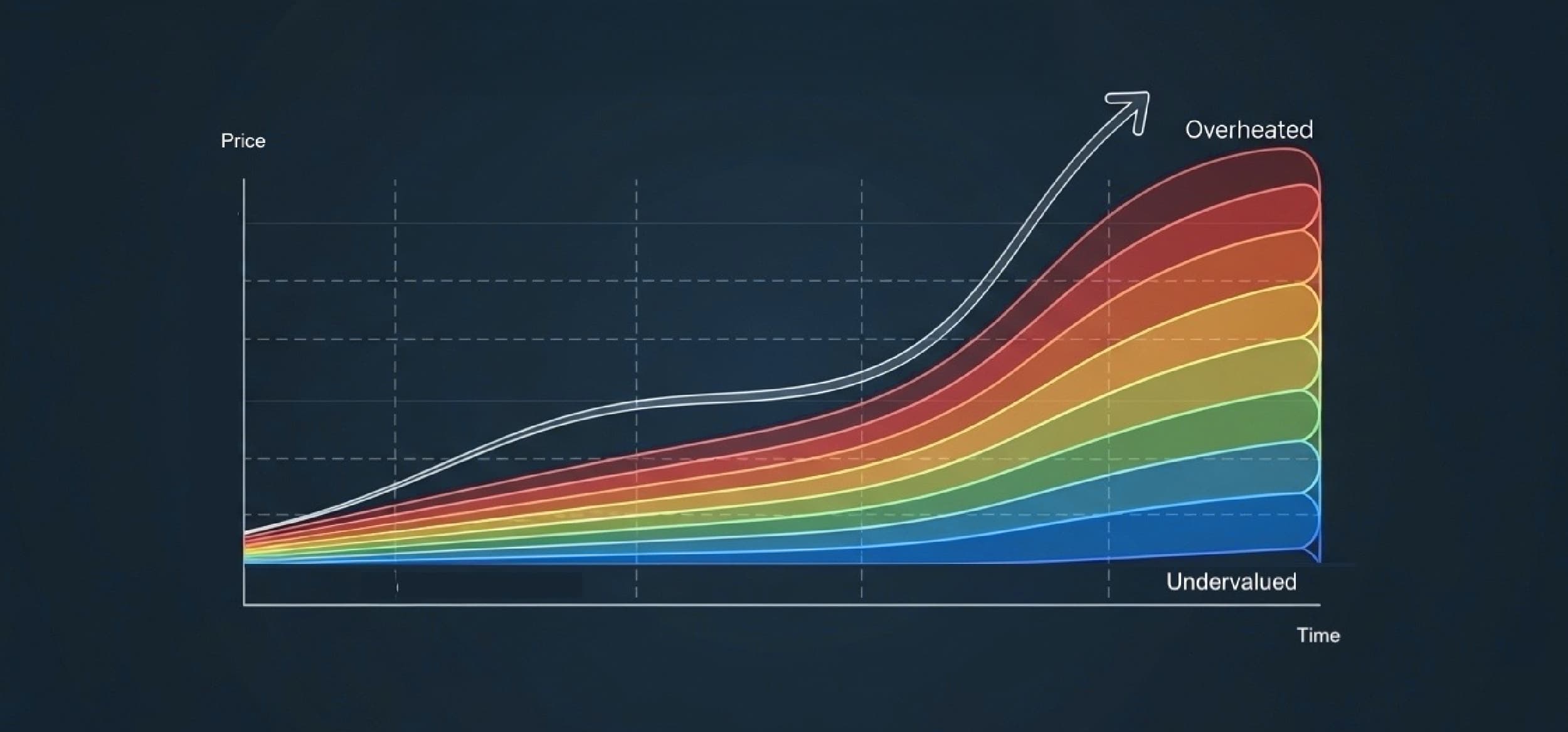
The Bitcoin rainbow chart is a long-term price visualization tool that overlays a rainbow-colored bank over Bitcoin’s historic price chart. Each color band represents a different valuation level, ranging from “undervalued” to “overvalued.” The chart was created as an easy way to interpret long-term trends rather than as a strict financial prediction model.
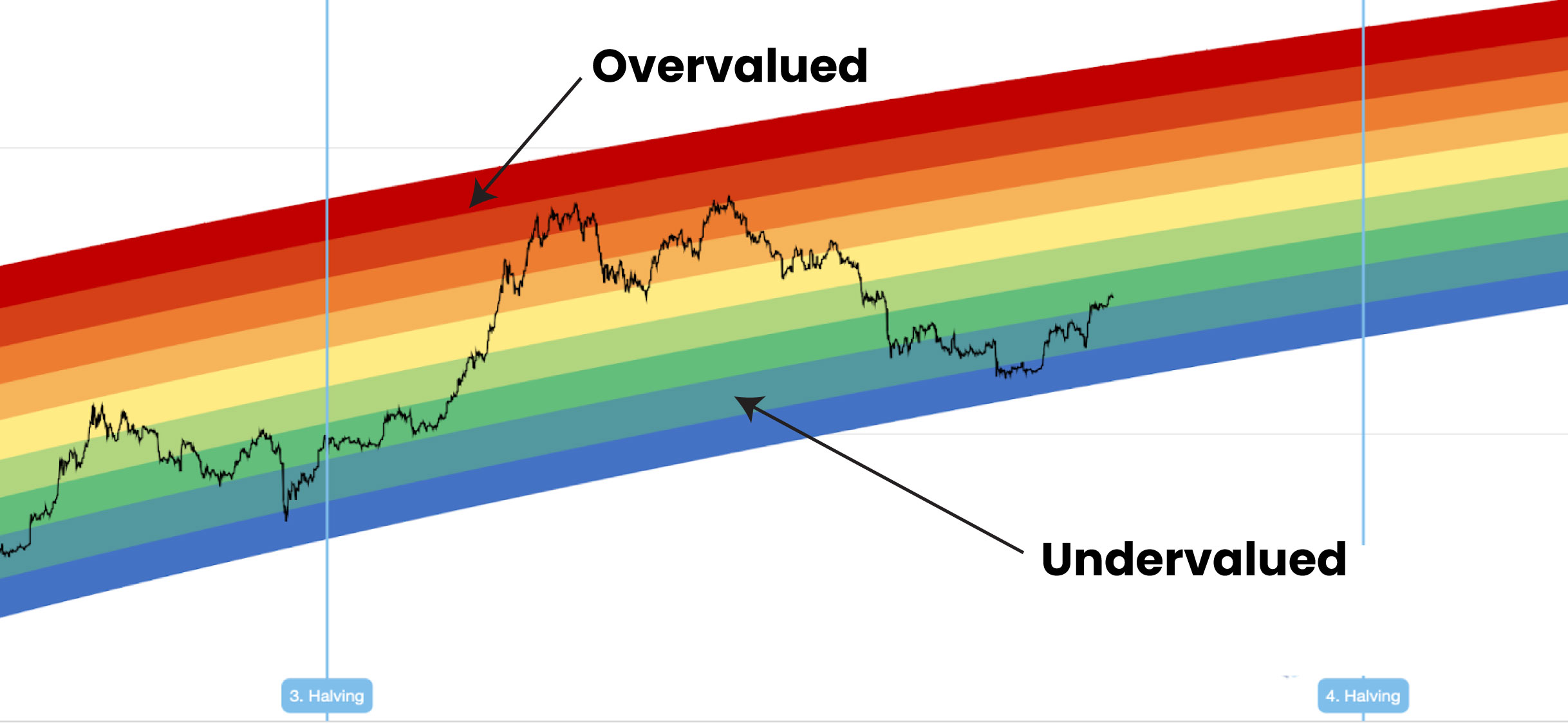
It is based on a logarithmic growth curve that reflects Bitcoin’s historical price behavior over time. The rainbow colors help investors visually identify whether the current price of Bitcoin appears relatively cheap, fairly valued, or potentially overheated compared to previous cycles. Since the chart focuses on long-term trends, it is especially useful for people who want to understand Bitcoin’s broader market cycles instead of reacting to daily price volatility.
Why is the Bitcoin Rainbow Chart Popular?
One reason the Bitcoin rainbow chart has become popular recently is its simplicity. Traditional trading indicators often require knowledge of complex formulas or market signals. In comparison, the rainbow chart uses color zones that are easy for beginners to understand.
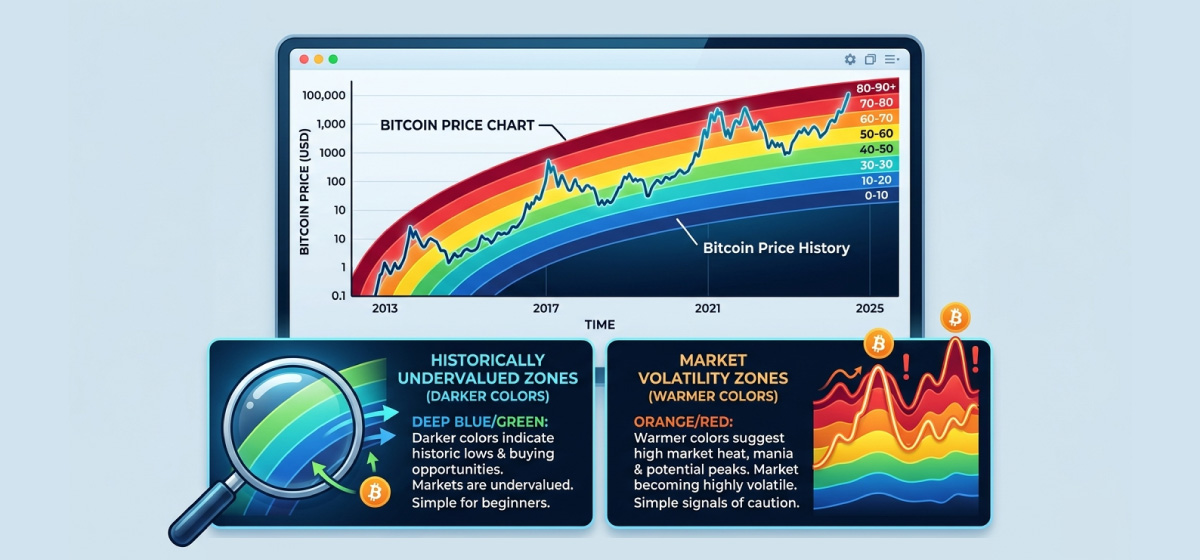
For example, darker colors such as deep blue or green often indicate that Bitcoin is historically undervalued. Warmer colors, such as orange or red, typically suggest that the market may be becoming volatile. This visual approach allows users to quickly interpret market sentiment without analyzing complicated data sets or remembering historical prices.
Another reason why it is popular is that it encourages a long-term perspective. Cryptocurrency markets are known for their volatility, and short-term trading decisions can be stressful for beginners or new investors. The Bitcoin rainbow chart shifts the focus toward long-term trends and historical context rather than stressing on FOMO.
How does the Bitcoin Rainbow Chart work?
The Bitcoin rainbow chart is designed using a logarithmic regression model that follows Bitcoin’s price growth over time. Unlike a linear chart, a logarithmic model considers exponential growth, which is more realistic for an asset such as Bitcoin. Considering that this premier cryptocurrency has experienced dramatic increases and decreases in value since its launch in 2009, having a tool such as the rainbow chart is exceptionally helpful.
The rainbow bands are layered around the logarithmic curve. Each band represents a price range that historically corresponded with certain market behaviors. Lower bands represent periods when Bitcoin appeared cheap as compared to its trend line, while upper bands correspond to times when the market was highly optimistic.
As the price of Bitcoin moves through these colored zones, investors and analysts use the chart as a reference to understand how the current market compares to previous cycles.
Understanding the Color Zones
The colors in the Bitcoin rainbow chart represent different levels of market sentiment. It is important to remember that the chart does not guarantee future price movements. It simply provides a framework for understanding how Bitcoin behaved historically.
Here is what each color zone in the rainbow chart means.
Lower Bands
While interpretations may vary slightly depending on the chart version, the lower bands generally suggest that Bitcoin is undervalued as compared to its historical trend. These zones often appeared during market downturns or periods when investor confidence was low. The colors in the lower bands are Blue, Dark Blue, and Light Blue.
Middle Bands
The middle bands represent what many experts consider the “normal” price range within the long-term trend. When Bitcoin trades within these areas, the market is usually seen as relatively stable and balanced. The colors in the middle bands are Green, Light Green, and Yellow.
Upper Bands
The upper bands represent an increasingly speculative area. Historically, when Bitcoin enters the highest color zones, it coincides with major bull market peaks. During these times, excitement around cryptocurrencies surged, and prices often climbed rapidly before eventually correcting. The colors in the upper bands are Orange, Red, and Dark Red.
How Beginners Can Use the Bitcoin Rainbow Chart?
For beginners, the Bitcoin rainbow chart can serve as a simple education tool for learning about market cycles. Here is how beginners can use the rainbow chart in their daily trading activities.
- Rather than attempting to time short-term trades, users can observe how Bitcoin has historically moved through different valuation zones over time.
- When the price moves towards the top bands, traders should become more cautious due to historical patterns of market correction.
- The chart is most effective when combined with other forms of research.
- Traders should always consider factors such as market adoption, global economic conditions, regulatory changes, and technological developments. These factors also influence Bitcoin’s price.
Limitations of the Bitcoin Rainbow Chart
Despite its popularity, the Bitcoin rainbow chart has its limitations, such as:
Not a Predictive Tool
It is not a predictive tool and should not be used as the only basis for investment decisions. The chart is based on historical data, and future market behavior may differ from past trends.
It Evolves Over Time
The rainbow bands are adjusted occasionally to account for new price data. This means the chart evolves as the market changes. While this helps maintain relevance, it also highlights that the model is not perfect or offers guaranteed results.
It Depends Upon Different Factors
Cryptocurrency markets are influenced by many factors beyond historical price patterns. Events such as institutional adoption, technological breakthroughs, and regulatory shifts can significantly impact Bitcoin’s value, which then impacts the chart.
Final Takeaways
The Bitcoin rainbow chart is a beginner-friendly and colorful way to understand Bitcoin’s long-term price trends. It simplifies complex market data into an accessible format using visually distinctive color bands. Beginners can use the chart to gain valuable insight about market cycles and historical valuation levels. However, it should serve as a reference tool rather than a precise prediction model and works best alongside other technical indicators.
Start trading on Bybit today and get 10% off fees PLUS up to $30,000 in bonuses! Sign up today and start saving while you earn. This exclusive offer won't last - claim yours now!
FAQs
What is the Bitcoin rainbow chart used for?
The Bitcoin rainbow chart helps to visualize the long-term price trends of the cryptocurrency and indicates whether it may be undervalued or overvalued.
Is the Bitcoin rainbow chart accurate for price predictions?
No, it is not a prediction tool. The chart only reflects historical trends and should be used for general insights.
Can beginners rely on the rainbow chart for investment decisions?
Beginners can use it as a learning tool, but it should always be combined with other research and analysis by market experts.
Why does the chart use a logarithmic model?
It uses a logarithmic model because Bitcoin has grown exponentially. A logarithmic model better represents its long-term price movement.
What do the colors on the rainbow chart mean?
They represent different market sentiment levels from undervalued (cool colors) or overvalued (warm colors).
Disclaimer: All content on The Moon Show is for informational and educational purposes only. The opinions expressed do not constitute financial advice or recommendations to buy, sell, or trade cryptocurrencies. Trading involves significant risk and may result in substantial losses. Always seek independent financial advice before making investment decisions. The Moon Show is not responsible for any financial losses or decisions made based on the information provided.
Please view the full disclaimer at: https://themoonshow.com/disclaimer

Margin Trading for Beginners: Leverage, Risks, and Examples
Margin trading for beginners starts with understanding how borrowed funds change risk. A small ...

Find Lost Crypto Wallets – A Step-by-Step Recovery Guide
Losing a crypto wallet does not always mean losing access to assets. Recovery may be possible i...

How to Buy Bitcoin for Beginners – A Step-by-Step Guide
When you are new to crypto, buying Bitcoin (BTC) can feel complicated. In practice, the process...