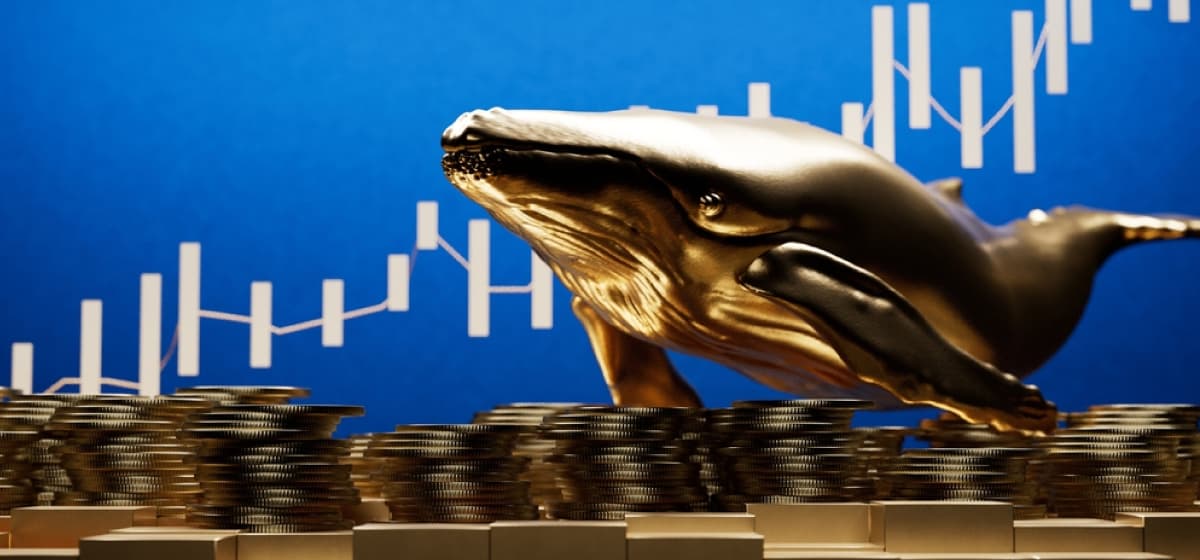
What Are Cryptocurrency Whales and How Do They Affect the Market?
If you have ever seen Bitcoin, drop several percent in an hour with no obvious news to explain it, there is a decent chance a whale was involved. In crypto, the term whale refers to any individual or entity that holds a large enough amount of a cryptocurrency to move its price when they buy or sell. They are called whales for the same reason the animal got its name. They are simply enormous compared to everything else in the water.
Understanding what cryptocurrency whales are, how they behave, and what their activity can signal is genuinely useful whether you are actively trading or simply trying to make sense of why markets move the way they do. This article breaks down how whales are defined, how they move markets, how to track them, and what their activity actually means for your trading decisions. Let’s take a look:
What Qualifies as a Cryptocurrency Whale?
There is no universal threshold that officially makes someone a whale, and the bar varies depending on the asset. For Bitcoin, the most commonly used benchmark is a wallet holding at least 1,000 BTC. At current prices that represents tens of millions of dollars, and by that measure the top 100 Bitcoin wallets alone hold close to 3 million BTC, roughly 15% of the total supply. For smaller cryptocurrencies with lower market capitalizations, a much smaller holding can still qualify as whale-level if it represents a meaningful percentage of the circulating supply.
Whales broadly fall into two categories. Individual whales are typically early adopters, high net-worth investors, or founders who accumulated large positions before most people were paying attention. Institutional whales are a newer and increasingly dominant category, covering entities like exchanges, hedge funds, corporate treasuries, and governments. MicroStrategy, now rebranded as Strategy, holds over 400,000 BTC in its corporate treasury. The US government has accumulated thousands of BTC through asset seizures. These are not the same kind of whale as an anonymous early miner sitting on coins from 2010, but they move markets in equally significant ways.
Your $30,000 bonus + 10% discount are waiting on Bybit! Sign up and claim these rewards before they're gone. Time's ticking!
How Cryptocurrency Whales Influence the Market
Price Impact
The most direct way whales affect the market is through buying and selling pressure. When a crypto wallet moves thousands of BTC onto an exchange, experienced traders read it as a potential sell signal and often react before the actual sale happens. That reaction alone can move the price. When a large holder withdraws BTC from an exchange into cold storage, it is generally read as a signal they are planning to hold rather than sell, which tends to support price.
In August 2025, a single entity sold 24,000 BTC worth over $300 million to an institutional buyer, triggering a sharp drop below $111,000 and generating an estimated $550 million in forced liquidations across the market. The weekend timing amplified the impact due to thinner order books and reduced market maker activity. That is a clear example of how a single whale transaction can shake the entire market within hours.
Liquidity Effects
Whales also shape market liquidity in less obvious ways. When large holders sit on their coins for extended periods without trading, fewer coins are available for everyone else to buy and sell. This concentrates circulating supply and can make price movements more exaggerated in either direction. The top 113 Bitcoin wallets, each holding over 10,000 BTC, control more than 15% of the circulating supply, and many of these wallets rarely transact. That is a significant portion of supply effectively locked away, which tightens the market for everyone else.
Governance Influence
On blockchains that use a Proof of Stake consensus mechanism, holding more cryptocurrency typically translates into greater voting power over protocol decisions. A whale with a large enough stake can influence everything from fee structures to development roadmaps. This is one of the more underappreciated aspects of whale power because it goes beyond price, it shapes the direction of the network itself. In extreme cases, a coordinated group of large holders could push through changes that benefit themselves at the expense of smaller participants, which is one of the legitimate criticisms of PoS governance models.
Market Manipulation Tactics to Know
Not all whale activity is passive or neutral. Some whales actively attempt to manipulate markets, and understanding the tactics they use can help you avoid being on the wrong side of them.
Spoofing
Spoofing involves placing a large buy or sell order with no intention of executing it. The order sits on the order book, creating the appearance of strong demand or supply at a certain price level. Other traders react to what they see, moving the price in the whale's preferred direction. The whale then cancels the order before it gets filled. This is illegal in traditional financial markets but remains difficult to enforce in crypto.
Wash Trading
Wash trading is when a whale rapidly buys and sells the same asset between wallets they control, creating the illusion of high trading volume and market activity. This can attract retail traders who see apparent momentum and jump in, at which point the whale exits into the newly created liquidity. It is particularly common with lower liquidity altcoins where faking volume is easier to pull off convincingly.
Disseminating FUD or Hype
Not every whale manipulation happens on a chart. Some of the most effective moves play out on social media first. A coordinated wave of negative posts, leaked rumours, or misleading headlines can spook retail traders into selling, quietly handing whales the lower prices they wanted all along. The same dynamic runs in reverse when a project gets pumped through influencer channels and coordinated hype right before a large holder starts offloading. What looks like genuine market enthusiasm from the outside is often carefully timed distribution. The more a narrative pushes you to act fast, the more worth it is to slow down and ask who benefits from you doing so.
How to Track Whale Activity
Because all blockchain transactions are publicly visible, tracking whale activity is more accessible than most people realize. Several tools make this straightforward even for non-technical users.
Whale Alert is one of the most widely followed services, broadcasting large transactions in real time on its website and X account. It covers transfers across multiple blockchains and gives you an immediate view of significant movements as they happen. Glassnode and CryptoQuant go deeper, offering on-chain analytics that track accumulation trends, exchange inflows and outflows, and wallet cluster behavior over time. These platforms are particularly useful for identifying whether whales are moving coins onto exchanges, which typically signals selling intent, or withdrawing into cold storage, which suggests they plan to hold.
Blockchain explorers like Etherscan also let you look up any wallet address directly and see its full transaction history, current balance, and recent activity. If you know the address of a major whale wallet, you can monitor it yourself without paying for any analytics platform.
One important caveat, though, is that not every large transfer is a trading signal. Many whale movements are simply internal reorganizations, security upgrades, or funds shifting between custodians. A whale moving 10,000 BTC from one cold wallet to another is not necessarily selling. Context matters, and pattern recognition over time is more reliable than reacting to individual alerts.
Some of the Most Well-Known Cryptocurrency Whales
Satoshi Nakamoto, the anonymous creator of Bitcoin, is estimated to hold around 1.1 million BTC that have not moved since the earliest days of the network. At current prices that position is worth tens of billions of dollars. The fact that these coins have never moved is closely watched by the market as a proxy for confidence in Bitcoin's long-term stability.
Michael Saylor and his company Strategy have become one of the most prominent institutional whales, accumulating over 760,000 BTC in corporate reserves as of March 2026, representing more than 3.6% of Bitcoin's total supply. Elon Musk has publicly confirmed holding Bitcoin, Ethereum, and Dogecoin, though the exact amounts are unknown. Changpeng Zhao, the founder of Binance, holds substantial amounts primarily in BNB, Binance's native token. And exchanges themselves, particularly Binance, Coinbase, and OKX, collectively manage custody of a significant share of the total crypto market through their hot and cold wallet infrastructure, making them among the largest whale entities by default.
Should You Follow Whale Activity in Your Trading?
Tracking whale behavior can add a useful layer of context to your analysis, but it is not a reliable standalone signal. Whales make bad trades too, and their movements are not always what they appear. A transfer to an exchange does not guarantee a sale is coming. Accumulation during a price dip does not mean prices cannot fall further. And many large wallets use multiple addresses specifically to obscure their activity from trackers.
What whale tracking does well is help you understand the broader market structure, who is holding, whether large players are accumulating or distributing, and where significant liquidity sits. Combined with price analysis and other on-chain metrics, it strengthens your reading of the market.
Closing Thoughts
Cryptocurrency whales are an unavoidable feature of how crypto markets work. Their size gives them influence over price, liquidity, and in some cases the direction of the networks themselves. That does not make them adversaries by default. Many whales are simply long-term holders whose behavior reflects conviction rather than manipulation. But understanding the role they play, and the tools available to track them, puts you in a meaningfully better position as an investor or trader than ignoring them entirely.
The transparency of blockchain is one of crypto's most underused advantages. Most financial markets give you no visibility into what the biggest players are doing. In crypto, that information is publicly available to anyone who knows where to look.
Start trading on Bybit today and get 10% off fees PLUS up to $30,000 in bonuses! Sign up today and start saving while you earn. This exclusive offer won't last - claim yours now!
Frequently Asked Questions - FAQs
What is a cryptocurrency whale?
An individual or entity that holds enough of a cryptocurrency to influence its price when they buy or sell.
How much Bitcoin do you need to be considered a whale?
The most commonly used threshold is 1,000 BTC, though the definition varies depending on the asset and market conditions.
Can whale activity predict price movements?
It can provide useful context, but it is not a reliable standalone signal since many large transfers are routine and not trading-related.
What is whale spoofing in crypto?
Placing a large fake order to move market sentiment and then canceling it before execution to manipulate price in a desired direction.
How do I track crypto whale activity?
Tools like Whale Alert, Glassnode, CryptoQuant, and blockchain explorers like Etherscan all provide visibility into large wallet movements.
Do whales only affect Bitcoin?
No, whales exist across all cryptocurrencies, and their influence is often greater on smaller assets with lower liquidity.
Are institutional whales different from individual whales?
Yes, institutional whales like exchanges and corporate treasuries tend to move more predictably and for different reasons than individual holders.
Is following whale wallets a good trading strategy?
It can add useful context but should be combined with other analysis, as whale movements are often misread and many whales use multiple wallets to obscure activity.
Disclaimer: All content on The Moon Show is for informational and educational purposes only. The opinions expressed do not constitute financial advice or recommendations to buy, sell, or trade cryptocurrencies. Trading involves significant risk and may result in substantial losses. Always seek independent financial advice before making investment decisions. The Moon Show is not responsible for any financial losses or decisions made based on the information provided.
Please view the full disclaimer at: https://themoonshow.com/disclaimer
How to Buy Bitcoin for Beginners – A Step-by-Step Guide
When you are new to crypto, buying Bitcoin (BTC) can feel complicated. In practice, the process...
How to Choose a Crypto Exchange in 2026: Fees, Security, Regulation
Over the years, cryptocurrency exchanges have evolved considerably. What first began as simple ...
All-time Highs: A Detailed Guide for Crypto Traders
All-time high is the highest price an asset hits since it starts trading. To learn more about A...