Crypto Hacks Explained: How They Happen and How to Protect Yourself
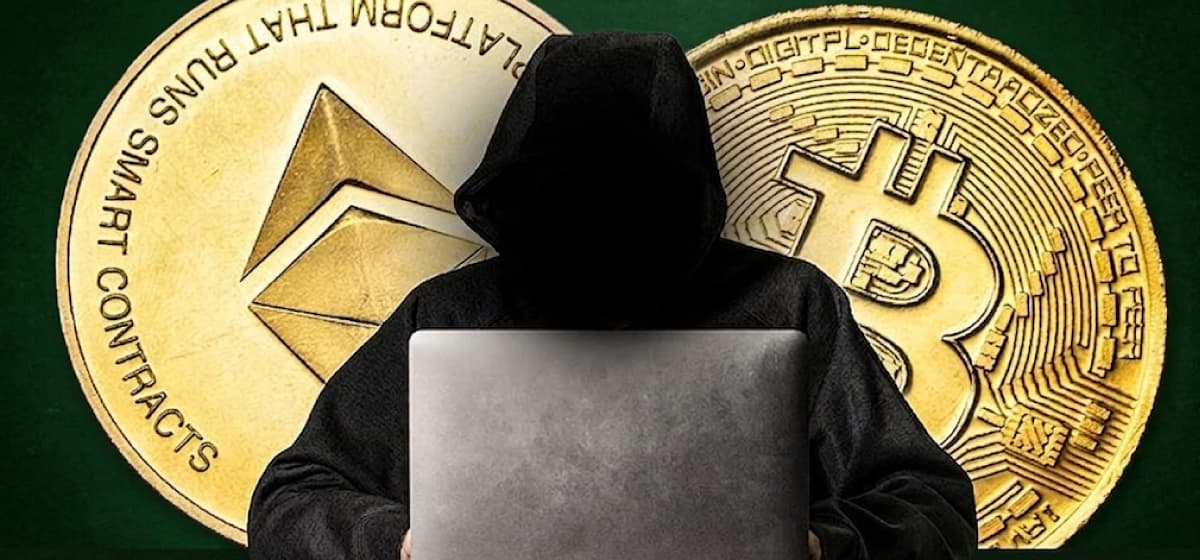
Crypto hacks are not rare events reserved for careless users or obscure exchanges. In 2024, more than $2.2 billion worth of cryptocurrency was stolen across hundreds of incidents. By mid-2025, that figure had already been surpassed, driven largely by the Bybit breach in February 2025, which alone accounted for $1.5 billion, the largest single crypto theft in history.
What makes crypto theft different from traditional financial fraud is that there are no chargebacks, no dispute resolution teams, and no government insurance on your holdings. Once assets leave your wallet, they are almost certainly gone. Understanding how these attacks happen and what you can do to reduce your exposure is not optional for anyone who holds crypto seriously. This article breaks down the most common methods hackers use and the practical steps you can take to protect yourself.
Your $30,000 bonus + 10% discount are waiting on Bybit! Sign up and claim these rewards before they're gone. Time's ticking!
How Crypto Hacks Actually Happen
Most people picture a crypto hack as some elite team breaking through layers of technical encryption. In reality, most successful attacks exploit much simpler weaknesses, and a large portion of them target people rather than code.
Private Key and Seed Phrase Theft
According to Chainalysis, private key compromise was the single largest hacking method in 2024, accounting for nearly 44% of all stolen funds. Your private key and seed phrase are the master credentials to your wallet. Whoever has them controls everything in it. Hackers obtain these through phishing emails, fake websites mimicking legitimate exchanges, malware on your device, and social engineering where they convince you to hand them over directly.
The most dangerous version of this is storing your seed phrase digitally, in a notes app, a cloud document, or a screenshot on your phone. Any device that connects to the internet is a potential attack surface, and if a hacker installs malware or gets into your accounts, your seed phrase is compromised before you even realize it.
Exchange and Platform Hacks
Not all crypto theft targets individual users. Large-scale attacks on exchanges and DeFi protocols account for a significant share of total losses each year. The DMM Bitcoin hack in May 2024 resulted in more than $305 million in stolen Bitcoin. The WazirX hack in July 2024 cost users over $234 million after attackers manipulated authorized signers into approving a malicious transaction. These attacks often exploit vulnerabilities in how platforms manage their own private keys, hot wallet infrastructure, or smart contract code.
The uncomfortable reality is that even if you do everything right personally, funds held on a centralized exchange are only as secure as that exchange's infrastructure. That is why most experienced traders store majority of their holdings in their own personal wallets.
Social Engineering and Phishing
Social engineering is behind some of the largest crypto heists on record, including the Bybit attack itself, which investigators linked to North Korean state-sponsored hackers who used sophisticated impersonation tactics to compromise the exchange from the inside. In May 2025, Coinbase revealed that overseas customer support contractors had been bribed by attackers to hand over sensitive user data, with estimated damages approaching $400 million. Critically, no code was exploited and no private keys were stolen. The attack succeeded entirely through human manipulation.
At the individual level, social engineering plays out through fake support agents on Telegram and Discord, phishing websites that mirror legitimate exchanges down to the URL structure, and SIM-swapping attacks where hackers take over your phone number to bypass two-factor authentication. These attacks are effective because they do not require any technical vulnerability in the blockchain itself. They require only a moment of inattention from the target, which technical defenses alone cannot fully prevent.
Malicious Smart Contracts and Fake dApps
As DeFi has grown, so has a category of attack that targets users who connect their wallets to decentralized applications. When you interact with a dApp, you are often signing a transaction that grants it certain permissions over your wallet. Malicious dApps exploit this by requesting far broader permissions than the interaction requires, effectively draining your wallet once you approve the connection. Fake token approval scams work the same way, and they have become increasingly common as more users engage with DeFi without fully understanding what they are signing.
Start trading on Bybit today and get 10% off fees PLUS up to $30,000 in bonuses! Sign up today and start saving while you earn. This exclusive offer won't last - claim yours now!
How to Protect Yourself from Crypto Hacks
Use a Hardware Wallet for Long-Term Holdings
A hardware wallet, also called a cold wallet, stores your private keys on a physical device that is never connected to the internet. Even if your computer is fully compromised, a hardware wallet requires physical confirmation of transactions, meaning a hacker with remote access to your machine cannot move your funds without the device in hand. For anyone holding a meaningful amount of crypto, this is the single most impactful security step available. Ledger and Trezor are the two most established options out there.
Never Store Your Seed Phrase Digitally
Write your seed phrase down on paper and store it somewhere physically secure. Do not photograph it, do not type it into any app, and do not save it in cloud storage. If someone tells you to enter your seed phrase anywhere online for any reason, including verification, recovery, or support, it is a scam without exception. No legitimate platform will ever ask for it.
Use an Authenticator App, Not SMS, for 2FA
SMS-based two-factor authentication is vulnerable to SIM-swapping attacks, where hackers convince your carrier to transfer your phone number to a SIM card they control. Once they have your number, they can receive your authentication codes and bypass 2FA entirely. An authenticator app like Google Authenticator generates codes locally on your device rather than sending them over the phone network, which makes SIM-swapping ineffective against it.
Be Extremely Careful with Wallet Connections
Before connecting your crypto wallet to any dApp, verify you are on the correct website. Bookmark legitimate URLs and always access them from those bookmarks rather than search results or links in messages. After interacting with a new protocol, review and revoke any unnecessary token approvals using a tool like Revoke.cash. Keeping permissions minimal significantly reduces your exposure if a project turns malicious or gets exploited.
Only Use Reputable Exchanges and Keep Minimal Funds There
If you use a centralized exchange for trading, choose one with a strong track record, independent security audits, and regulatory compliance. More importantly, do not treat it as long-term storage. Move funds you are not actively trading to a wallet where you control the private keys, because what you leave on an exchange is exposed to that platform's security posture, which is entirely outside your control.
Protect Yourself Against Social Engineering
Social engineering attacks are harder to defend against than technical exploits because they target your judgment rather than your software or device. The most effective defense is building habits that remove judgment from the equation entirely. Scammers deliberately create time pressure to stop you from thinking clearly, whether it is a support agent telling you your account will be locked, or a limited-time investment opportunity. Legitimate platforms do not operate that way.
Always verify before you act. If someone contacts you claiming to be from an exchange or project, close the conversation, go directly to the official website yourself, and contact support through the channels listed there. Never follow links or phone numbers provided in unsolicited messages. And be particularly cautious about anything involving screen sharing, remote access requests, or being asked to move funds to a so-called safe wallet. These are almost always social engineering attacks in progress.
Stay Skeptical of Unsolicited Contact
As mentioned above, no legitimate exchange, wallet provider, or crypto project will contact you out of nowhere asking for your credentials, seed phrase, or to verify your account via a link. If someone reaches out on Telegram, Discord, X, or email claiming to be support staff or offering an exclusive opportunity, treat it as a scam by default. The more urgent the message feels, the more suspicious you should be. Urgency is one of the most reliable tools in a social engineer's playbook so beware of it.
Important Reads: Common Crypto Scams to Avoid
A Note on Exchange-Level Risk
Individual security habits matter enormously, but it is worth being clear about what they cannot protect against. If an exchange you use gets hacked at the infrastructure level, as happened with Bybit, DMM Bitcoin, and WazirX, your personal security practices will not save funds held there. This is not an argument against using exchanges, it is an argument for understanding the difference between funds you control and funds held on your behalf, and sizing your exchange balances accordingly.
Closing Thoughts
Crypto hacks are not a niche concern for power users or institutional players. Individual wallet compromises surged to over 158,000 incidents in 2025, affecting around 80,000 unique victims according to Chainalysis. The targets are getting broader as crypto adoption grows.
The good news is that most individual-level hacks are preventable. A hardware wallet, an offline seed phrase, a proper authenticator app for 2FA, and a healthy skepticism toward unsolicited contact will put you in a considerably stronger position than most crypto holders. None of it is complicated. It just requires taking security seriously before something goes wrong.
Double your advantage on Bybit: 10% off trades + $30,000 up for grabs! Sign up now and claim these exclusive rewards. Offer expires soon!
Frequently Asked Questions
What is the most common way crypto gets stolen?
Private key and seed phrase theft, often through phishing or malware, accounted for nearly 44% of all stolen crypto funds in 2024.
Can stolen crypto be recovered?
Rarely, blockchain transactions are irreversible, and while law enforcement has recovered funds in a small number of cases, most stolen crypto is never returned.
Is keeping crypto on an exchange safe?
Exchanges carry platform-level risk that is outside your control, so it is best to keep only funds you are actively trading on any exchange.
What is a hardware wallet and do I need one?
A hardware wallet stores your private keys offline on a physical device, making it the most secure way to hold crypto long-term.
What is a SIM-swap attack?
A SIM-swap is when a hacker convinces your carrier to transfer your phone number to their SIM, allowing them to intercept SMS authentication codes.
How do I know if a dApp is safe to connect my wallet to?
Stick to well-known and audited protocols, verify the URL carefully, and revoke token approvals after interacting with any new platform.
Should I store my seed phrase in a password manager?
No, seed phrases should be stored offline on paper only, as any digital storage introduces risk of remote compromise.
Who are the biggest crypto hackers in the world?
North Korean state-sponsored groups, particularly the Lazarus Group, are responsible for over $6 billion in crypto theft since 2017 according to Chainalysis.
Disclaimer: All content on The Moon Show is for informational and educational purposes only. The opinions expressed do not constitute financial advice or recommendations to buy, sell, or trade cryptocurrencies. Trading involves significant risk and may result in substantial losses. Always seek independent financial advice before making investment decisions. The Moon Show is not responsible for any financial losses or decisions made based on the information provided.
Please view the full disclaimer at: https://themoonshow.com/disclaimer

How to Buy Bitcoin for Beginners – A Step-by-Step Guide
When you are new to crypto, buying Bitcoin (BTC) can feel complicated. In practice, the process...
How to Choose a Crypto Exchange in 2026: Fees, Security, Regulation
Over the years, cryptocurrency exchanges have evolved considerably. What first began as simple ...

All-time Highs: A Detailed Guide for Crypto Traders
All-time high is the highest price an asset hits since it starts trading. To learn more about A...