Binance Exchange Review 2026: The Biggest Exchange, But Is It the Best?
Binance at a Glance
|
Category |
Details |
|
Founded |
2017 by Changpeng Zhao (CZ) |
|
Current CEO |
Richard Teng (since November 2023) |
|
Users |
250+ million globally |
|
Countries |
180+ |
|
Listed assets |
400+ cryptocurrencies |
|
Trading pairs |
1,500+ |
|
Max leverage |
125x on futures |
|
Spot Fees (base) |
0.10% maker / 0.10% taker (25% BNB discount available) |
|
Futures Fees (base) |
0.02% maker / 0.04% taker |
|
VIP program |
10 tiers (VIP 0-9), with near-zero fees at the top |
|
Insurance fund |
$1B+ SAFU fund, Proof of Reserves verified |
|
Regulation |
Licensed in 15+ jurisdictions including France, Italy, Dubai, Bahrain |
|
Fiat Support |
65+ fiat currencies via cards, SEPA, bank transfers, Apple/Google Pay |
|
App ratings |
iOS 4.8/5 (9,700+ reviews) |
|
Trustpilot rating |
~1.4/5 |
Summary: Binance is the world's largest crypto exchange by volume, serving 250+ million users across 180+ countries with 400+ assets and 1,500+ trading pairs. It offers spot, futures (125x leverage), options, margin, P2P, copy trading, bots, Launchpad/Launchpool, and Binance Earn. Spot fees start at 0.10% with a 25% BNB discount, and futures at 0.02% maker / 0.04% taker. A 10-tier VIP program drops rates further. Binance is licensed in 15+ jurisdictions and maintains a $1B+ SAFU fund with Proof of Reserves. The trade-off is that the global platform is unavailable to US residents, the interface overwhelms beginners, and the Trustpilot rating sits at 1.4/5.
Best for: Active traders who want deep liquidity, the widest selection of assets, competitive fees, and access to every crypto service imaginable in one platform.
Avoid if: You are based in the US (use Binance.US instead), are a complete beginner overwhelmed by complex interfaces, or prioritize customer support quality above all else.
Strongest points:
- The deepest liquidity of any exchange in the market. High trading volume means tighter spreads, faster fills, and minimal slippage even on large orders. For active traders, this is the single most important practical advantage Binance has over every competitor.
- An ecosystem that extends far beyond trading. Futures, P2P, copy trading, bots, Launchpad, Launchpool, Binance Earn, an NFT marketplace, the BNB Chain, and a crypto education hub all live under one roof. No other exchange matches this breadth.
- A tiered fee structure that rewards activity. The 25% BNB discount on spot fees and a 10-level VIP program that drops futures fees to near zero for the highest-volume traders make Binance one of the cheapest platforms available for anyone trading consistently.
Weakest points:
- The global platform is not available to US residents. Binance.US exists as a separate, more limited alternative with fewer assets and features.
- The interface is dense. Beginners who just want to buy Bitcoin and hold it can get lost navigating the full trading dashboard, though the Lite mode helps with this.
- Trustpilot ratings sit at approximately 1.4 out of 5. The most common complaints involve account restrictions tied to compliance checks, slow customer support responses, and withdrawal delays during high-traffic periods.
Bottom line: Binance earned its position at the top of the exchange market through sheer breadth and liquidity. It is not the simplest platform, it is not the friendliest to beginners, and its regulatory history is complicated. But for active traders who want the widest selection of assets, the deepest order books, and access to every crypto service in one ecosystem, nothing else comes close.
What Is Binance?
Binance is a centralized cryptocurrency exchange that launched in 2017 and became the largest in the world by trading volume within its first six months of operation. Changpeng Zhao, known as CZ, founded the platform with infrastructure experience from building trading systems at the Tokyo Stock Exchange.
CZ stepped down as CEO in November 2023 as part of a $4.3 billion settlement with the US Department of Justice over anti-money laundering violations, and Richard Teng has led the company since.
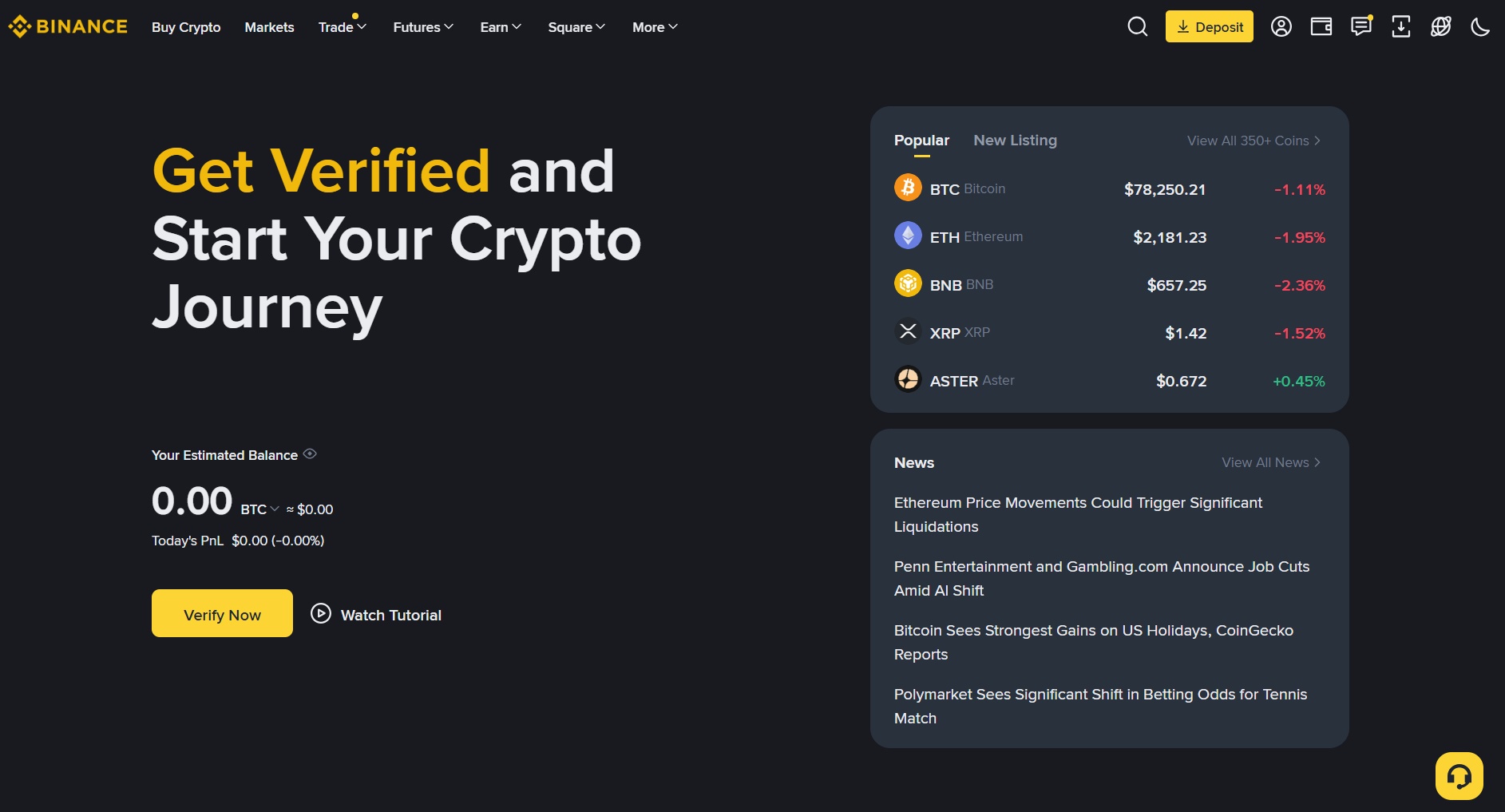
The exchange serves over 250 million users across 180+ countries with more than 400 digital assets and 1,500+ trading pairs. Beyond basic trading, the platform has expanded into a full crypto ecosystem with spot and futures markets, a P2P platform, copy trading, automated bots, a token launchpad, staking and passive income products, and an NFT marketplace.
Binance also operates BNB Chain, its own blockchain hosting over 1,200 projects with average transaction costs around $0.10. The exchange is licensed or registered in 15+ jurisdictions and the global version is not available to US residents, who must use the separate Binance.US platform.
Jump into crypto with Binance—sign up now and claim up to $1,000 in bonuses! Trade Bitcoin, Ethereum, and more with zero hassle. This exclusive offer won’t last, so secure your reward today!
Binance Key Features
Spot Trading
The spot market gives you access to more than 400 digital assets across 1,500+ trading pairs, with order types including market, limit, stop-limit, and OCO (One Cancels the Other). The interface integrates TradingView charts with drawing tools and technical indicators.
For beginners, a Lite mode strips the interface down to the essentials. For advanced traders, the Pro dashboard provides everything you would expect from an institutional-grade terminal. There is also a Convert feature that lets you swap between any two supported assets instantly without using an order book, which is the simplest way to execute a trade on the platform for users who do not want to interact with charts or order types at all.
Futures Trading
Binance offers both perpetual and delivery futures contracts with leverage up to 125x. USDT-margined contracts are settled in USDT, while COIN-margined contracts use the cryptocurrency itself as both collateral and settlement. Both isolated and cross margin modes are supported. Futures fees start at 0.02% maker and 0.04% taker at the base level and drop further through the VIP program. Copy trading is built into the futures platform, letting you replicate trades from experienced lead traders who earn up to 30% of copier profits as commission.
Alongside futures, Binance supports margin trading with over 700 pairs and leverage ranging from 5x to 20x depending on the mode. There is also an options trading platform offering European-style contracts on BTC and ETH, where your maximum loss as a buyer is limited to the premium you paid. Options add a layer of strategic flexibility for hedging and structured positions that futures alone cannot replicate.
Peer-to-Peer (P2P) Trading
The P2P platform lets users trade crypto directly with each other, setting their own prices and payment methods. With support for over 800 payment methods and 100+ fiat currencies, the flexibility here is unmatched. Binance holds the seller's crypto in escrow when a trade is initiated, protecting both parties from fraud during the transaction. Disputes can still take time to resolve through arbitration, but the escrow system prevents the most common scams.
Trading Bots
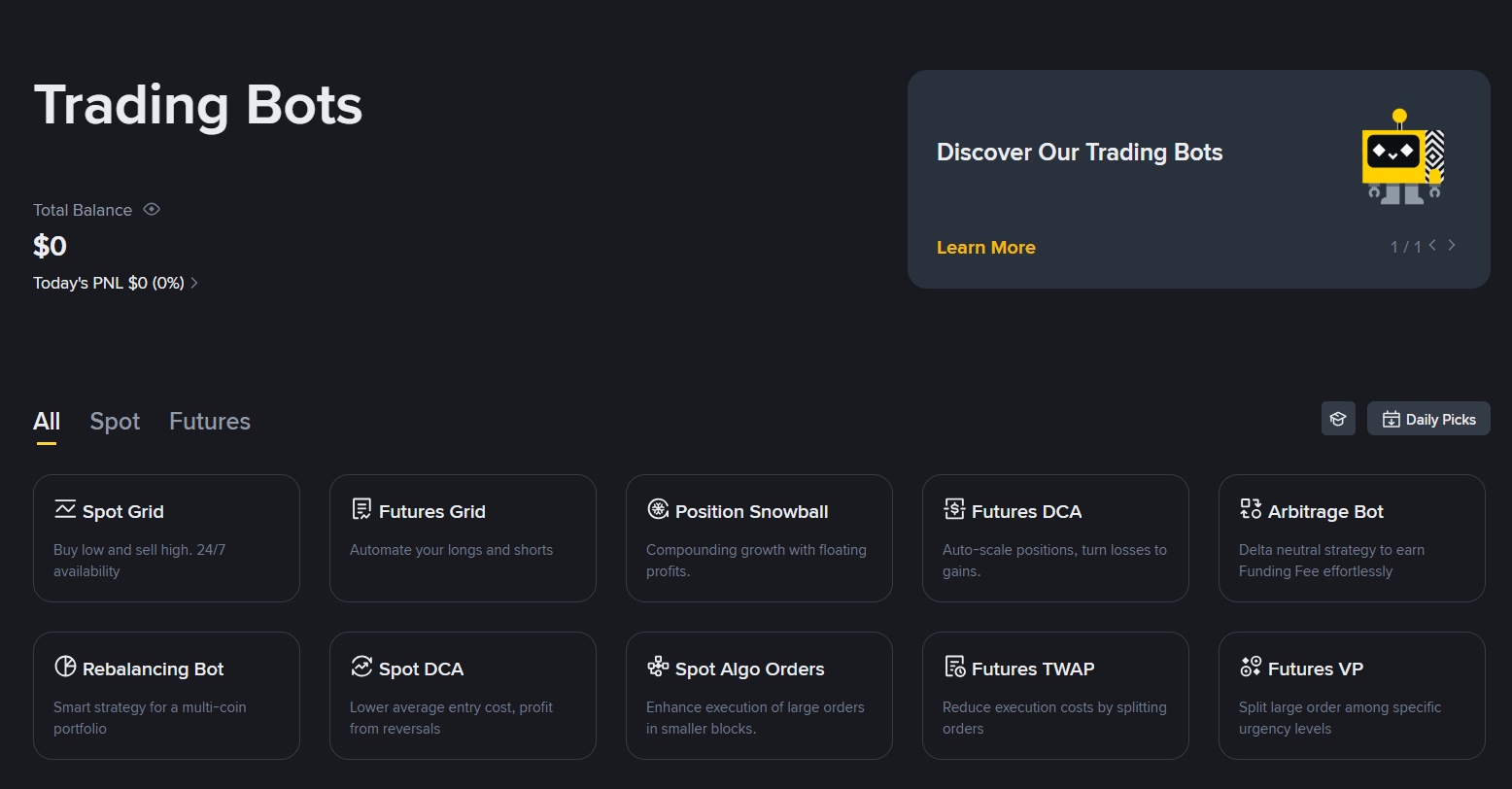
Binance provides automated trading bots for users who prefer systematic strategies. Grid Trading Bots place buy and sell orders at fixed intervals within a defined price range to profit from fluctuations.
Rebalancing Bots maintain a preset portfolio allocation by automatically adjusting holdings as prices shift.
Dollar-cost averaging bots automate recurring purchases at set intervals. All bots run on Binance's servers, so they continue executing even when your device is offline.
Launchpad and Launchpool
Binance Launchpad gives users early access to new token launches through Initial Exchange Offerings where participants use BNB to purchase tokens before they hit the broader market. The feature has been running since December 2017 and has hosted numerous successful sales. Launchpool works differently by letting you stake crypto into liquidity pools and earn new tokens as rewards at no extra cost. Both features require KYC verification to participate.
Binance Earn
For users who want their holdings to generate returns without active trading, Binance Earn offers staking, flexible and locked savings, dual investment, and several other yield products.
Over 100 proof-of-stake coins are supported for staking, with locked savings rates reaching approximately 6.1% APR for select assets. Locked products tie up your funds for a set period, and returns are never guaranteed, but the product range is broader than what most competitors offer.
Two other features round out the ecosystem. Binance Card is a Visa debit card that lets you spend crypto directly at merchants and withdraw cash from ATMs, converting your holdings to fiat at the point of sale. And the Binance Web3 Wallet, an MPC-based self-custody wallet built directly into the Binance app, gives you access to DeFi protocols, dApps, and cross-chain swaps without leaving the platform. We have a separate in-depth review of the Binance Web3 Wallet for users who want a closer look at how it works.
Binance Fees
|
Action |
Fee |
|
Spot trading (base) |
0.10% maker / 0.10% taker |
|
Spot with BNB discount |
~0.075% maker / ~0.075% taker (25% off) |
|
Futures trading (base) |
0.02% maker / 0.04% taker |
|
VIP 9 futures |
Near 0% maker / 0.017% taker |
|
Crypto deposits |
Free |
|
Crypto withdrawals |
Varies by asset and network (e.g., ~0.0002 BTC) |
|
Fiat Gateway purchases |
0% to 7% depending on payment method |
|
P2P trading |
Free for takers, 0.1% for ad makers |
The fee structure is among the most competitive in the industry, especially for traders who hold BNB or generate enough volume to climb VIP tiers. The 25% BNB discount on spot and margin fees applies automatically once you enable it in your account settings. Futures traders who reach VIP 9 pay close to zero on the maker side.
Where costs can catch you off guard is the Fiat Gateway, because card purchases through third-party processors can carry fees up to 7% depending on the provider. Bank transfers and SEPA deposits are significantly cheaper and usually come in under 1%.
Is Binance Secure? An Honest Assessment
Binance employs a layered security approach with AI-powered risk control systems monitoring transactions in real time, two-factor authentication and SSL encryption protecting user accounts, biometric authentication on mobile, and a publicly verifiable Proof of Reserves system.
The SAFU fund (Secure Asset Fund for Users) holds over $1 billion in reserve to cover losses in the event of a breach. Cold wallet storage holds the majority of user funds offline. On the protective features side, wrong address detection alerts you before sending to potentially fraudulent wallets, malicious contract detection warns against compromised smart contracts, and advanced users can set up withdrawal address whitelisting and anti-phishing codes.
The regulatory history is the more complicated part of the story. In November 2023, Binance agreed to a $4.3 billion settlement with the US DOJ over anti-money laundering violations. CZ stepped down as CEO and served a prison sentence. Richard Teng took over and has since led a compliance overhaul.
Binance now holds licenses or registrations in 15+ jurisdictions and has been flagged for MiCA readiness in the EU. The settlement was severe, but the company survived it and emerged with stronger compliance infrastructure than most competitors.
Is Binance Legit and Trustworthy?
Binance is legitimate, fully operational, and licensed in multiple jurisdictions. It even survived the largest regulatory penalty in crypto history and continued growing. The $1 billion+ SAFU fund and publicly verifiable Proof of Reserves provide tangible safety nets that most exchanges cannot match.
The Trustpilot rating of 1.4 out of 5 is poor, though most major exchanges score badly on Trustpilot because dissatisfied users are disproportionately motivated to leave reviews. Common complaints involve account restrictions during compliance reviews, slow support responses, and withdrawal holds during high-traffic events. Completing KYC early and keeping your activity consistent significantly reduces the likelihood of running into these issues.
Does Binance Require KYC?
Yes. Binance enforces KYC for full platform access. Without identity verification, you face lower withdrawal limits and restricted access to features like Launchpad, fiat deposits, and P2P trading. The verification process involves uploading a government-issued ID and completing facial recognition. Processing times vary, but most users report completion within a few hours to a few days.
Binance Deposits and Withdrawals
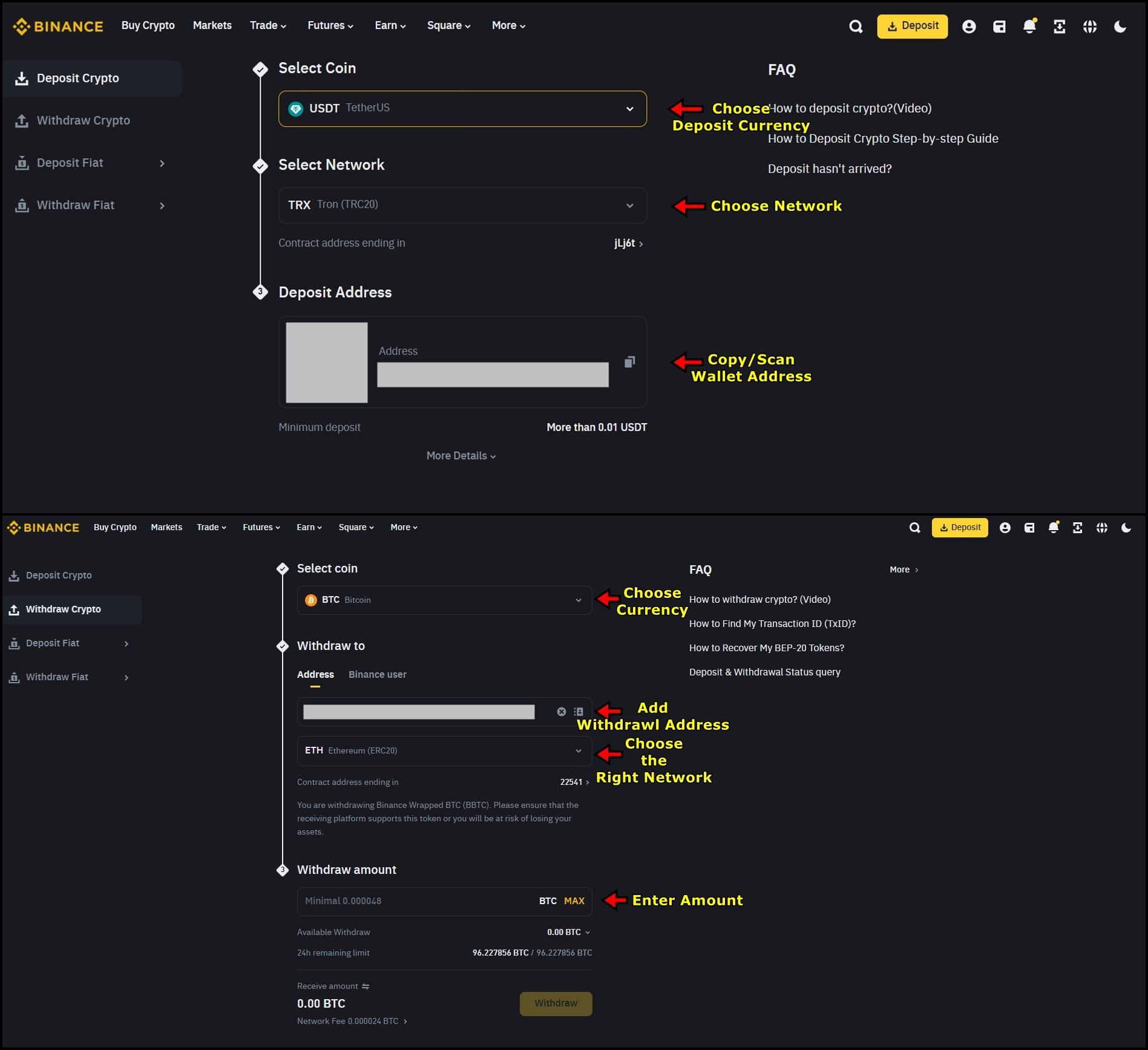
Crypto deposits are free on Binance. Navigate to the wallet section, select the cryptocurrency and the correct network, and the platform generates a deposit address. Sending assets on the wrong network results in permanent loss, so always verify the network before confirming.
For fiat, Binance supports over 65 currencies through bank cards, SEPA transfers, bank deposits, Apple Pay, Google Pay, and a MoonPay integration for USD. Availability varies by region and card purchases are the most convenient but carry the highest fees.
Withdrawals follow the standard flow. Select the asset, enter the amount and recipient address, choose the network, and confirm with 2FA. Crypto withdrawal fees vary by asset and network congestion. Fiat withdrawals require linked bank details and may take 1 to 3 business days to process.
How to Create Your Binance Account
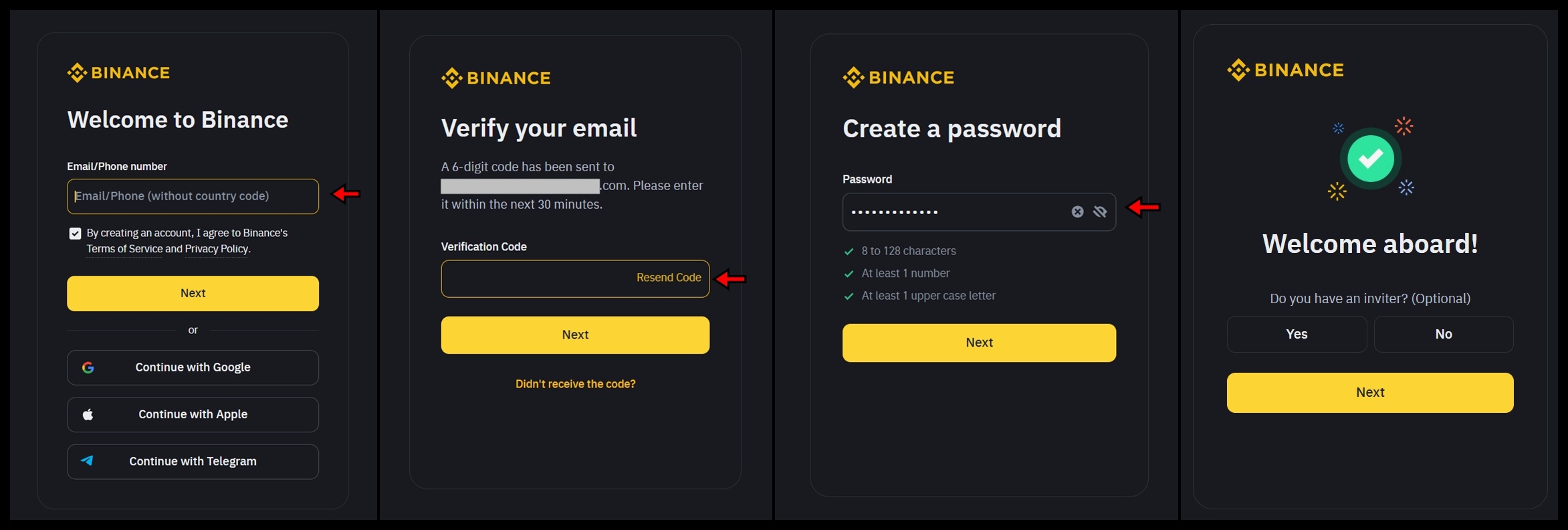
- Visit binance.com or download the app from the App Store or Google Play.
- Click Sign Up and enter your email or phone number. You can also register using Google or Apple ID.
- Verify your email by entering the code Binance sends.
- Create a strong password and submit.
- Complete KYC verification by uploading a government-issued ID and completing facial recognition on mobile for full platform access.
Binance vs Other Crypto Exchanges
|
Feature |
Binance |
Bybit |
OKX |
Coinbase |
|
Spot assets |
400+ |
900+ |
350+ |
260+ |
|
Trading pairs |
1,500+ |
1,000+ |
600+ |
600+ |
|
Max leverage |
125x |
200x |
125x |
None (spot only) |
|
Spot fees (base) |
0.10% / 0.10% |
0.10% / 0.10% |
0.08% / 0.10% |
0.40% / 0.60% |
|
Futures fees (base) |
0.02% / 0.04% |
0.02% / 0.055% |
0.02% / 0.05% |
N/A |
|
VIP fee tiers |
Yes (10 levels) |
Yes |
Yes |
Yes (limited) |
|
P2P trading |
Yes (800+ methods) |
Yes |
Yes |
No |
|
Fiat currencies |
65+ |
50+ |
90+ |
USD, EUR, GBP |
|
Insurance fund |
$1B+ SAFU |
$1B+ |
Risk reserve |
Insured USD balances |
|
Trustpilot |
~1.4/5 |
3.4/5 |
2.1/5 |
1.6/5 |
Binance leads on ecosystem breadth, P2P flexibility, and fiat currency support. Bybit offers higher leverage and a slightly larger spot selection. OKX has the lowest base maker fees and broader fiat coverage. Coinbase charges dramatically more but offers a simpler, fully regulated US experience. The right platform depends on whether you prioritize cost, features, regulatory clarity, or ease of use.
Who Should Use Binance?
A good fit for:
- Active traders who want the deepest liquidity and tightest spreads available in the market.
- Users who want access to every crypto service in one place, from spot and futures to P2P, staking, bots, and token launches.
- Fee-conscious traders who benefit from BNB discounts and the volume-based VIP program.
- Users in regions where fiat access through 65+ currencies and 800+ P2P payment methods matters.
Not the right fit for:
- US residents who need the global version. Binance.US is a separate, more limited platform.
- Complete beginners who find complex interfaces intimidating. The Lite mode helps, but the full platform has a steep learning curve.
- Users who put customer support responsiveness at the top of their priority list.
- Privacy-focused traders looking for no-KYC access. Binance requires identity verification for full functionality.
Common Mistakes on Binance
- Depositing on the wrong network
Binance supports multiple networks for the same asset, and choosing the wrong one means permanent loss. Sending USDT on the Ethereum network when the recipient expects TRON is the kind of mistake that costs people real money every day. Always verify the network before confirming any deposit or withdrawal.
- Ignoring the BNB fee discount
A surprising number of traders pay full spot fees when they could be saving 25% by holding a small amount of BNB and enabling the discount in settings. Over time, especially for active traders, that 25% compounds into meaningful savings.
- Using high leverage without a risk plan
125x leverage on BTC means a 0.8% adverse move liquidates your entire position. Many traders, especially those coming from spot trading, underestimate how quickly leveraged positions can collapse. Start with low leverage and increase only as your understanding of margin mechanics and your risk management discipline improve.
- Leaving large holdings on the exchange long-term
Binance has a $1 billion+ SAFU fund and has not been hacked since the 2019 incident where the fund covered all losses. Self-custody through a hardware wallet remains the safest option for any crypto you are not actively trading. Keep trading capital on the exchange and move everything else into cold storage.
Closing Thoughts
Binance earned its position as the world's largest exchange through a combination of aggressive expansion, competitive pricing, and an ecosystem that covers virtually every crypto use case. The depth of liquidity alone makes it the default choice for serious traders, because tighter spreads and faster fills have a direct impact on profitability that most users never think to quantify.
The fee structure rewards active participation through BNB discounts and VIP tiers, and the product range from spot to futures to P2P to Earn means most users never need to leave the platform.
The regulatory history is rich and should not be glossed over. A $4.3 billion DOJ settlement and a leadership change are not trivial events, and the Trustpilot feedback suggests customer support has not kept pace with the platform's growth. But Binance came through the other side of those challenges with stronger compliance infrastructure, more licenses, and continued market dominance. For traders who want the most complete crypto trading experience available in 2026, Binance remains the benchmark that every other exchange is measured against.
Your $1,000 Binance bonus is up for grabs! Sign up on Binance, make your first trade, and earn a chance to redeem this reward before it’s gone.
Disclaimer: All content on The Moon Show is for informational and educational purposes only. The opinions expressed do not constitute financial advice or recommendations to buy, sell, or trade cryptocurrencies. Trading involves significant risk and may result in substantial losses. Always seek independent financial advice before making investment decisions. The Moon Show is not responsible for any financial losses or decisions made based on the information provided.
Please view the full disclaimer at: https://themoonshow.com/disclaimer
BloFin Exchange Review – Key Features, Fees and Security
Choosing a cryptocurrency exchange is not easy. Traders look for the right mix of features, low...
Bybit Review 2026 – Best Derivatives Trading Platform?
Bybit remains one of the world’s leading crypto exchanges in 2026 with over 84 million users an...
WEEX Exchange Review 2026: High Leverage, No KYC, But Is It Worth the Trade-Offs?
Choosing a cryptocurrency exchange is never a simple decision. You need a platform packed with ...