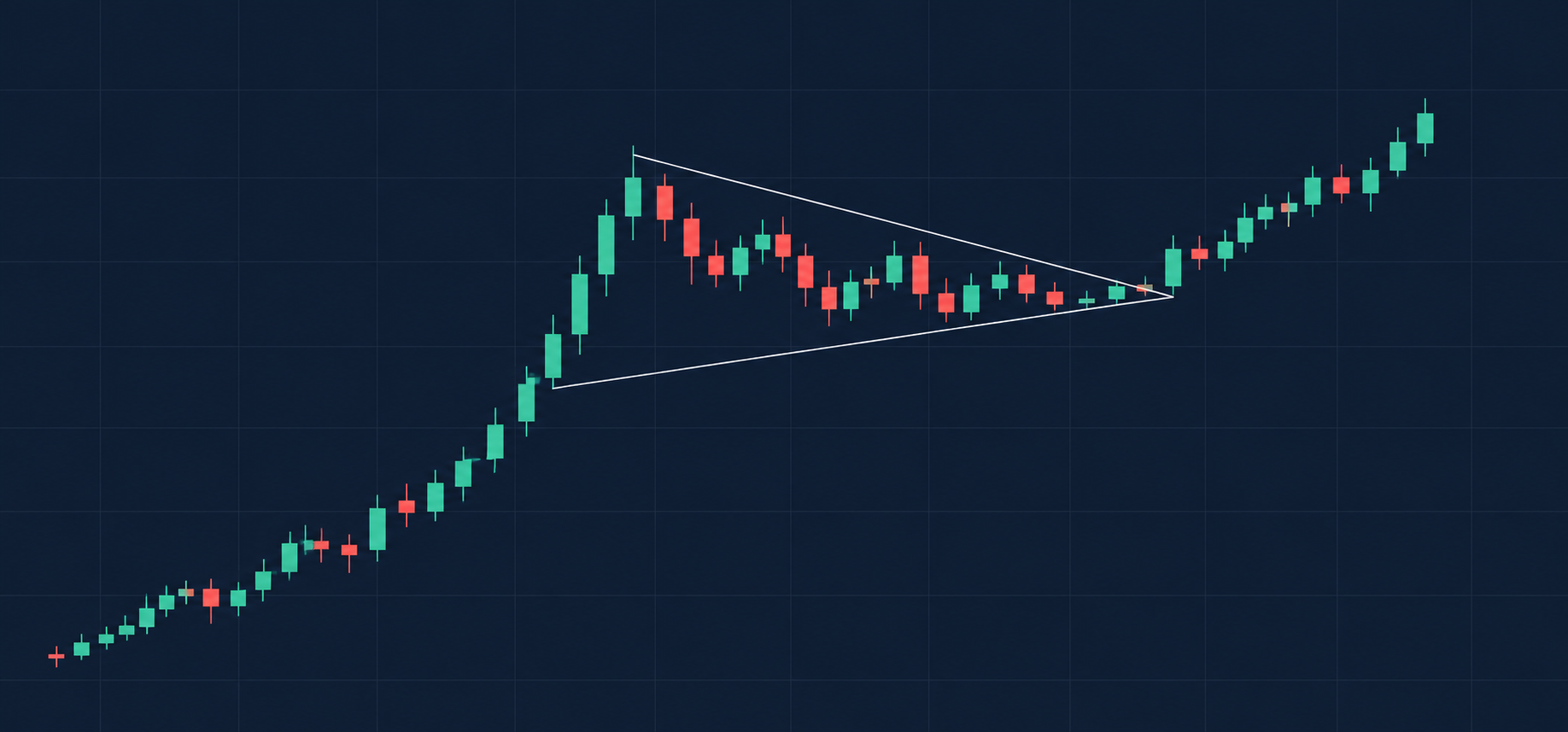


Quick Summary: Bitcoin trading looks simple from the outside. A trader picks a direction, places an order, and waits for price to move. The harder part comes before the order. A trader needs to know what justifies the entry, where the idea becomes wrong, how much capital to risk, and what should trigger an exit. A repeatable trade plan gives each decision a reason and keeps one bad setup from turning into an uncontrolled loss.
What Is Bitcoin Trading?
Bitcoin trading means buying or selling exposure to BTC to benefit from shorter-term price movement. A position may last minutes, hours,or several days depending on the strategy.
That differs from long-term investing. A trader works with a shorter thesis and needs a clear point where that thesis fails. A short-termtrade should not quietly become a long-term investment simply because pricemoved against it.
This distinction changes how traders approach risk. An investor may tolerate a large drawdown as part of a multi-year thesis. A tradernormally enters because a particular setup exists right now. Once that setupbreaks, the original reason for holding the position disappears.
Your $30,000 bonus + 10% discount are waiting on Bybit! Signup and claim these rewards before they’re gone. Time’s ticking!
Spot or Futures: Where Should Bitcoin Trading Start?
Spot trading is the more straightforward starting point. A trader buys BTC without borrowing to increase exposure, so there is noleverage-driven liquidation price.
Bitcoin futures and other derivatives add flexibility. Theycan provide price exposure without direct BTC ownership and make shortpositions easier. For example, CME’s Bitcoin futures settle in cash rather than delivering BTC.
The added flexibility also brings more risk. CFTC guidanceon virtual-currency trading warns that leverage can amplify losses when aposition moves against the trader.
A trader who cannot consistently define entries, stops, andposition sizes in spot markets gains little from adding leverage. The samedecision-making process still applies, but mistakes become more expensive.
How to Trade Bitcoin Step by Step
A practical Bitcoin trading process can be reduced to sixdecisions. Each should be made before the order goes live.
1. Start With Market Structure
The first question is not whether Bitcoin looks bullish orbearish. It is where price sits within the current structure.
Traders can begin on the daily or 4-hour chart and markobvious swing highs, swing lows, support, and resistance. These levels showwhere buyers or sellers have already produced meaningful reactions.
A market can be in an uptrend and still offer a poor longentry directly below major resistance. A trader may instead wait for a breakoutor for price to pull back toward support.
Lower timeframes can refine an entry, but they should notreplace the wider structure. A five-minute bullish pattern carries less weightwhen it forms directly beneath daily resistance.
Our guide to reading crypto charts covers candlesticks,trendlines, support and resistance in more detail.
2. Define the Setup Before the Entry
A setup describes what must happen before a trade becomesvalid.
A breakout setup might require Bitcoin to close aboveresistance and then hold that level on a retest. A pullback setup might requirean existing uptrend, a retracement into support, and evidence that buyers arereturning.
This prevents traders from entering simply because a largecandle suddenly appears.
The trigger should also be specific. “Buy near support”leaves too much room for interpretation. “Enter after a 4-hour candle rejectssupport and closes back above the prior candle high” gives the trader acondition that can actually be checked.
If the condition never appears, there is no trade.
3. Decide Where the Trade Is Wrong
Every trade needs an invalidation level. This is the pointwhere the original setup no longer makes sense.
For a long position built around support, invalidation maysit below the swing low defining that support. For a breakout, it may sit backinside the old range if price fails to hold above the breakout level.
The stop-loss should come from this structure rather than anarbitrary percentage.
Support and resistance also behave more like areas thanexact walls. Bitcoin can briefly wick through a level before recovering,especially during volatile sessions. The stop therefore needs to reflect theactual structure rather than sit automatically on the most obvious horizontalline.
4. Calculate Position Size From Risk
Only after the entry and stop are known should the traderdecide how large the position can be.
For an unleveraged trade, a basic position-sizing formulais:
Position size = Amount at risk ÷ Stop distance as apercentage
Suppose a trader has a $2,000 account and decides that afailed trade can cost no more than $20. If the planned entry sits 2.5% abovethe stop, the maximum position size would be approximately $800 beforeaccounting for fees and slippage.
$20 ÷ 0.025 = $800
The important part is the sequence. The chart defines thestop. The accepted cash risk defines the position size.
Reversing that process creates a common problem. A traderchooses an oversized position first, then places the stop unnaturally close tothe entry so the potential loss looks manageable.
5. Set the Exit Before the Trade Starts
A complete trade plan needs a target as well as a stop.
Targets can come from the next resistance level, a previousswing high, the width of a range, or a measured chart pattern. They should havea reason visible on the chart.
Risk-to-reward then helps judge whether the opportunitymakes sense.
If a setup risks $20 to make $40, it offers a 2:1reward-to-risk ratio. That does not automatically make it a good trade. Adistant target with little structural justification has limited value even ifthe ratio looks attractive.
The entry, stop, and target all need to fit the same setup.
6. Use the Right Order for the Plan
Execution should match the setup.
A market order prioritizes immediate execution but givesless control over the final fill price. A limit order gives more price controlbut may never execute. Stop and stop-limit orders can automate entries or exitsonce a defined trigger is reached.
The differences between these are covered in our cryptoorder types guide.
The order should execute an existing plan. It should notdetermine the plan.
A Practical Bitcoin Trade Example
Consider a hypothetical chart where Bitcoin repeatedlyrejects $82,000 resistance.
Instead of buying just below resistance because priceappears strong, a breakout trader waits for a completed 4-hour close above$82,000. Bitcoin then pulls back and holds the former resistance as support.
The trader plans an entry at $82,400. The setup becomesinvalid below $81,200, placing the stop about 1.46% below the entry. The nextmajor resistance sits near $85,000.
If the trader is prepared to lose $30, the approximateunleveraged position size becomes:
$30 ÷ 0.0146 = $2,055
The prices are hypothetical, but the process shows how eachdecision connects.
The market structure creates the setup. The setup definesthe invalidation. The distance to invalidation determines position size. Thenext resistance helps define the target.
If Bitcoin never confirms the breakout, there is no trade totake.
Risk Management Matters More Than Win Rate Alone
A high win rate does not automatically produce profitableBitcoin trading.
A trader can win six trades out of ten and still lose moneyif the four losing trades are much larger than the six winners. Another tradercan win fewer than half of all trades and remain profitable if losses staycontrolled and successful trades produce larger returns.
This is also why moving a stop farther away after entrycauses problems. The trader originally accepted one amount of risk, thenincreases it because price moved in the wrong direction.
Leverage makes the same mistake more costly. Position sizingand predefined invalidation should come before any attempt to increaseexposure.
What Bitcoin Traders Should Watch Beyond the Chart
Technical structure does not exist in isolation.
Bitcoin can react sharply around inflation releases,central-bank decisions, major regulatory developments, ETF flows, and suddenchanges across broader risk markets. These events do not automaticallydetermine direction, but they can increase volatility around otherwise cleansetups.
The practical response is not to predict every headline.Traders should know when major scheduled events are approaching and decidewhether a position still justifies taking risk through them.
This becomes especially important when the planned stop sitsclose to the current price. A sudden volatility spike can invalidate ashort-term setup even when the wider market structure remains unchanged.
Common Bitcoin Trading Mistakes
Most beginner mistakes come from abandoning the processrather than choosing the wrong indicator.
· Chasing large candles: Entering after asharp move often means buying after much of the opportunity has already passed.
· Moving the stop-loss: Shifting a stopfarther away turns a predefined loss into a larger and less controlled one.
· Increasing size after a loss: Raisingposition size to recover quickly introduces emotion into risk management andincreases downside.
· Switching strategies too often: Two orthree losing trades are not enough to judge whether a strategy works,especially when the rules keep changing.
· Overloading the chart: Using RSI, MACD, several moving averages, Fibonacci levels, and multiple patterns at once can make decisions harder. Price structure, volume, and a few well-understoodconfirmations are easier to apply consistently.
A Trading Journal Turns Experience Into Data
For each Bitcoin trade, traders can record the setup,timeframe, entry, stop, target, position size, and reason for taking the trade.
A screenshot captured before entry also makes later reviewmore useful because it preserves what the chart actually looked like before theoutcome was known.
After enough trades, the journal starts answering practicalquestions.
Does the strategy perform better on breakouts or pullbacks?Do losses increase around major economic releases? Are profitable trades beingclosed too early? Are losing positions consistently breaking the same rule?
Without that record, traders have to judge their performancefrom memory. That makes patterns harder to identify and poor decisions easierto repeat.
A Good Bitcoin Trade Is Defined Before Entry
Learning how to trade Bitcoin does not require predictingevery major move.
A useful process decides when a setup exists, where itfails, how much capital can be risked, and where the position should end beforemoney enters the market.
The strategy itself can change over time. The important partis answering the same questions before every trade.
That turns Bitcoin trading into something traders canreview, test, and improve instead of a series of reactions to whatever pricedoes next.
FAQs
Is Bitcoin trading suitable for beginners?
Bitcoin remains volatile, so losses can be substantial.Beginners can start by learning spot trading, market structure, and positionsizing before considering leveraged products.
How much money is needed to trade Bitcoin?
There is no fixed amount because Bitcoin can be tradedfractionally. Position size should depend on how much a trader is prepared tolose if the setup fails rather than the price of one whole BTC.
What is the best timeframe for Bitcoin trading?
There is no single best timeframe. Swing traders commonlyuse daily and 4-hour charts, while intraday traders may use shorter intervals.The timeframe should match the intended holding period and provide enoughstructure to define an entry and invalidation.
Sign up on WEEX and roll for a chance to win a share of the $1,000,000 prize pool.