Understanding the Falling Wedge Pattern in Crypto Trading
Beginners use chart patterns, such as the falling wedge pattern, along with other indicators to evaluate market sentiment and flow. As market conditions change, specific patterns can hint whether the market is weakening or improving. The falling wedge pattern is a bullish reversal pattern that signals an upcoming trend based on volume and market activity. Traders find it useful because it signals a potential shift in momentum and is easy to identify.
In this blog, we will discuss what a falling wedge pattern is, how it forms, how to trade it, and more.
Let’s begin!
Get started on WEEX with a simple 40 USDT reward. Deposit 100 USDT, make your trade, and claim the bonus.
What is a Falling Wedge Pattern?
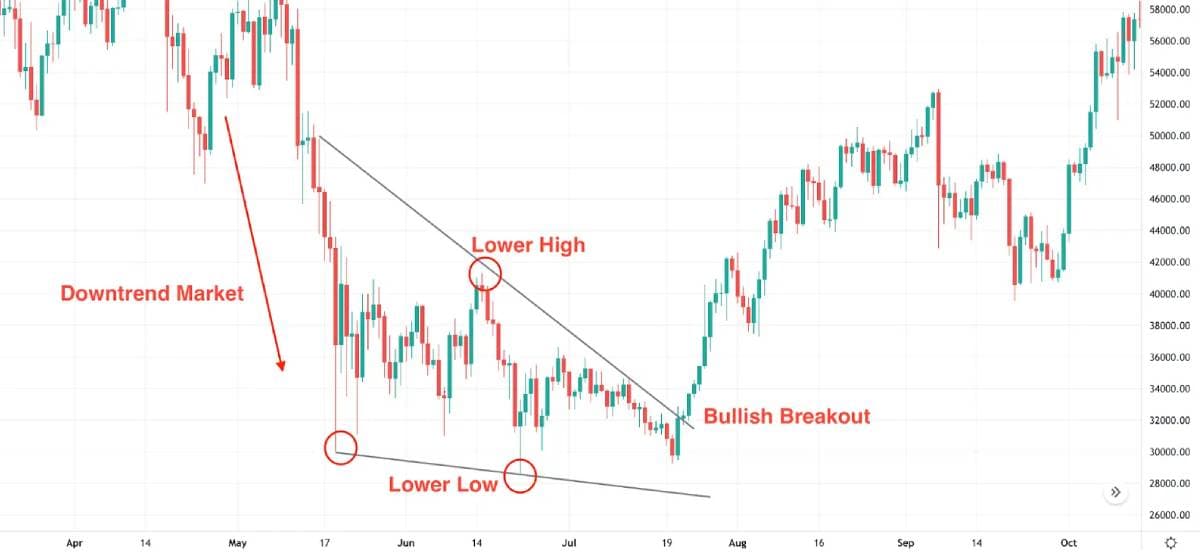
A falling wedge pattern is created by two downward-sloping lines. It often appears during a downtrend and signals a bullish reversal. Traders look out for a breakout that is opposite to the wedge’s direction, such as a fall from a rising wedge or a rise from a falling wedge. They also look for increased volume to confirm the change in trend. This pattern is useful for spotting early signs of trend exhaustion.
Despite the declining price movement, the falling wedge pattern is generally considered a bullish pattern. This is because the selling pressure that drives prices lower begins to weaken over time. Each new low is not significantly lower than the previous one. This indicates that the sellers are losing control while the buyers are slowly gaining momentum. When the price eventually breaks above the upper trendline, it often signals the beginning of a bullish reversal or a continuation of a larger uptrend.
How does a Falling Wedge Pattern Form?
The falling wedge pattern forms typically during a downward price momentum. It may form during a broader downtrend where momentum is gradually slowing or as part of a corrective phase. The pattern begins to form when the sellers dominate the market. The prices decrease, creating successive lower highs and lower lows. However, the intensity of the selling decreases as time passes.
Volume plays a critical role in confirming pattern formation. As the wedge continues to form, the volume usually decreases. This decrease in volume aligns with the narrowing price range, suggesting that the market is approaching a correction. The pattern is confirmed when the price breaks above the upper trendline and volume increases. This breakout signals that buyers have regained control of the market and that a bullish trend is most likely to follow.
How to Use the Falling Wedge Pattern in Crypto Trading
Using the falling wedge pattern effectively requires more than simply identifying its shape on a candlestick chart. Here are some ways you can use the falling wedge pattern in crypto trading.
Wait for a Confirmed Breakout
Traders need to consider the market conditions and confirmation signals. Once a falling wedge is clearly formed, traders typically wait for a confirmed breakout above the upper trendline rather than entering a position prematurely. Entering a position too early and before the breakout can expose traders to continued downward risk if the pattern fails.
Look for a Retest
After the breakout is confirmed, traders often look for a retest of the broken trendline as a potential entry opportunity. This retest can provide additional confirmation that former resistance has turned into support. Price targets are commonly estimated by measuring the widest part of the wedge and projecting that distance upward from the breakout point. Although this method does not guarantee exact outcomes, it offers a structured approach for setting realistic expectations.
Use Risk Management Tools
Risk management is essential when trading a falling wedge pattern in the crypto market. Stop-loss orders are typically placed below the most recent lows or beneath the lower trendline to limit potential losses if the breakout fails. Combining the falling wedge pattern with other indicators, such as moving averages, support and resistance levels, or relative strength index, can improve trade reliability and reduce the chances of false signals.
Common Mistakes to Avoid
Here are some common mistakes that you should avoid when trading the falling wedge pattern.
Always Expecting A Breakout
Remember that not every downward sloping wedge pattern will result in a bullish breakout. Not all patterns give the expected results, especially in the volatile crypto market. Misidentifying the pattern, confusing it with a descending pattern, or a bearish continuation structure can lead to poor decision-making.
Ignoring Volume Confirmation
Another common mistake that traders often make is ignoring volume confirmation. A breakout without a noticeable increase in volume may lack conviction and can reverse. Traders who don’t wait for confirmation get trapped in false breakouts that result in unnecessary losses.
Ignoring Market Trend
Overlooking the overall market trend can reduce the effectiveness of the pattern. A falling wedge that forms in alignment with a strong bullish market environment generally has a higher probability of success than one that appears during extreme bearish conditions.
Emotional Decisions
Making emotional trading decisions is another mistake that beginners often make. Traders may enter positions impulsively out of fear of missing out, set clear exit strategies, or act without waiting for proper confirmation. It goes against the disciplined approach required for consistent success and can turn a potentially profitable setup.
Final Takeaways
The falling wedge pattern is an effective indicator of a bullish reversal. Recognizing it on the charts, how it forms, and what it indicates can highlight new potential opportunities. While no chart pattern is foolproof, combining the pattern with other indicators can help improve risk management and reliability.
FAQs
What is a falling wedge pattern in crypto trading?
A falling wedge pattern signals a potential bullish reversal or continuation after a period of declining prices.
Is a falling wedge pattern bullish or bearish?
Even though the pattern slopes downward, the falling wedge pattern is generally considered a bullish pattern when it is confirmed by a breakout.
Can a falling wedge pattern fail?
Yes, like all chart patterns, the falling wedge pattern can fail. It happens in highly volatile or low-volume market conditions.
What confirms a falling wedge pattern breakout?
A strong price movement above the upper trendline, supported by increased trading volume, confirms the breakout.
Where should the stop-loss order be placed when trading a falling wedge pattern?
Stop-loss orders are usually placed below the recent lows or under the lower wedge trendline.
Start trading on WEEX with a 100 USDT deposit and unlock 40 USDT back after completing your first trading step.
Disclaimer: All content on The Moon Show is for informational and educational purposes only. The opinions expressed do not constitute financial advice or recommendations to buy, sell, or trade cryptocurrencies. Trading involves significant risk and may result in substantial losses. Always seek independent financial advice before making investment decisions. The Moon Show is not responsible for any financial losses or decisions made based on the information provided.
Please view the full disclaimer at: https://themoonshow.com/disclaimer

How to Buy Bitcoin for Beginners – A Step-by-Step Guide
When you are new to crypto, buying Bitcoin (BTC) can feel complicated. In practice, the process...

How to Choose a Crypto Exchange in 2026: Fees, Security, Regulation
Over the years, cryptocurrency exchanges have evolved considerably. What first began as simple ...

All-time Highs: A Detailed Guide for Crypto Traders
All-time high is the highest price an asset hits since it starts trading. To learn more about A...