Understanding the Rising Wedge Pattern in Crypto Trading
Chart patterns guide traders as they study how prices behave during different market phases. When the market climbs, certain formations can reveal whether momentum is still intact or beginning to weaken. The rising wedge pattern belongs to this group because it forms during an upward movement and often draws the attention of traders who monitor changing market pressure. Beginners usually find it useful because the structure is straightforward and points to a potential shift in direction.
In this blog, we will discuss what a rising wedge pattern is, how it forms, how to trade it, and more.
Let’s take a look!
What is a Rising Wedge Pattern?
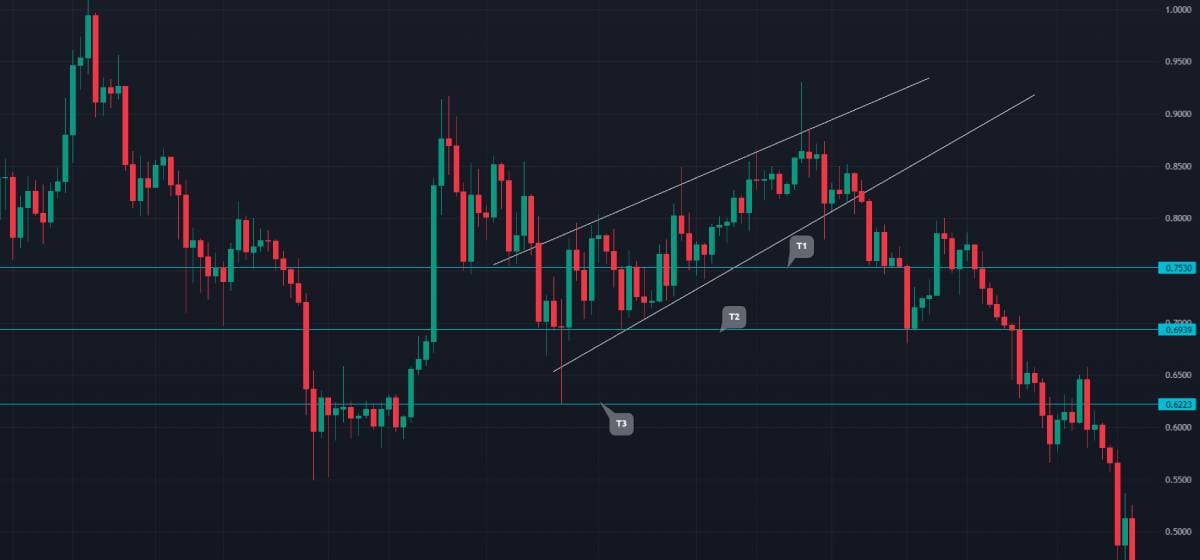
A rising wedge pattern occurs when the prices consolidate between two upward-sloping lines, in which the lower trendline is steeper. It typically appears after an upward trend and indicates a possible bearish reversal as the momentum slows. It forms when the prices move upward but remain within a narrowing range while creating two converging trendlines. The upper trendline connects a series of higher highs, whereas the lower trendline connects higher lows that rise more steeply. This creates a wedge-like shape that is slanting upwards.
It represents a loss of momentum even though it may sound bullish on paper. Even though prices are climbing, the momentum of the market is slowing down. Once the wedge breaks down, the market trend moves lower. It is an early warning indicator that bearish market conditions are ahead.
Get started on WEEX with a simple 40 USDT reward. Deposit 100 USDT, make your trade, and claim the bonus.
How Does a Rising Wedge Pattern Form?
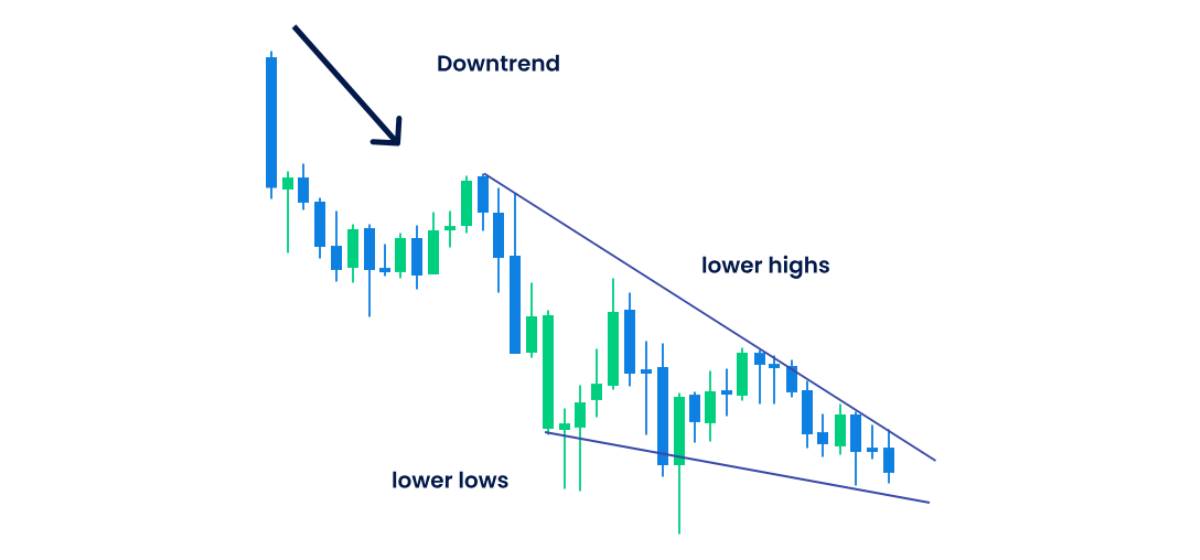
A rising wedge pattern forms over a period when the prices are on the rise, but the momentum is slowing down. The initial phase usually starts with a strong upward move that is driven by renewed effort by buyers. As the price continues to rise, a series of higher highs and higher lows is established. This creates a recognizable upward-sloping pattern. However, as the pattern develops, the highs become less aggressive, and the difference between successive peaks reduces. At the same time, although the lows continue to rise, they do so more progressively than the highs.
This combination produces a market sentiment where the buyers are pushing the price upward, but the momentum has slowed down. The narrowing space created between trendlines reflects the reduced volatility in the market and growing indecision of buyers and sellers. At this stage, the volume often declines, which reinforces the idea that interest is sustaining, but the rally is fading. Eventually, the price reaches a point where it can no longer maintain the steep climb along the lower trendline. Once the trendline breaks with a spike in volume, the pattern is considered complete, and a bearish reversal is expected.
Important Read: Ultimate Guide to Crypto Chart Patterns for Beginners
How to Use a Rising Wedge Pattern in Crypto Trading
Experienced traders use the rising wedge pattern along with other indicators to anticipate potential bearish reversals and to position themselves accordingly. Here are some ways you can use the rising wedge pattern in crypto trading.
Wait for Pattern Confirmation
Once the pattern is identified, traders should wait for confirmation. Although a wedge suggests weakening bullish momentum, the signal is not validated until the price breaks below the lower trendline. Opening or closing a position before a confirmation can expose the traders to unnecessary risk, especially since markets occasionally produce false signals.
Open Position Carefully
After the breakdown is confirmed, traders should enter a short position or exit a long position. In the cryptocurrency industry, shorting can be executed through derivatives such as futures, perpetual contracts, and margin trading. For spot traders, who do not short, the pattern mainly serves as an alert for a potential downturn and to manage risk more efficiently.
Set Stop-Loss Order
Setting appropriate stop-loss levels is essential. Many traders place stop-loss orders slightly above the last high within the rising wedge to protect against any unexpected upward momentum. The stop-loss orders are also used for profit targets. In this, stop-loss orders are estimated by measuring the height of the wedge at its widest point and projecting that distance downward from the breakout level. This method provides realistic expectations for how far the price may fall after momentum shifts in favor of the sellers.
Volume Analysis
Volume analysis also plays an important role in trading the rising wedge pattern. A breakdown accompanied by increased volume enhances the strength of the signal, while weak volume may indicate the possibility of a false breakout. By combining the trendlines, volume, and other indicators such as moving averages or RSI, traders can improve their confidence in the setup and refine their timing.
Common Mistakes to Avoid
Here are some common mistakes that you should avoid when trading the rising wedge pattern.
Assuming Bullish Momentum
One of the most common mistakes traders make when using the rising wedge pattern is prematurely assuming that upward price movement is bullish. Although the pattern occurs in an upward direction, it actually reflects weakening momentum. Misinterpreting the pattern can lead traders to enter long positions when the market is preparing for a reversal. To avoid this, it is crucial to look beyond simple price direction and pay attention to the structure of the trendlines and the behavior of the volume.
Not Waiting for Pattern Confirmation
Another frequent error is failing to wait for confirmation. The two converging trendlines alone do not guarantee a bearish outcome. The actual trigger is the breakdown below the lower trendline. Acting without confirmation can result in entering trades that never materialize into proper reversals. Similarly, traders may ignore overall market conditions, using the rising wedge pattern alone without considering broader trends or key support and resistance levels.
Incorrect Risk Management
Incorrect risk management is another major mistake most beginners make. The cryptocurrency markets are volatile, and prices can rise and fall randomly. Traders who do not place stop-loss orders or who risk too much capital on a single setup may suffer avoidable losses. Understanding the limitations of technical patterns and preparing for unexpected price movements is essential for long-term success.
Final Takeaways
The rising wedge pattern is an effective indicator of a bearish reversal. Recognizing how it forms and what it indicates can provide traders with an additional perspective and highlight new potential opportunities. Although no pattern is foolproof, combining the rising wedge pattern with other indicators can help improve reliability and risk management.
Start trading on WEEX with a 100 USDT deposit and unlock 40 USDT back after completing your first trading step.
What does a rising wedge pattern indicate in crypto trading?
It typically signals a weakening bullish pattern and a trend reversal to bearish conditions.
Is a rising wedge pattern always bearish?
Yes, it is generally considered a bearish pattern, even when it forms during an uptrend.
How can I confirm a rising wedge breakdown?
A strong candle closing below the lower trendline with increased volume confirms the breakdown.
Where should I place my stop-loss when trading a rising wedge?
Most traders place it just about the last high inside the wedge to limit risk.
Can a rising wedge form during a downtrend?
Yes, it can, especially in such cases, it signals bearish continuation rather than reversal.
What timeframe is best for identifying rising wedge patterns?
They can appear on any timeframe, but higher timeframes generally provide more reliable signals.
How do I set a profit target after a rising wedge breakdown?
Measure the pattern’s height and project that distance downward from the breakout point.
Disclaimer: All content on The Moon Show is for informational and educational purposes only. The opinions expressed do not constitute financial advice or recommendations to buy, sell, or trade cryptocurrencies. Trading involves significant risk and may result in substantial losses. Always seek independent financial advice before making investment decisions. The Moon Show is not responsible for any financial losses or decisions made based on the information provided.
Please view the full disclaimer at: https://themoonshow.com/disclaimer

How to Buy Bitcoin for Beginners – A Step-by-Step Guide
When you are new to crypto, buying Bitcoin (BTC) can feel complicated. In practice, the process...

How to Choose a Crypto Exchange in 2026: Fees, Security, Regulation
Over the years, cryptocurrency exchanges have evolved considerably. What first began as simple ...

All-time Highs: A Detailed Guide for Crypto Traders
All-time high is the highest price an asset hits since it starts trading. To learn more about A...