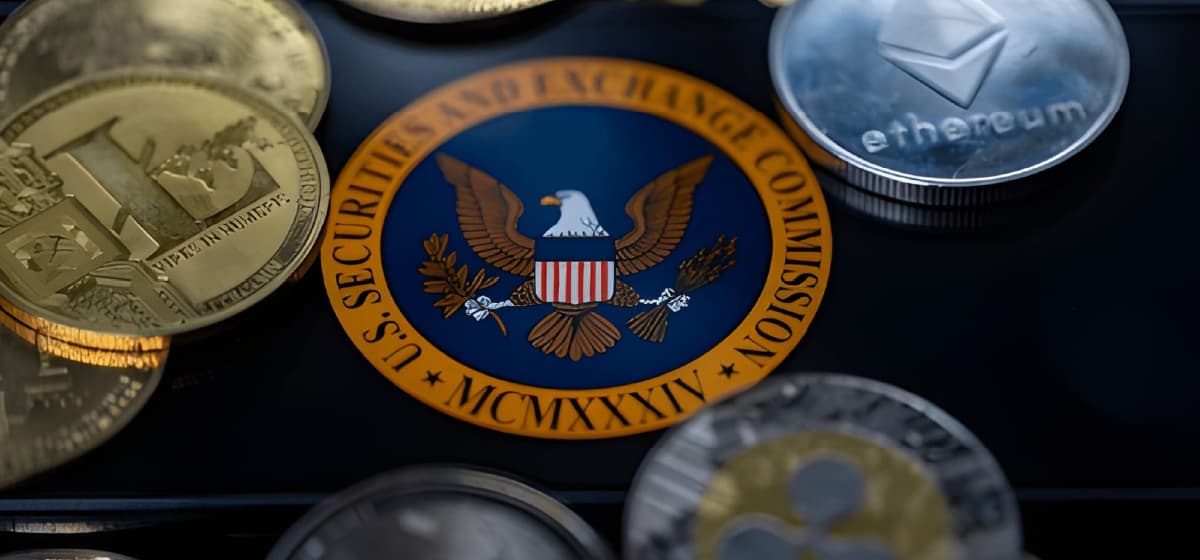
SEC Crypto Regulations – What You Need to Know
Key Takeaways
- The SEC oversees crypto assets using existing securities laws rather than purpose-built crypto regulation, meaning exchanges, token issuers, and investment advisers are all subject to frameworks that predate digital assets by decades.
- Two landmark developments in 2025 and 2026 have reshaped the regulatory picture: the GENIUS Act established the first federal framework for stablecoins, while a joint SEC and CFTC interpretive release formally classified major cryptocurrencies as digital commodities rather than securities.
- For investors and businesses, SEC regulations carry real consequences, from mandatory exchange registration to ICO compliance requirements, making regulatory awareness a practical necessity rather than a legal formality.
Cryptocurrency has grown into a multi-trillion-dollar asset class that is shaping global finance. Bitcoin (BTC) has become the world’s largest digital currency by market capitalization, ETFs are dominating headlines, and institutional investors are pouring billions into digital assets. However, uncertainties surrounding crypto regulations demand increased scrutiny from financial regulators, such as the U.S. Securities and Exchange Commission (SEC).
The SEC follows a predictable approach towards cryptocurrency regulations. As its enforcement targets major exchanges, new guidelines are emerging over time to shift the regulatory landscape. For cryptocurrency investors and businesses, understanding these regulations is essential.
Let’s explore SEC crypto regulations and their impact on the cryptocurrency industry.
What are Crypto Regulations?
Cryptocurrency regulations are the set of rules and guidelines established by financial and government authorities to oversee the use and trading of digital assets. These regulations aim to ensure transparency in the cryptocurrency market, prevent illegal activities such as money laundering and terrorism financing, and integrate digital currencies into the existing financial system.
Your $30,000 bonus + 10% discount are waiting on Bybit! Sign up and claim these rewards before they're gone. Time's ticking!
Cryptocurrencies are decentralized assets, meaning they are not tied to any financial or government institutions. These digital assets are largely unregulated, and their creators may feel that regulations are at odds with their intentions.
However, the need for regulations has been growing for the past few years as fraudulent activities and mismanagement of funds erode consumer trust.
Role of SEC in Crypto Regulations
The U.S. Securities and Exchange Commission (SEC) is a government agency that promotes market fairness through transparent and accurate financial reporting. The agency enjoys broader authority, including the ability to influence judicial precedent and initiate enforcement actions while exposing fraudulent and manipulative practices in the crypto industry.
SEC holds the authority to produce rules that govern the orderly conduct of services in the cryptocurrency market. Any entity that breaks the law, including exchanges, brokers, dealers, or others, is subject to legal proceedings under the agency’s regulations. Among the outcomes, the SEC can seek penalties, bring civil enforcement actions, refer cases for criminal prosecutions, and examine records of violators. However, the federal agency cannot press charges that carry a prison sentence.
More recently, the SEC has shifted toward a guidance-based approach, issuing interpretive releases and coordinating directly with the CFTC to establish clearer regulatory frameworks for digital assets.
Key SEC Rules
Historically, the SEC has relied on existing securities laws rather than purpose-built crypto rules, though this approach has been evolving in recent years.
Some of its most relevant regulations are:
- Securities Act of 1933: It regulates the issuance and sale of securities, such as cryptocurrency, to the public.
- Securities Exchange Act of 1934: It regulates trading of securities on exchanges and over-the-counter (OTC) markets.
- Investment Company Act of 1940: The act regulates investment companies, including hedge funds and mutual funds.
- Investment Advisers Act of 1940: It establishes provisions for investment advisers who manage investment portfolios for clients.
- Howey Test 1946: A legal standard established by a landmark Supreme Court ruling that defines what qualifies as a security under U.S. law. The SEC applies this test to determine whether a crypto asset falls under its regulatory jurisdiction
- Sarbanes-Oxley Act of 2002: The act affects corporate ethics and enhances corporate governance and accounting standards.
- Dodd-Frank Wall Street Reform and Consumer Protection Act: It increases regulatory oversight of financial institutions to ensure consumer protection.
Notable SEC Crypto Regulations
Over the past decade, the SEC has issued landmark regulations in the cryptocurrency industry. These regulations have shaped the regulatory landscape for digital currencies.
Some of the notable SEC crypto regulations are:
1. Initial Coin Offerings (ICOs)
Under the Securities Act of 1933, the SEC clarifies that all newly offered cryptocurrencies should comply with the federal securities laws. This means that ICO issuers should register their offerings or qualify to avoid enforcement actions.
The SEC has pursued several actions against ICOs that failed to register with the relevant authorities, resulting in millions of dollars in penalties. Once registered, the ICO issuers can qualify for exemptions, such as Regulation D (raise funds legally through private token sales without complete SEC registration) and Regulation S (exemption from SEC registration for non-U.S. investors).
2. Cryptocurrency Exchanges
Cryptocurrency exchanges are platforms for trading digital assets, such as Bitcoin (BTC), Ethereum (ETH), and others. These platforms have faced significant regulatory requirements in the United States.
The SEC has taken several steps against exchanges that allegedly operate unregistered. Leading cryptocurrency exchanges, such as Binance and Coinbase, have faced scrutiny over their services. Under the Securities Exchange Act of 1934, cryptocurrency exchanges that list security tokens (representing digital ownership in a real-world asset) are required to register as either a security exchange or an alternative trading system (ATS).
3. Stablecoin Regulations
Stablecoins are digital currencies pegged to a reference asset such as the U.S. dollar. The SEC has historically been involved in discussions around stablecoin classification, though its direct regulatory role has evolved significantly with new legislation.
In July 2025, President Donald Trump signed the GENIUS Act, into law, establishing the first federal regulatory framework for stablecoins in the United States. The law introduced sweeping changes to how stablecoins are issued and overseen. Under the GENIUS Act, stablecoin issuers are required to maintain reserves on a one-to-one basis using liquid assets such as U.S. dollars or short-term Treasury securities. Crucially, compliant payment stablecoins are explicitly excluded from the definitions of securities and commodities under federal law, meaning they fall outside the direct oversight of the SEC and the CFTC. Regulatory authority over permitted stablecoin issuers is instead distributed between federal banking regulators and qualifying state authorities. Both bank and non-bank entities can apply to become permitted issuers under the framework, subject to approval by the appropriate regulator.
4. Approval of Spot Bitcoin ETFs
Exchange-traded funds (ETFs) share several similarities with mutual funds. These funds generally track the price of an asset, such as Bitcoin (BTC) or Gold, or a basket of assets, like the S&P 500. They provide a more reliable way for institutional investors to invest in digital currencies, who are often concerned with the lack of regulations in the crypto market.
The SEC’s approval of Spot Bitcoin ETFs in 2024 marked a new era in the landscape of cryptocurrency investments in the United States. The SEC took several factors into account, including the nature of the underlying asset, overall implications for protecting investors, and potential risks of market manipulation. Bitcoin ETFs provide a scalable bridge between cryptocurrency and traditional finance, serving as a pivotal integration point.
Advantages of SEC Crypto Regulations
Cryptocurrency regulators aim to enhance investor protection and maintain market stability. The following are some of the key advantages of SEC crypto regulations.
- Investor protection: The crypto market is still relatively new, and many frauds and scams are associated with it. The SEC's enforcement could protect investors from fraud by ensuring that crypto enterprises provide accurate information to the public, enabling investors to make informed decisions.
- Market integrity: The lack of regulation makes the crypto market susceptible to manipulative practices. The SEC oversight could curb such practices to help maintain investor trust and market integrity.
- Legitimacy and adoption: The SEC regulations could legitimize crypto enterprises and attract more institutional investors. By creating a level playing field, the federal agency can encourage innovation and competition.
- Regulatory clarity: The SEC crypto regulations will help determine the boundaries between digital assets and traditional securities. It will provide more clarity for investors and entrepreneurs.
Final Thoughts
The regulatory landscape for cryptocurrency in the United States has changed considerably. The GENIUS Act established the first federal framework for stablecoins in 2025, and the SEC and CFTC followed in March 2026 with a joint interpretive release that formally classified Bitcoin, Ethereum, Solana, and other major cryptocurrencies as digital commodities, closing a decade-long debate over their legal status. For anyone operating in this space, keeping pace with these developments is simply part of doing business now.
Start trading on Bybit today and get 10% off fees PLUS up to $30,000 in bonuses! Sign up today and start saving while you earn. This exclusive offer won't last - claim yours now!
Disclaimer: All content on The Moon Show is for informational and educational purposes only. The opinions expressed do not constitute financial advice or recommendations to buy, sell, or trade cryptocurrencies. Trading involves significant risk and may result in substantial losses. Always seek independent financial advice before making investment decisions. The Moon Show is not responsible for any financial losses or decisions made based on the information provided.
Please view the full disclaimer at: https://themoonshow.com/disclaimer

How to Buy Bitcoin for Beginners – A Step-by-Step Guide
When you are new to crypto, buying Bitcoin (BTC) can feel complicated. In practice, the process...

How to Choose a Crypto Exchange in 2026: Fees, Security, Regulation
Over the years, cryptocurrency exchanges have evolved considerably. What first began as simple ...

All-time Highs: A Detailed Guide for Crypto Traders
All-time high is the highest price an asset hits since it starts trading. To learn more about A...