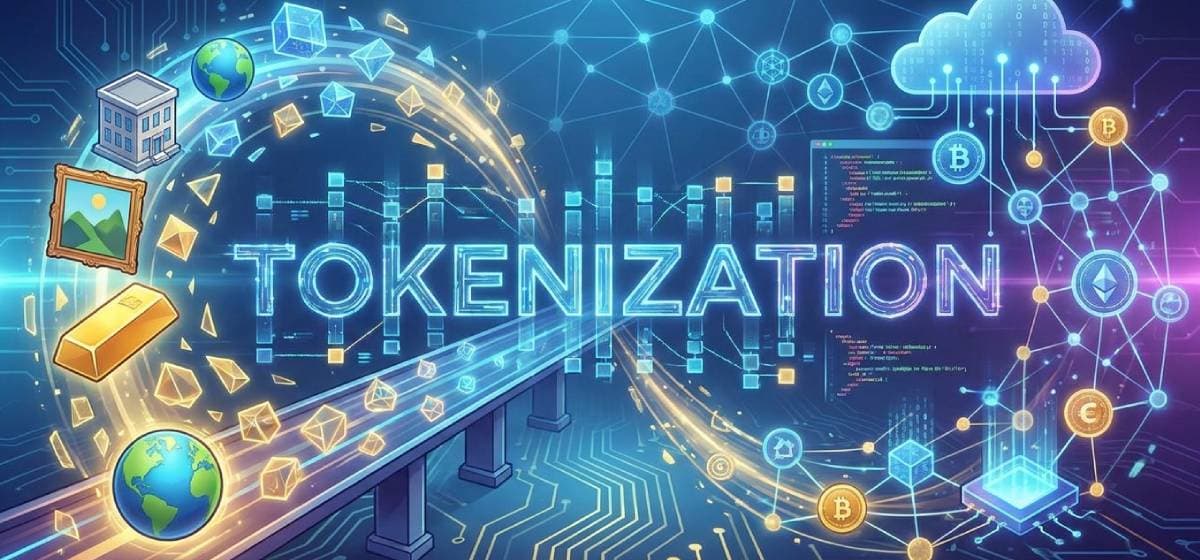
Understanding Tokenization and How It Is Transforming the Financial Landscape
Key Takeaways:
- Tokenization converts real-world assets into blockchain-based digital tokens, enabling ownership, trading, and management of assets such as real estate, stocks, commodities, and intellectual property on-chain.
- Fractional ownership is one of tokenization's biggest advantages, allowing investors to purchase small portions of high-value assets that were previously inaccessible due to large capital requirements.
- Tokenization improves liquidity by making traditionally illiquid assets easier to buy, sell, and trade through blockchain-powered marketplaces.
- Smart contracts automate key processes such as ownership transfers, dividend distributions, compliance checks, and interest payments, reducing costs and increasing efficiency.
- Real-World Asset (RWA) tokenization is rapidly growing, with major financial institutions including JPMorgan, Goldman Sachs, BlackRock, and Citi actively exploring tokenized financial products.
- Tokenization can significantly lower transaction costs and settlement times, enabling near-instant transfers compared to traditional financial systems that may take days to process.
- Regulatory uncertainty remains a major challenge, as governments and regulators worldwide continue to develop frameworks for tokenized assets and digital securities.
- The future of tokenization could lead to 24/7 global markets, broader financial inclusion, and more efficient capital markets through seamless digital asset trading.
- Many experts view tokenization as a multi-trillion-dollar opportunity, with the potential to reshape traditional finance in the same way the internet transformed communication and commerce.
Tokenization has emerged as one of the most transformative innovations in the cryptocurrency and blockchain industry. While cryptocurrencies such as Bitcoin (BTC) and Ethereum (ETH) introduced decentralized digital money, tokenization expands blockchain technology far beyond payments. It enables the representation of real-world assets, financial instruments, and ownership rights as digital tokens on a blockchain.
From real estate and stocks to commodities and intellectual property, tokenization is reshaping how assets are created, traded, and managed. As institutions, governments, and enterprises increasingly explore blockchain solutions, tokenization is becoming a key driver of the next phase of digital finance.
In this blog, we will look at what tokenization is, how it works, its benefits, use cases, challenges, and its future impact on the global economy.
Let’s begin!
What is Tokenization?
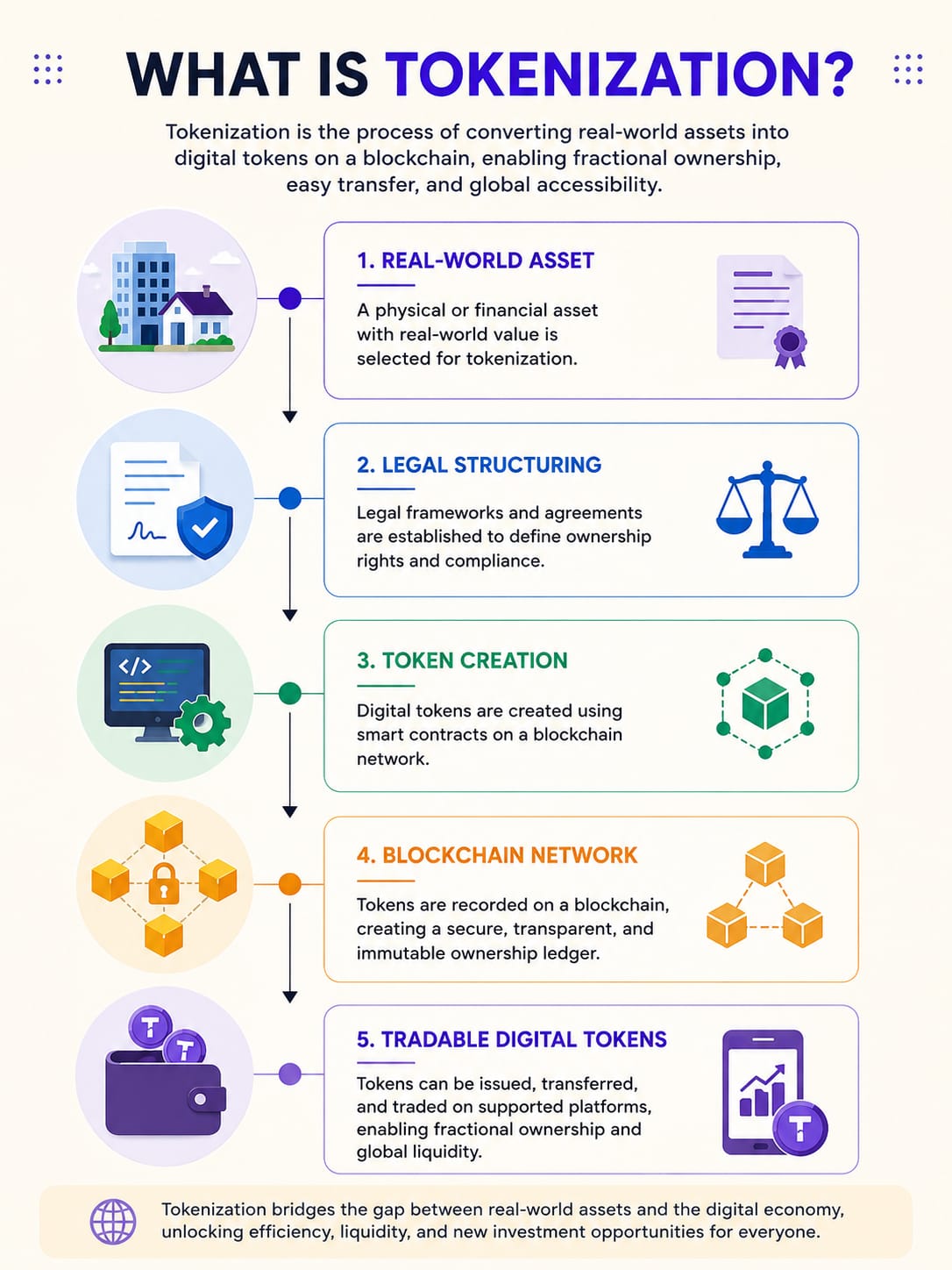
Tokenization is the process of converting ownership rights of an asset into a digital token that exists on a blockchain network. These tokens represent ownership, value, or access rights to a specific asset. The underlying asset can be:
- Real estate
- Stocks and bonds
- Commodities such as gold and silver
- Artwork and collectibles
- Intellectual property
- Private equity
- Carbon credits
- Stablecoins backed by fiat currencies
Each token acts as a digital representation of the asset and can be transferred, traded, or managed on a blockchain platform. For example, a $10 million commercial property can be tokenized into one million digital tokens worth $10 each. Investors can then purchase fractions of the property rather than buying the entire asset.
How Tokenization Works?
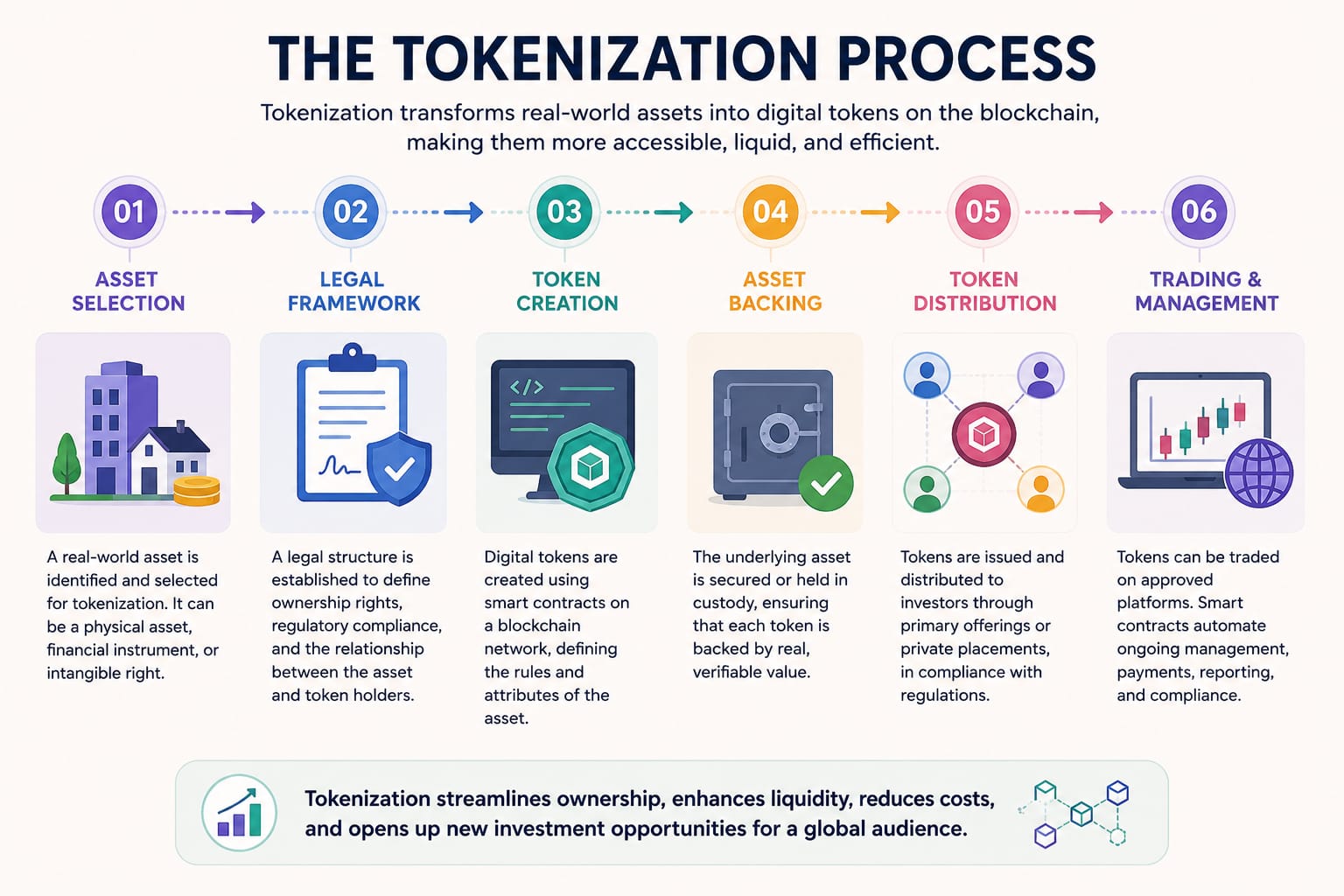
Tokenization follows a structured process that combines traditional asset management with blockchain technology.
- Asset Identification: An asset is selected for tokenization. This can be a physical asset, financial instrument, or digital asset.
- Legal Structuring: Ownership rights and compliance requirements are defined. Legal frameworks ensure token holders have recognized rights over the underlying asset.
- Token Creation: Digital tokens are created using smart contracts on a blockchain network such as Ethereum, Solana, Polygon, or Avalanche.
- Asset Backing: The asset is linked to the tokens through legal agreements or custodial arrangements that verify ownership.
- Distribution and Trading: Tokens are issued to investors and can be traded on approved marketplaces or blockchain platforms.
- Ongoing Management: Smart contracts automate processes such as dividend payments, revenue sharing, voting rights, compliance checks, and ownership transfers. This reduces administrative costs and improves efficiency.
Important Reads: What is Tokenomics
Types of Tokenized Assets
Tokenization can be applied to a wide range of asset classes. These include:
Real Estate
Real estate tokenization allows investors to buy fractional ownership in properties. Benefits include:
- Lower investment thresholds
- Improved liquidity
- Faster transactions
- Global investor access
Financial Securities
Stocks, bonds, and other securities can be tokenized to enable faster settlement and improved transparency.
Commodities
Physical assets such as gold, silver, oil, and agricultural products can be represented digitally on blockchains.
Art and Collectibles
Tokenization allows investors to own fractions of high-value artwork and rare collectibles. NFTs or Non-Fungible Tokens are the best examples of tokenized assets.
Intellectual Property
Music royalties, patents, trademarks, and copyrights can be tokenized to create new investment opportunities.
Benefits of Tokenization
Here are some benefits of tokenization that you should know.
Increased Liquidity
Many traditional assets are illiquid and difficult to sell quickly. Tokenization enables assets to be divided into smaller units that can be traded more easily. For example, instead of selling an entire property, investors can sell portions of their tokenized holdings.
Fractional Ownership
Tokenization lowers barriers to entry by allowing investors to purchase small fractions of expensive assets. This democratizes access to investments that were previously reserved for wealthy individuals or institutions.
Enhanced Transparency
Blockchain technology provides an immutable and transparent record of ownership and transactions. The benefits include:
- Reduced fraud
- Better auditability
- Improved trust among participants
Faster Settlement
Traditional asset transactions often require multiple intermediaries and can take days to settle. Tokenized assets can settle within minutes or even seconds on blockchain networks.
Reduced Costs
Automation through smart contracts eliminates many administrative tasks and intermediary fees. This can significantly lower transaction and operational costs.
Tokenization and Real-World Assets (RWAs)
One of the fastest-growing sectors in crypto is Real-World Asset (RWA) tokenization. RWA tokenization involves bringing traditional assets onto blockchain networks. Major financial institutions are increasingly embracing this trend. Some of the standout examples include:
- Tokenized Treasury bonds
- Tokenized money market funds
- Tokenized private credit
- Tokenized real estate funds
- Tokenized commodities
Industry leaders such as Goldman Sachs, JPMorgan, BlackRock, Franklin Templeton, and Citi have launched initiatives exploring tokenized financial products. Many experts believe RWAs could become a multi-trillion-dollar market over the coming decade.
The Role of Smart Contracts
Smart contracts are self-executing programs that operate on blockchain networks. In tokenization, smart contracts automate critical functions such as:
- Ownership transfers
- Interest payments
- Dividend distribution
- Compliance verification
- Voting mechanisms
Because smart contracts execute automatically when predefined conditions are met, they reduce human error and improve efficiency. For example, a tokenized bond could automatically distribute interest payments to token holders on scheduled dates.
Challenges Facing Tokenization
Despite its immense potential, tokenization is still in its early stages and faces several challenges that could slow widespread adoption. Regulatory concerns, security risks, and infrastructure limitations continue to be key hurdles for the industry.
Regulatory Uncertainty
One of the biggest obstacles to tokenization is the lack of clear and consistent regulations across different jurisdictions. Since tokenized assets often blur the line between traditional securities and digital assets, regulators are still determining how they should be classified and governed. Different countries have adopted varying approaches, creating uncertainty for businesses and investors. Until comprehensive regulatory frameworks are established, many institutions may remain cautious about fully embracing tokenization.
Custody and Asset Verification
For tokenization to succeed, investors must trust that the underlying assets genuinely exist and are properly managed. This requires reliable custodians, transparent auditing processes, and strong legal structures that link the digital token to the real-world asset. Any doubts regarding ownership rights or asset backing can undermine investor confidence and limit adoption.
Limited Market Adoption
Although tokenization has gained significant attention, it has not yet achieved mainstream adoption. Many financial institutions continue to rely on legacy systems that were not designed for blockchain integration. Transitioning to tokenized infrastructure requires investment, education, and collaboration between traditional finance and blockchain providers. Greater participation from institutions and regulators will be essential for long-term growth.
Technology and Security Risks
Like any emerging technology, blockchain networks and smart contracts are not immune to risks. Coding vulnerabilities, cyberattacks, network congestion, and operational failures can impact tokenized assets and platforms. Smart contract bugs, in particular, can lead to financial losses if not properly identified and addressed. As the industry evolves, stronger security standards and rigorous auditing practices will be necessary to protect investors and maintain trust in tokenized markets.
Interoperability Challenges
The tokenization ecosystem currently consists of multiple blockchain networks, each with its own standards and infrastructure. This fragmentation can make it difficult for tokenized assets to move seamlessly between platforms. Improving interoperability between blockchains and traditional financial systems will be crucial for creating a truly global and efficient tokenized asset market.
Investor Education and Awareness
Many investors still have limited knowledge of blockchain technology and tokenized assets. Misunderstandings about digital ownership, custody, and regulatory protections can create hesitation among potential participants. Increased education and awareness will play a vital role in helping investors understand the benefits and risks associated with tokenization, ultimately supporting broader adoption across financial markets.
The Future of Tokenization
The future of tokenization appears highly promising. As blockchain technology matures and regulations become clearer, more assets are expected to move on-chain.
Potential future developments include:
- 24/7 global asset trading
- Instant settlement systems
- Greater financial inclusion
- Expanded fractional ownership opportunities
- Increased institutional adoption
- Tokenized government bonds and public infrastructure
Many analysts compare tokenization's potential impact to the digitization of information through the internet. Just as the internet transformed communication and commerce, tokenization could transform ownership and financial markets.
Final Thoughts!
Tokenization is revolutionizing the way assets are owned, traded, and managed. By converting real-world assets into blockchain-based digital tokens, it improves liquidity, accessibility, transparency, and efficiency. From real estate and securities to commodities and intellectual property, tokenization is unlocking new opportunities for investors and businesses alike.
While regulatory and technological challenges remain, the growing involvement of major financial institutions suggests that tokenization is becoming a foundational component of the future financial system. As adoption accelerates, tokenization may bridge the gap between traditional finance and decentralized technologies, creating a more inclusive and efficient global economy.
Your $30,000 bonus + 10% discount are waiting on Bybit! Sign up and claim these rewards before they're gone. Time's ticking!
Disclaimer: All content on The Moon Show is for informational and educational purposes only. The opinions expressed do not constitute financial advice or recommendations to buy, sell, or trade cryptocurrencies. Trading involves significant risk and may result in substantial losses. Always seek independent financial advice before making investment decisions. The Moon Show is not responsible for any financial losses or decisions made based on the information provided.
Please view the full disclaimer at: https://themoonshow.com/disclaimer
What is a Bull Flag in Crypto Trading?
Traders use a bull flag pattern to assess whether a sharp rally might continue after a brief co...

Cup and Handle Pattern: Crypto Trading Rules, Targets, and Risks
The cup and handle is a bullish continuation chart pattern that signals a potential upward pric...
How Does Bitcoin Work? Blockchain, Mining, and Wallets Explained
Bitcoin is the world’s first decentralized digital currency that lets people send money directl...