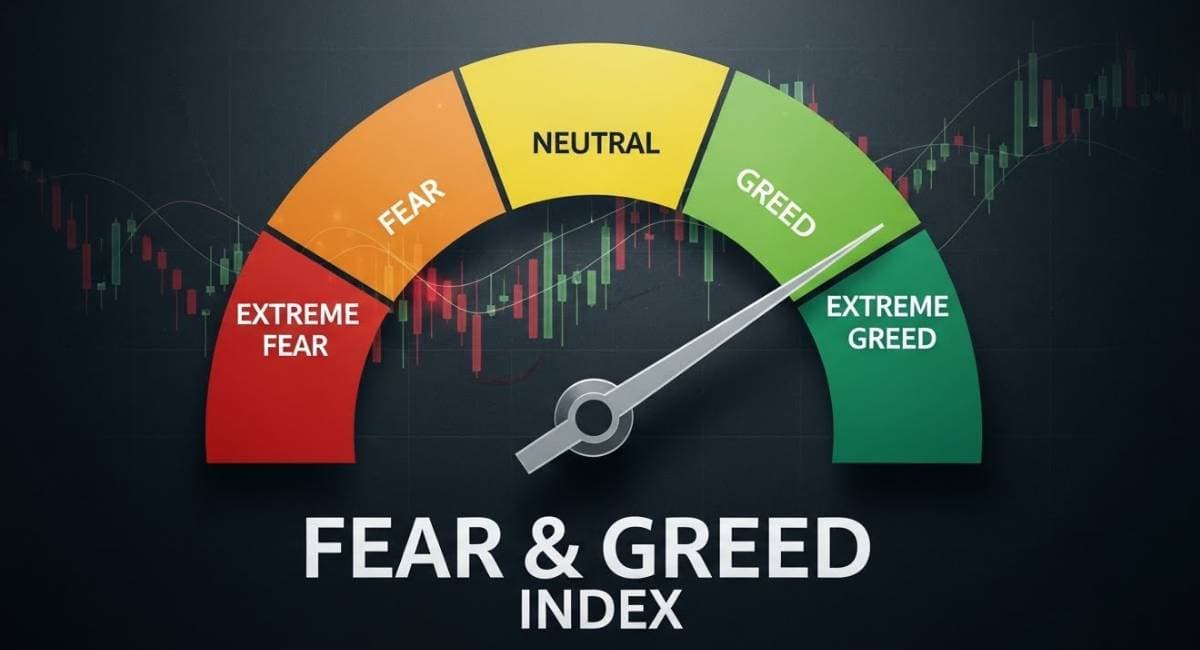
Crypto Fear and Greed Index: A Crypto Trader’s Complete Guide
The Crypto Fear and Greed Index is a vital tool that gives an overview of the market sentiment. It captures how the value of assets like Bitcoin is affected by the emotions of investors. There are two extremes of the index – Extreme Fear and Extreme Greed. When the price of an asset is constantly moving, the Fear and Greed Index is referred by many as a tool to determine how strongly the investors want to sell or buy the asset.
Who is this for: Crypto traders who actively look for opportunities to sell or buy crypto can get a good idea of whether the market sentiment is favourable towards their preferred action or not.
Key Takeaways
- The index measures the market sentiment based on seven crucial key indicators.
- ‘Extreme Fear’ generally indicates potential buying opportunities, whereas, ‘Extreme Greed’ indicates the market may face correction.
- The index should be used alongside other technical indicators such as RSI for better results.
- The index also gives a reality check to traders, helping them avoid emotional and impulsive decisions fuelled by feeling of FOMO or social media hype.
- The readings on the index can be used for DCA adjustment.
What is the Crypto Fear and Greed Index?
The Fear and Greed Index was originally developed in 2012 by CNN Business for the traditional finance market. The purpose of the index was to measure the market sentiment based on seven key indicators.
Following the same idea and serving the same purpose, the Crypto Fear and Greed Index was developed in 2018 by a data analytics platform called Alternative.me.
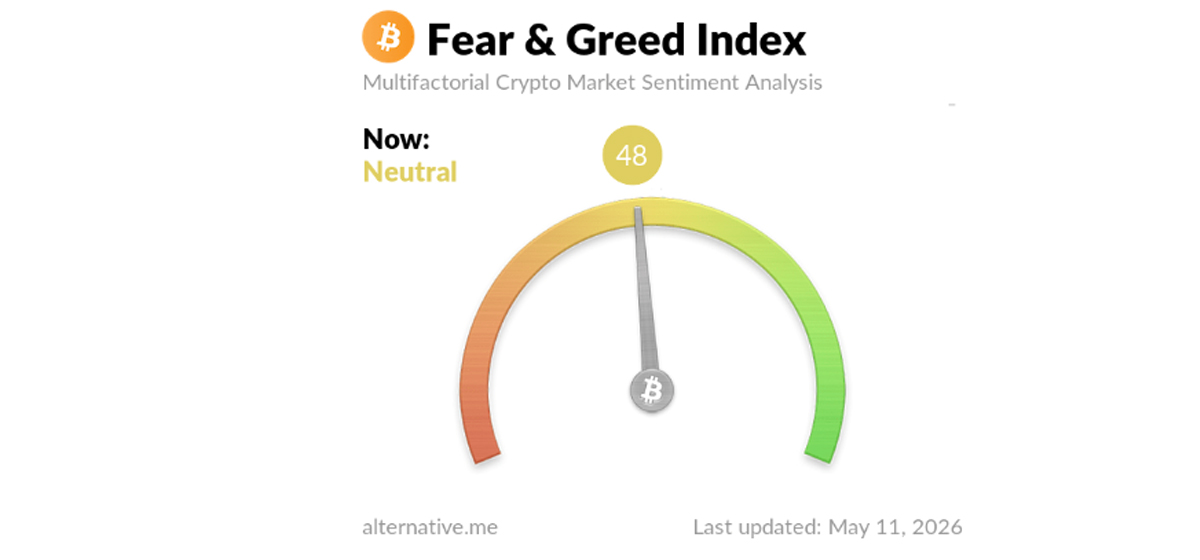
The index has a scale ranging from 0 (Extreme Fear) to 100 (Extreme Greed). Data points such as volume, volatility and social media sentiment are analysed to measure crowd psychology that can eventually help traders in making well-informed buying and selling decisions.
How the Index is Calculated?
The Crypto Fear and Greed Index primarily focuses on how Bitcoin is moving and the sentiment around it as BTC heavily influences other assets. The calculation is divided into 5-6 categories that focus on different aspects, ensuring that the final reading from 0 to 100 is accurate and balanced.
Data Sources and Weighting
The index is reliant on a very specific formula, which makes sure that the reading isn’t commanded by any single factor. The exact proportions can vary slightly, depending on the provider you use but the standard breakdown is the same and as follows:
Volatility (25%)
It measures and compares the current price movement with the average values noted over a period of last 30-90 days. If the volatility is unusually high, it typically indicates a fearful market.
Market Volume / Momentum (25%)
It tracks and compares the current buying volume with the average buying volume over the last 30-90 days. If the market is positive and the buying volume is high, it indicates the market is greedy.
Social Media (15%)
It tracks hashtags and engagement on social media platforms, especially X. Engagement rates and volume of posts help determine the environment surrounding Bitcoin.
Dominance (10%)
It tracks any rise or fall in Bitcoin dominance. A rise suggests fear and a fall in the BTC dominance suggests greed.
Trends (10%)
The index uses data from Google Trends to calculate if the market is more fearful or greedy. Searches of keywords like “Bitcoin scam” typically suggest fear, whereas, keywords like “how to buy crypto” indicates greed.
Surveys (15%)
This is another aspect that contributes to the reading determined by the index. However, it is currently paused by some index providers. By using surveys, large groups of investors were asked how they felt about the market, giving a closer look at the human sentiment.
The 0 to 100 Scale
The scale ranges from 0 (Extreme Fear) to 100 (Extreme Greed). Here is the breakdown of the scale.
- 0-24 (Extreme Fear): this is where the investors panic. However, some contrarians consider this to be a “buying zone.”
- 25-49 (Fear): market remains cautious and away from complete meltdown.
- 47-54 (Neutral): a balanced market sentiment
- 55-74 (Greed): people are optimistic and new retail investors often enter the market at this point.
- 75-100 (Extreme Greed): this is often seen as a “selling zone” by disciplined traders because the market is overheated and a price correction can be expected.
Decoding “Extreme Fear”
The market is in Extreme Fear when the reading on the index is between 0-24. This is generally a very difficult time for investors to hold their asset. However, historically speaking, it has been the most lucrative time to buy an asset.
How Market Behaves during Fear?
When fear hits, any kind of negative news or just a hint immediately takes the spotlight. Investors start to panic, thinking they may not get a better chance to sell and hence, they end up “panic selling”. Because of this frantic selling, cascading liquidations are often triggered, and a chain reaction begins. Leveraged positions are automatically sold and the price eventually drops faster and further than it normally would.
The Contrarian View
The contrarian crypto trading is based on Warren Buffett’s famous statement, "Be fearful when others are greedy, and greedy when others are fearful,". The most successful traders often go in when the market sentiment is at its lowest. This is seen as a scenario where the “weak hands” have exited the market and the selling pressure is close to exhaustion. In other words, according the contrarian view, Extreme Fear is a point where the asset is available to be purchased at a discount.
Historical Examples
- The COVID-19 Crash (March 2020): the price of Bitcoin fell to $4,000 and the index hit single digits (~8 to 10). Investors who saw this as a phase of “Extreme Fear” instead of panicking and thinking crypto was dead, benefitted from their strategic plays in the following year.
- The FTX Collapse (November 2022): the market sentiment was at Extreme Fear for weeks and despite the FTX collapse being a massive hit to the industry, it also ultimately marked the bottom of the bear market. This resulted in a generational entry point before the market recovered in 2023.
Decoding Extreme Greed
When the index rises above 74, it is not only Extreme Greed, but it is also a “danger zone” where investors are so excited that they completely overlook risk management.
How the Market Behaves During Greed?
When the market is in Extreme Greed, investors are just ecstatic seeing the success of other investors online. Headlines of people turning into millionaires overnight causes a sense of FOMO (fear of missing out) and people simply rush into the market without a realistic plan.
Overextension – The Rubber Band Effect
It is important to always keep in mind that the market cannot keep moving up forever. When everyone has bought the asset, there is no buy-side liquidity left and hence, the price of the asset doesn’t go higher. Extreme Greed indicates the “rubber band” has been stretched to its limit and all it needs for the over-leveraged structure to come down is a shred of negative news and an intense market correction occurs.
The Danger of Buying the Top
Buying when the market sentiment is positive and prices are going up makes investors feel confident about their purchase. However, experienced and disciplined traders understand and can recognize when the sentiment becomes unsustainable, calling for a timely exit from the market.
Crypto Fear and Greed Index: Limitations and Criticisms
The Crypto Fear and Greed Index is a powerful and widely used tool. However, it is not flawless. Here are some limitations of the tool:
Social Media Bias
The social media component contributes 15% to the reading of the tool, however, it is likely to be influenced by the “echo chamber” effect. High social volume doesn’t always show a complete picture of the actual market sentiment, from real investors. The social volume can be swayed by paid influencers, bot comments or groups of people promoting or “shilling” a specific narrative. This may cause the tool to show “Greed” while the actual majority is feeling otherwise.
The Bitcoin Bias
The Fear and Greed Index primarily focuses on Bitcoin’s behaviour and the sentiment around it to calculate the reading. Bitcoin does influence the price of other assets in the crypto space, however, in events like the Altseason, major altcoins like Ethereum and Solana start moving on their own as BTC’s dominance drops. In such scenarios, a trader looking at the tool showing “Fear” may overlook that other sectors such as Gaming Tokens are actually on the opposite end of the tool.
The “Whale” Factor
Traders need to keep in mind some manipulation risks when it comes to blindly trusting tools like the Crypto Fear and Greed Index. Whales can theoretically temper with the calculation of the tool by manipulating the market sentiment. They may trigger liquidations, which changes the volume metrics and volatility. For example, if a big player wants to buy an asset at a lower price, they may intentionally create “Fear”, causing retail investors to panic selling.
How to Strategically Use the Crypto Fear and Greed Index?
Using the Crypto Fear and Greed Index with other tools or technical indicators ensures far better results in determining the mood of the market and what your next step should be.
DCA Adjustments
Integrating the Crypto Fear and Greed Index in your Dollar-Cost Averaging (DCA) strategy and adjusting it accordingly is one of the ways you can strategically make use of the tool. When the index hits ‘Extreme Fear’ increase your purchasing amount and when it hits ‘Extreme Greed’ decrease or pause your purchases. This will ultimately lower your average entry price with time and you won’t have to “time” the market perfectly.
Risk Management
When the index is at “Greed” for a few weeks, it can be a good move to tighten your stop-loss orders to protect your profits. Similarly, when the index is at “Extreme Fear” for some time, you can consider widening your stop-loss orders and prevent getting “wicked out” by temporary price swings.
Using a Combination of Indicators
The Crypto Fear and Greed Index can be used as a standalone tool just to get a general idea about the market sentiment. However, it should not be used in isolation to make trading decisions. Use it as a secondary tool with something like confluence, and the experience completely changes.
For example, the index is at 15 (Extreme Fear) and Bitcoin is oversold on the RSI on the daily chart and it is close to a major support level, then you will get a much stronger buying signal.
What is a good Fear and Greed index?
A few top platforms have their own crypto fear and greed index, out of which the most reliable and widely cited source is Alternative.me. Other well-known and trusted sources include Coinglass, CoinMarketCap and Binance Square.
FYI: CoinMarketCap uses their unique and private formula to assess market trends and filter social media to measure the fear and greed index reading. Binance Square, on the other hand, combine volume insights and real-time trading behaviors to get their readings.
What has been the highest Crypto Fear and Greed Index reading?
The all-time high Crypto Fear and Greed reading was 95 (Extreme Greed) in June 2019. This occurred during a huge price rally where Bitcoin’s price when from ~$4,000 to ~$14,000 in a few months.
What has been the lowest Crypto Fear and Greed Index reading?
The all-time low Crypto Fear and Greed reading was 5 (Extreme Fear) on February 12, 2026. The reading crashed this low, following the well-known 10/10 liquidation event on October 10, 2025.
Closing Thoughts
The Crypto Fear and Greed Index is an important tool that measures how the market sentiment changes in a space that moves fast and is heavily influenced by emotions. By assessing and identifying the difference between panic-driven liquidations, frantic selling and buying due to FOMO, you can become an observer instead of an emotional trader or investor. This tool is crucial in identifying market exhaustion, however, it is not infallible and should be used with other tools and technical indicators. Most importantly, every investor and trader should be disciplined and maintain emotional neutrality to ensure the decisions they take are data-driven and not solely emotional.
FAQs
What is the fear and greed index?
The fear and greed index is a sentiment indicator that measures whether the market is dominated by fear or greed at any given time.
How often is the fear and greed index updated?
Most versions of the index are updated daily to share the fresh market sentiment data.
What does extreme fear mean in the index?
Extreme fear usually suggests investors are selling heavily, and the market may be oversold.
What does extreme greed indicate?
Extreme fear usually suggests investors are buying aggressively, and the market may be overvalued.
What factors influence the fear and greed index?
Volatility, trading volume, social media sentiment, search trends, surveys, and dominance of a cryptocurrency in a market are the factors that influence the fear and greed index.
Join WEEX and unlock 40 USDT back with your first deposit-and-trade step. Deposit 100 USDT and start trading.
Disclaimer: All content on The Moon Show is for informational and educational purposes only. The opinions expressed do not constitute financial advice or recommendations to buy, sell, or trade cryptocurrencies. Trading involves significant risk and may result in substantial losses. Always seek independent financial advice before making investment decisions. The Moon Show is not responsible for any financial losses or decisions made based on the information provided.
Please view the full disclaimer at: https://themoonshow.com/disclaimer

How to Buy Bitcoin for Beginners – A Step-by-Step Guide
When you are new to crypto, buying Bitcoin (BTC) can feel complicated. In practice, the process...

How to Choose a Crypto Exchange in 2026: Fees, Security, Regulation
Over the years, cryptocurrency exchanges have evolved considerably. What first began as simple ...
All-time Highs: A Detailed Guide for Crypto Traders
All-time high is the highest price an asset hits since it starts trading. To learn more about A...