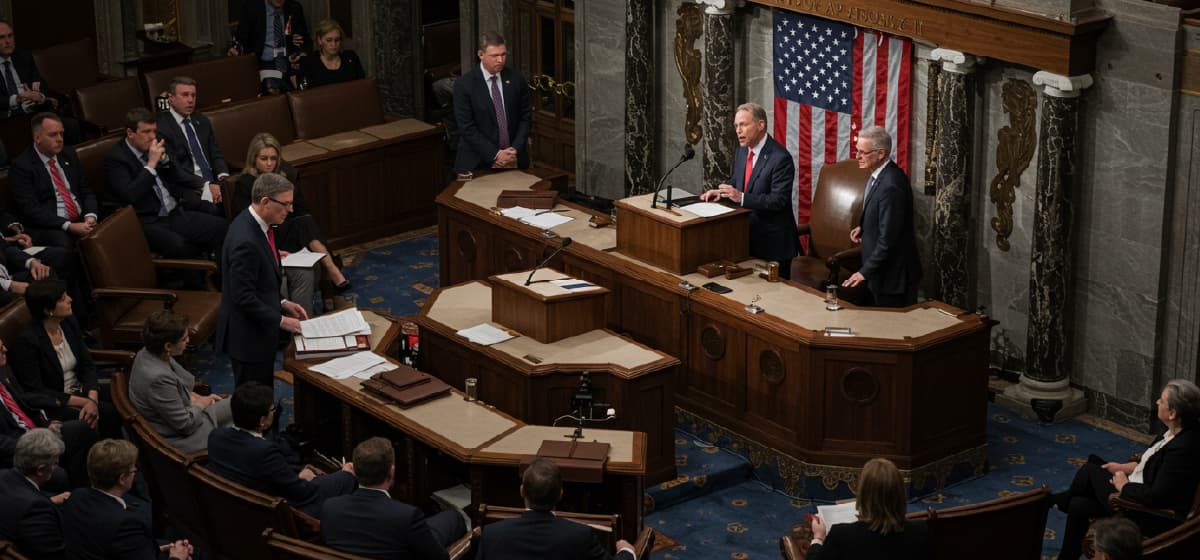
US House Postpones Key Vote on Crypto Legislation
The vote for key crypto legislations has been delayed. In a move that surprised the world, U.S. House Speaker Mike Johnson decided to delay the vote that was set for July 16. The decision was made when the members of the House Freedom Caucus received pushback. The crypto bills hanging in the balance include the Market Structure Clarity Act and the GENIUS Act.
This delay has shaken the crypto markets and raised concerns over regulatory uncertainty in the country.
Vote on Key Crypto Legislation Delayed
The GENIUS Act and the CLARITY Act are key parts of U.S. President Donald Trump’s broader financial reform agenda. Both of the bills are designed with the goal to redefine the regulatory framework for stablecoins, decentralized finance (DeFi) operations, and cryptocurrencies.
Most of the people who opposed the measures were worried about central bank digital currencies (CBDCs). Conservative politicians like Rep. Andy Harris and Rep. Marjorie Taylor Greene called for more openness and clarity in the process. Speaker Johnson is still determined to get the bill ahead, even though it has been delayed.
Important Reads: U.S. House Declares July 14 “Crypto Week” to Vote on Key Digital Asset Bills
“This is the legislative process we are in now, and we're going to work with our members to get the answers they need,” Johnson stated, indicating continued negotiations to resolve intra-party disagreements.
The delay has an immediate effect on the whole crypto market. Bitcoin, which had temporarily gone over $120K in hopes of getting clearer rules from the bills, became more volatile. Traders reacted quickly to the news, and market watchers think there will be more uncertainty until a new vote is set.
The GENIUS Act is getting a lot of attention from people in the industry because it sets out a specific set of rules for stablecoins. If passed, U.S.-issued stablecoins like USDC will have to follow very rigorous restrictions, which might change the way these digital assets are created and traded.
On the other hand, the Market Structure Clarity Act wants to make it clear which digital assets the Securities and Exchange Commission (SEC) and the Commodity Futures Trading Commission (CFTC) have control over. Experts argue that this explanation could finally make crypto compliance rules more consistent.
Analysts say that any protracted delay might have big effects on both how investors feel and on crypto innovation in the U.S. as a whole. Many crypto firms have vowed to move their operations abroad because they are worried about unclear rules. There is no new date for the vote yet, but people in the House say it might happen as soon as next week, depending on how negotiations proceed inside the Republican caucus.
The crypto business is nonetheless on edge until then, stuck between a demand for clear rules and the political conflicts that are holding them back.
Join WEEX and verify your account to claim a 10–100 USDT coupon. Fund your account to access deposit bonuses and ongoing trading rewards.
Disclaimer: All content on The Moon Show is for informational and educational purposes only. The opinions expressed do not constitute financial advice or recommendations to buy, sell, or trade cryptocurrencies. Trading involves significant risk and may result in substantial losses. Always seek independent financial advice before making investment decisions. The Moon Show is not responsible for any financial losses or decisions made based on the information provided.
Please view the full disclaimer at: https://themoonshow.com/disclaimer

Deribit’s $1.47 Billion Bitcoin Options Expiry Arrives With Puts Outnumbering Calls
Bitcoin options worth approximately $1.47 billion reached their scheduled October 16 expiry on ...

Thailand’s Bitcoin and Ethereum ETF Rules Take Effect, Opening Path to Regulated Listings
Thailand’s ETF regulations take effect on October 16, 2026, establishing a framework for locall...

Bitcoin Rebounds to $82,000 After Brief Drop Below $80,000 as Asian Stocks Recover
Bitcoin rose 1.3% to nearly $82,000 in Asian morning hours on October 16, after falling below $...