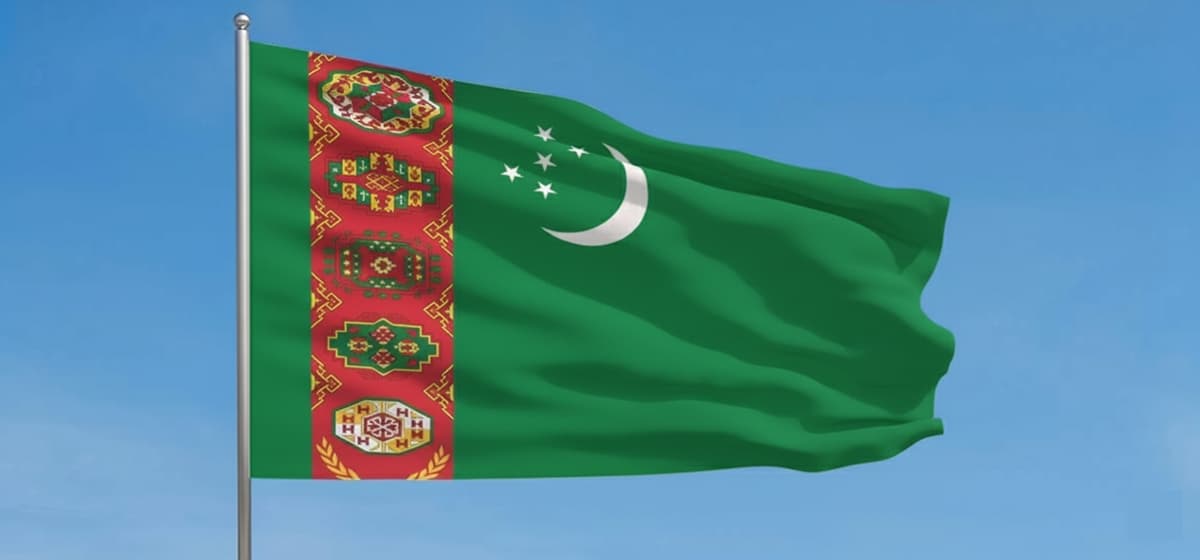
Turkmenistan Legalizes Crypto Mining and Exchanges to Support Economic Growth
Key Takeaways:
- Turkmenistan now allows crypto mining and exchanges, but only inside a tight legal and regulatory framework.
- The government treats crypto as an investment asset, not as money people can use to pay for things.
- The main goal behind the move is to bring in foreign investment and grow the economy without losing control over the system.
Turkmenistan has formally legalized cryptocurrency mining and crypto exchanges as part of a broader effort to modernize its economy and attract foreign investment. The government hopes the move will bring new capital into the country while creating a clear legal environment for digital asset activity.
The new law, titled the Law on Virtual Assets, came into force after President Serdar Berdimuhamedov signed it on November 28. It establishes rules for how virtual assets can be created, used, and traded inside Turkmenistan. The legislation also defines how crypto businesses must operate and how authorities will oversee the sector.
Officials present the law as a step toward economic diversification, especially at a time when many developing countries are exploring digital finance as a way to grow beyond traditional industries.
Get started on WEEX with a simple 40 USDT reward. Deposit 100 USDT, make your trade, and claim the bonus.
Virtual Assets Defined as Property, Not Currency
The law clearly states that virtual assets are treated as property rather than money or financial securities. This means cryptocurrencies such as Bitcoin cannot be used as a direct payment method for goods or services inside Turkmenistan.
Instead, the government views digital assets as investment instruments or digital property that can be owned, transferred, or traded under regulated conditions.
The legislation also divides virtual assets into two categories. The first category includes secured assets, which are backed by an underlying asset such as a commodity or financial instrument. The second category includes unsecured assets, which are not backed by anything tangible. Bitcoin and similar cryptocurrencies fall into this unsecured group.
By drawing this distinction, lawmakers aim to reduce confusion around the legal status of different types of tokens and provide clarity for investors, businesses, and regulators.
Mining Becomes Legal Under Strict Conditions
The new law allows both individuals and companies to engage in cryptocurrency mining. However, all mining activity must follow strict rules.
Miners must register with the Central Bank of Turkmenistan before operating. They also have to meet technical and operational standards that the authorities will define and enforce. The government wants to ensure that mining does not disrupt the national power supply or operate in hidden or illegal ways.
The law explicitly bans covert mining practices such as cryptojacking, where hackers secretly use other people’s devices to mine cryptocurrency without consent. This ban aims to protect users, businesses, and public institutions from cyber abuse.
By allowing legal mining while banning abusive practices, the government seeks to control the sector rather than push it into the underground economy.
Crypto Exchanges and Custody Services Get Legal Status
Alongside mining, the law authorizes the operation of cryptocurrency exchanges and custodial services. These platforms must obtain a license from the central bank before offering services in Turkmenistan.
Both local and foreign companies can apply to run exchanges, with one key restriction. Entities based in or linked to offshore jurisdictions cannot own or operate these services. This rule reflects the government’s concern about transparency and financial oversight.
Licensed exchanges must follow strict compliance rules. They must verify users through know-your-customer procedures and enforce anti money-laundering standards. Anonymous wallets and anonymous transactions are not permitted under the law.
These requirements aim to prevent the misuse of crypto for illegal activities while still allowing regulated trading and investment.
Government Targets Investment and Economic Development
Turkmenistan’s leadership frames the crypto legalization as part of a larger strategy to attract foreign capital and modernize the financial system.
A 2025 study on member states of the Organization of Islamic Cooperation, which includes Turkmenistan, found that crypto-friendly policies can support economic growth in developing economies. The study highlighted improved financial access and greater interest from international digital investors as key benefits.
Muhammad Rheza Ramadhan, an economist and researcher at Indonesia’s Ministry of Finance, said that legalization often plays a crucial role in attracting digital investment.
“Clear crypto regulation helps developing countries grow by improving financial inclusion and giving foreign investors legal certainty,” he said.
Turkmenistan appears to be following this logic by offering a structured, controlled environment rather than leaving crypto activity unregulated or illegal.
Balancing Innovation with Control
The law reflects a careful balancing act. On one hand, it opens the door to innovation, digital business, and foreign investment. On the other hand, it keeps tight government control over how crypto operates inside the country.
By refusing to recognize crypto as legal tender, the state preserves control over its monetary system. By requiring licenses, registration, and identity checks, it limits financial risks and criminal misuse.
This shows that that the country does not see crypto as a replacement for its existing financial system but as a separate, regulated asset class that can contribute to growth if properly managed.
Conclusion
Turkmenistan’s decision to legalize cryptocurrency mining and exchanges marks a significant shift in its economic policy. The new law creates a legal framework for virtual assets, defines them as property, and allows regulated mining and trading under strict oversight. The government aims to attract foreign investment, encourage digital innovation, and boost economic development while maintaining strong control over financial risks and illegal activity.
Whether this strategy succeeds will depend on how effectively the rules are enforced and whether international businesses view the regulatory environment as stable and transparent. For now, the move signals that Turkmenistan wants a place in the growing digital economy, but on its own carefully defined terms.
Join WEEX and unlock 40 USDT back with your first deposit-and-trade step. Deposit 100 USDT and start trading.
Disclaimer: All content on The Moon Show is for informational and educational purposes only. The opinions expressed do not constitute financial advice or recommendations to buy, sell, or trade cryptocurrencies. Trading involves significant risk and may result in substantial losses. Always seek independent financial advice before making investment decisions. The Moon Show is not responsible for any financial losses or decisions made based on the information provided.
Please view the full disclaimer at: https://themoonshow.com/disclaimer
Kraken Parent Payward Launches 24/7 Settlement With Singapore Gulf Bank
Payward, the parent company of crypto exchange Kraken, has partnered with Singapore Gulf Bank (...

Bitcoin ETFs Draw $2.65 Billion as October Opens With Inflows
U.S. spot Bitcoin exchange-traded funds (ETFs) recorded $2.65 billion in net inflows in Septemb...
Robinhood Flags SEC Stock-Token Limits as Regulator Proposes Crypto Custody Rules
Robinhood’s crypto chief says the Securities and Exchange Commission’s innovation exemption cou...