The Ultimate Beginner’s Guide to Crypto Swing Trading
Cryptocurrencies are decentralized digital assets that offer a sustainable alternative to traditional fiat currency. The cryptocurrency market is highly volatile, which means the prices can fluctuate significantly at any time. This unpredictability can be overwhelming for new traders, who need to build a market understanding gradually. Digital currencies exhibit patterns of upswings and downswings, offering traders a chance to increase their profits even during price fluctuations through smart strategies.
One strategy that can help you capitalize on these market movements is crypto swing trading. This strategy involves trading cryptocurrencies during bear or bull market cycles to capitalize on volatility. The goal for traders is to buy when the prices are low and sell when they are high.
Let’s find out more.
What is Cryptocurrency Trading?
Before exploring swing trading, it is essential to understand the basics. Cryptocurrency trading involves the buying and selling digital currencies, such as Bitcoin (BTC) and Ethereum (ETH), at a specific market price. The aim is to generate profits by analyzing market indicators and adopting trading strategies that align with the potential price movements.
Your $30,000 bonus + 10% discount are waiting on Bybit! Sign up and claim these rewards before they're gone. Time's ticking!
Today, traders use both basic and advanced trading strategies to capitalize on market movements. Some of the popular methods include swing trading, day trading, scalping, and holding. Swing trading refers to holding positions for some time to profit from price fluctuations. In day trading, one opts for quick and small profits within a day. With scalping, traders can expect frequent gains from small price movements. Lastly, holding (HODLing) is one of the most popular methods to keep digital currencies for an extended period, awaiting a potential increase over time.
In this swing trading guide, you will learn about its basics, pros and cons, and the key rules to follow.
What is Crypto Swing Trading?
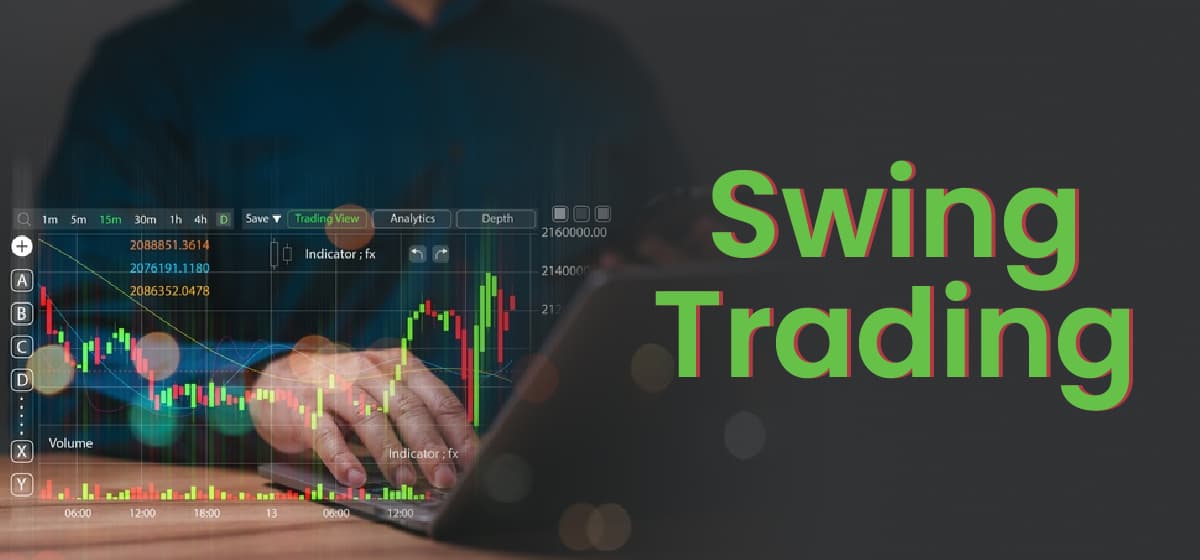
Traders utilize swing trading in cryptocurrency to generate profits from short- to medium-term price movements. Its keen focus is to capture price swings in the market over a period of days, weeks, or even months. Traders seek potential swing highs during bull markets and swing lows in bearish markets to open a position and make gains.
The core idea of swing trading is to identify a potential trend that offers opportunities. Once identified, traders enter a position and hold it until the trend reverses. It allows them to profit from both upward and downward market trends over time.
Swing trading focuses on potential profits from short-term market trends that last from a few days to a few weeks. It depends on the technical analysis of price charts, support and resistance levels, and other key market indicators. Additionally, it requires an active approach to access the correct market timings to maximize profits.
Important Reads: Crypto Trading Tips
Benefits of Swing Trading
Swing trading offers multiple benefits to traders seeking quick profits in the market. The following are some of its advantages:
- Swing trading is less time-intensive as you don’t need to monitor the market constantly. Once the trade is placed, you can monitor it periodically.
- Traders can target larger price swings to increase their profit potential in swing trading.
- Compared to short-term trading strategies, such as day trading, swing trading is less stressful and allows more time to make trading decisions.
- Swing trading enables traders to combine chart patterns with market news and sentiments for better accuracy.
Drawbacks of Swing Trading
There are certain risks associated with swing trading that traders need to be aware of.
- In swing trading, positions are held for days, exposing them to price movements. A sudden market event can cause the price to fall, leaving a little time to react.
- To capture large price swings, a substantial amount of capital is required. This can be particularly challenging for traders with smaller accounts.
- Swing trading requires traders to hold and monitor a position for a longer time, which requires a great deal of patience. Making emotional decisions can lead to financial losses.
Key Rules to Follow
To become a swing trader, it is crucial to follow some key rules. A trader should know when to open or close a position. For this, you need to be familiar with reading charts and using technical indicators to forecast future price movements.
Listed below are some key rules of swing trading that can help you capitalize on price fluctuations.
1. Recognize the Trend
Trend identification helps traders find the direction in which the price is heading. A trend can be bullish, bearish, or sideways. Identifying a trend is paramount to entering or exiting a position. There are several standard tools that swing traders can use to determine a trend, for example, the 200-day Moving Average (MA). A trend is considered an uptrend when the price is above the 200-day MA, and if the price is below the 200-day MA, it signals a downtrend. By using this approach, swing traders can decide when to go long or short.
2. Interpret Candlesticks
Visualizing price data is essential in swing trading. For this, a common approach is to analyze candlestick patterns. A candlestick represents a specific time period, such as a day, and shows the opening, closing, highest, and lowest prices of a digital asset.
If the candlestick is colored green, it represents an upward trend, indicating that the price is moving upward. On the other hand, if a candlestick is colored red, it indicates a downward trend, meaning the price is decreasing. This practice enables swing traders to understand market sentiment, allowing them to time their entries and exits effectively.
3. Identify Support and Resistance Levels
Support and resistance levels are the price boundaries within which a digital currency is traded. These levels play a central role in swing trading. Support is a price point where a cryptocurrency stops falling below and bounces upward, signaling strong buying interest from buyers. Conversely, resistance is a price point where a digital asset stops rising and reverses downward, indicating selling pressure from traders.
You can identify these levels by studying historical price patterns where the asset’s direction reversed. Once identified, you can buy near the support level (anticipating an upward price movement) and sell near the resistance level (predicting a downward price movement).
4. Assess Volume
Assessing market volume is vital in crypto swing trading. A higher trading volume indicates a bullish trend, and a lower trading volume suggests bearish sentiment. Traders should observe discrepancies to use volume effectively.
If the price rises without significant volume, the upward trend may lack strength, and if the price falls with low volume, it might not signal a true downward trend. This way, you can avoid wrong entries and losses.
5. Set Realistic Targets
Set clear targets with swing trading. Examine historical data, conduct technical analysis, and utilize advanced tools such as Moving Averages (MA) or the Relative Strength Index (RSI) to determine price movements. Avoid making emotional decisions and show patience with your strategy to make informed trading decisions.
Final Thoughts
Crypto swing trading is a valuable strategy for engaging with the digital market. It offers a balanced approach between short-term trading and long-term investing, enabling traders to generate significant profits. However, each cryptocurrency trading strategy comes with its own set of challenges that require traders to set each trade carefully. Begin with a thorough understanding of the underlying market factors and be familiar with the digital currency you intend to trade. Discover the fundamentals of swing trading and develop a robust strategy to achieve your financial goals.
Double your advantage on Bybit: 10% off trades + $30,000 up for grabs! Sign up now and claim these exclusive rewards. Offer expires soon!
Disclaimer: All content on The Moon Show is for informational and educational purposes only. The opinions expressed do not constitute financial advice or recommendations to buy, sell, or trade cryptocurrencies. Trading involves significant risk and may result in substantial losses. Always seek independent financial advice before making investment decisions. The Moon Show is not responsible for any financial losses or decisions made based on the information provided.
Please view the full disclaimer at: https://themoonshow.com/disclaimer

What is a Bull Flag in Crypto Trading?
Traders use a bull flag pattern to assess whether a sharp rally might continue after a brief co...

Cup and Handle Pattern: Crypto Trading Rules, Targets, and Risks
The cup and handle is a bullish continuation chart pattern that signals a potential upward pric...

How Does Bitcoin Work? Blockchain, Mining, and Wallets Explained
Bitcoin is the world’s first decentralized digital currency that lets people send money directl...