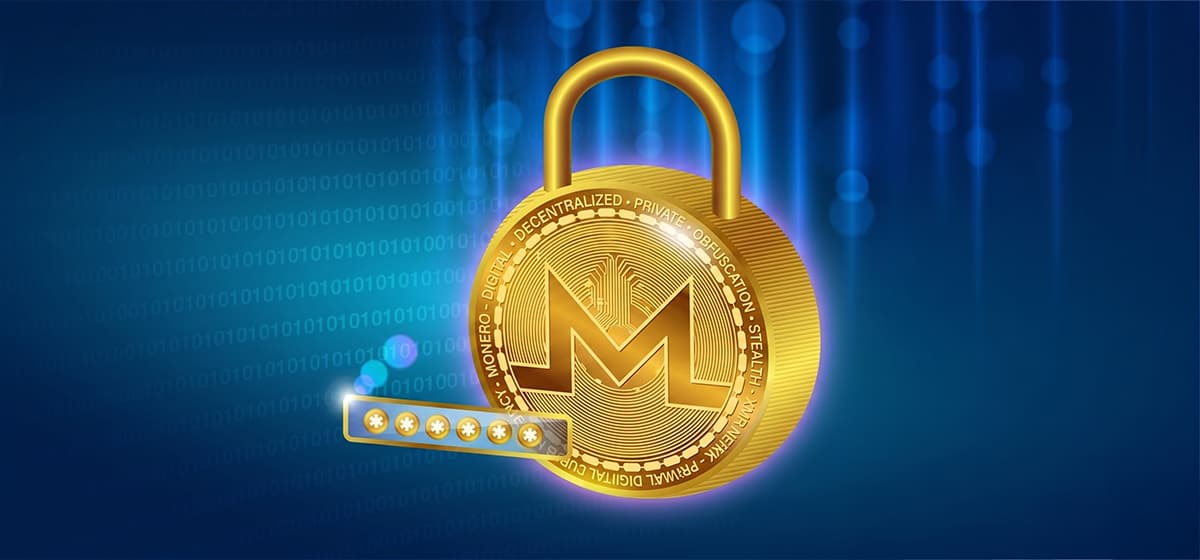
What Are Crypto Privacy Coins and Why Do They Matter?
What Are Privacy Coins?
Privacy coins are cryptocurrencies that use advanced cryptographic techniques to conceal transaction details. Depending on the coin and how it is configured, that can mean hiding the sender, the recipient, the amount transferred, or all three simultaneously. Unlike Bitcoin, which leaves a permanent public record of every transaction, privacy coins are designed to make that information either invisible or practically impossible to link to a specific person.
A useful way to think about it is digital cash. When you hand someone a physical banknote, the bank has no way of knowing what you did with it after withdrawal. Privacy coins attempt to replicate that property in a digital environment, though true anonymity is extremely difficult to achieve in practice, and well-resourced investigators can sometimes de-anonymize users through off-chain analysis or errors.
Who is this for: Crypto users who want to understand how transaction privacy works on the blockchain, traders evaluating privacy coins as an investment, and anyone following the regulatory debate around financial anonymity in 2026.
Key Takeaways
- Monero (XMR) enforces mandatory privacy on all transactions using ring signatures, stealth addresses, and Ring Confidential Transactions. There is no option to send a transparent transaction.
- Zcash (ZEC) gives users the choice between transparent and shielded transactions using zk-SNARKs. About 27.5% of ZEC supply was in shielded addresses by late October 2025, a record high.
- The privacy coin sector significantly outperformed BTC in 2025. ZEC surged over 700% from its late September levels. XMR climbed from $190 to near $800 by January 2026.
- At least ten countries impose bans or strict exchange restrictions on privacy coins as of early 2026.
- The EU's Anti-Money Laundering Regulation will ban anonymity-enhanced coins from licensed exchanges starting July 2027.
- Despite regulatory concerns, Chainalysis data shows that BTC and stablecoins account for a far larger share of illicit transaction volume than privacy coins do.
Most people assume cryptocurrency transactions are private or anonymous simply because they are decentralized and do not require revealing personal details to a bank. That assumption is wrong. Bitcoin transactions are pseudonymous, meaning they are publicly visible to anyone who knows where to look. Your wallet address, transaction history, and balances are all on-chain and traceable. Privacy coins were built specifically to fix that.
In 2025, the privacy coin sector significantly outperformed Bitcoin, with the broader category seeing strong gains amid renewed demand for on-chain privacy (according to Artemis and Grayscale data). This article breaks down what crypto privacy coins are, how the main ones work, and what the landscape looks like heading into 2026.
What Are Privacy Coins?
Privacy coins are cryptocurrencies that use advanced cryptographic techniques to conceal transaction details. Depending on the coin and how it is configured, that can mean hiding the sender, the recipient, the amount transferred, or all three simultaneously. Unlike Bitcoin, which leaves a permanent public record of every transaction, privacy coins are designed to make that information either invisible or practically impossible to link to a specific person.
A useful way to think about it is digital cash. When you hand someone a physical banknote, the bank has no way of knowing what you did with it after withdrawal. Privacy coins attempt to replicate that property in a digital environment, though true anonymity is extremely difficult to achieve in practice, and well-resourced investigators can sometimes de-anonymize users through off-chain analysis or errors.
How Do Privacy Coins Work?
Different privacy coins use different cryptographic methods to achieve anonymity. The three most widely used approaches are ring signatures, stealth addresses, and zero-knowledge proofs.
Ring Signatures
Used by Monero, ring signatures mix a user's transaction with several others on the network, making it computationally infeasible to determine which participant actually sent the funds. Monero's current implementation uses a ring size of 16, meaning any given transaction is mixed with 15 decoys, creating a high level of plausible deniability for each sender.
Stealth Addresses
Also used by Monero, stealth addresses generate a unique one-time address for every transaction a user receives. Even if someone knows your public address, they cannot use the blockchain to see your incoming transactions because each one lands at a freshly generated address that is only discoverable by you.
Zero-Knowledge Proofs (zk-SNARKs)
Zcash pioneered the use of zk-SNARKs, or Zero-Knowledge Succinct Non-Interactive Arguments of Knowledge, in a major cryptocurrency. The technology allows a transaction to be verified as valid without revealing any of its details. The network can confirm that no coins were created out of thin air and that the sender had sufficient funds, all without exposing who sent what to whom. Zcash also offers the option of transparent transactions for users who do not need privacy, which is part of what distinguishes its approach from Monero's mandatory anonymity.
The Main Privacy Coins
Monero (XMR)
Monero is widely considered the gold standard among privacy coins. Privacy is mandatory by default, meaning every transaction is private regardless of user preference. It combines ring signatures, stealth addresses, and Ring Confidential Transactions to hide amounts, creating a comprehensive privacy layer. XMR started 2025 around $190 and climbed as high as $470 by November before pushing to an all-time high near $800 in January 2026. Its mandatory privacy has made it a regulatory target and led to delistings on major exchanges in certain regions, but it also means users always know exactly what they are getting.
Zcash (ZEC)
Zcash launched in 2016 and offers both transparent and shielded transactions. Shielded transactions use zk-SNARKs for strong privacy, while transparent transactions work similarly to Bitcoin. In late 2025 Zcash surged over 700% from its late September levels, briefly overtaking Monero by market cap. By late October 2025, around 27.5% of ZEC's total supply was in shielded addresses, a record high suggesting genuine long-term accumulation.
Dash (DASH)
Dash offers an optional privacy feature called PrivateSend, based on CoinJoin, which obscures transaction origins by combining multiple users' funds. Privacy is not enforced by default and Dash's identity has shifted more toward fast payments than financial anonymity, but it remains one of the longer-standing privacy-focused projects, having launched in 2014.
Privacy Coins Compared
|
Coin |
Privacy Method |
Privacy Default |
2025-26 Performance |
Main Risk |
|
XMR |
Ring signatures + stealth addresses |
Mandatory (always on) |
$190 to ATH near $800 |
Exchange delistings |
|
ZEC |
zk-SNARKs |
Optional (user choice) |
700%+ from Sep 2025 lows |
Most txns still transparent |
|
DASH |
CoinJoin (PrivateSend) |
Optional (off by default) |
Modest gains |
Weaker privacy than XMR/ZEC |
Why Privacy Coins Matter
The case for privacy coins goes beyond wanting to hide transactions from governments. Financial privacy is a legitimate concern for businesses conducting sensitive negotiations, individuals living under authoritarian governments, journalists and activists operating in hostile environments, and ordinary people who believe their financial history is their own business.
In countries where capital controls are strict or where political dissidents face financial persecution, privacy coins have served as a practical tool for preserving economic freedom. That use case plays out in real situations where people have no other viable option.

The Regulatory Picture of Privacy Coins in 2026
The most significant challenge facing crypto privacy coins is regulatory pressure. Japan banned privacy coins from licensed exchanges in 2018. South Korea followed in 2021. As of early 2026, at least ten countries impose bans or strict exchange restrictions on Monero, Zcash, and similar assets.
The EU's Anti-Money Laundering Regulation is set to ban anonymity-enhanced coins from July 2027, and several European exchanges have already started delisting ahead of that deadline. The Financial Action Task Force's Travel Rule, which requires virtual asset service providers to share customer information above certain transaction thresholds, creates a fundamental conflict with privacy coin architecture that is difficult to resolve.
The regulatory argument is that the same anonymity that protects legitimate users also shields bad actors. That concern is not unfounded, though Chainalysis data consistently shows that Bitcoin and stablecoins account for a far larger share of illicit transaction volume in absolute terms than privacy coins do.
Common Mistakes With Privacy Coins
- Assuming BTC transactions are private
BTC transactions are pseudonymous, not anonymous. Every transaction is publicly visible on the blockchain. Your wallet address, transaction history, and balances can all be traced. Companies like Chainalysis specialize in exactly this. Privacy coins exist specifically because BTC does not provide financial privacy.
- Treating all privacy coins as equal
Monero enforces privacy on every transaction. Zcash makes it optional, and most ZEC transactions are actually transparent. Dash's PrivateSend feature is considered weaker than both. The level of privacy you actually get depends entirely on which coin you use and how you use it.
- Ignoring liquidity risk from delistings
Exchange delistings reduce trading venues, widen spreads, and make it harder to exit positions. A regulatory headline in a major jurisdiction can trigger a sharp price drop with limited buying support. Always check how many exchanges still list a privacy coin before taking a large position.
- Forgetting that off-chain analysis still exists
Even with strong on-chain privacy, users can be identified through KYC data on exchanges, IP address tracking, or mistakes like reusing addresses. Privacy coins protect the blockchain layer, but operational security is still the user's responsibility.
Risks Worth Understanding
Beyond regulation, privacy coins carry liquidity risk that standard cryptocurrencies do not. Delistings reduce trading venues, widen spreads, and make it harder to exit positions when needed. A regulatory headline in a major jurisdiction can trigger a sharp price drop with limited buying support.
There is also technical risk. The cryptographic methods underpinning these coins are robust but not infallible. Long-term advances in computing, including the theoretical threat of quantum computing, could eventually compromise the assumptions these privacy models rely on. Both the Monero and Zcash development teams are actively working on post-quantum resistance, with Monero's FCMP++ upgrade expected later in 2026.
Your $30,000 bonus + 10% discount are waiting on Bybit! Sign up and claim these rewards before they're gone. Time's ticking!
Frequently Asked Questions
What is a crypto privacy coin?
A cryptocurrency that uses advanced cryptographic techniques to conceal transaction details such as the sender, recipient, and amount.
Are privacy coins legal?
In most countries owning privacy coins is legal, but several jurisdictions have banned or restricted them on regulated exchanges, including Japan, South Korea, and parts of Europe. The EU plans to ban them from licensed exchanges by July 2027.
What is the most private cryptocurrency?
Monero is widely considered the most private because anonymity is mandatory by default, with no transparent transaction option.
How is Zcash different from Monero?
Zcash offers both transparent and shielded transactions, giving users a choice, while Monero enforces privacy on all transactions by default. As of late October 2025, about 27.5% of ZEC supply was held in shielded addresses.
Why are privacy coins being delisted from exchanges?
Regulatory pressure around anti-money laundering rules makes it difficult for exchanges to comply while supporting assets that obscure transaction data.
Did privacy coins perform well in 2025?
Yes, the privacy coin sector significantly outperformed BTC. ZEC surged over 700% from its late September levels, and XMR climbed from around $190 to near $800 by January 2026.
What is a ring signature?
A cryptographic method used by Monero that mixes a user's transaction with 15 decoys, making it practically impossible to identify the actual sender.
What are zk-SNARKs?
Zero-Knowledge Succinct Non-Interactive Arguments of Knowledge, a cryptographic proof that verifies a transaction without revealing its details, used by Zcash.
Closing Thoughts
Privacy coins occupy a genuinely contested space in crypto. The technology is sophisticated and the use cases are real. At the same time, the regulatory environment is tightening in ways that could restrict access meaningfully over the next few years, particularly in Europe and parts of Asia.
Whether you are interested in them from an investment angle or simply want to understand what they are, the core question they raise is worth taking seriously. In a world where financial transactions are increasingly visible, who gets to decide how much privacy you are entitled to? So when it comes to privacy coins it is always better to tread smartly and always be skeptical of them due to the regulatory concerns they bring.
Disclaimer: All content on The Moon Show is for informational and educational purposes only. The opinions expressed do not constitute financial advice or recommendations to buy, sell, or trade cryptocurrencies. Trading involves significant risk and may result in substantial losses. Always seek independent financial advice before making investment decisions. The Moon Show is not responsible for any financial losses or decisions made based on the information provided.
Please view the full disclaimer at: https://themoonshow.com/disclaimer

Cup and Handle Pattern: Crypto Trading Rules, Targets, and Risks
The cup and handle is a bullish continuation chart pattern that signals a potential upward pric...
How Does Bitcoin Work? Blockchain, Mining, and Wallets Explained
Bitcoin is the world’s first decentralized digital currency that lets people send money directl...

Leverage Trading in Crypto: How It Works, Risks, and Examples
Leverage trading lets crypto traders control larger positions using borrowed funds or derivativ...