
Understanding Crypto Order Types: A Complete Guide for Beginners
Key Takeaways:
- Crypto order types are essential for trading strategy and risk management due to the volatile nature of the crypto market.
- Each order type has a different purpose, so traders should choose based on their goals, such as speed, price control, risk protection, or execution certainty.
- Market orders are fast but offer less price control, meaning traders may face slippage during high volatility or low liquidity.
- Limit orders and stop-limit orders give traders more control over price, but they may not execute if the market does not reach the selected price.
- Stop-loss and trailing stop orders help manage risk, with stop-loss limiting losses and trailing stops helping protect profits as prices move upwards.
- Advanced orders such as OCO, FOK, and IOC help traders manage execution conditions, such as planning for two market scenarios, avoiding partial fills, or allowing partial instant execution.
The crypto industry is gradually growing its reputation as one of the world’s most dynamic and fast-moving financial sectors. Unlike traditional stock markets, the crypto industry never sleeps, allowing users to continue trading 24/7. The crypto market operates with high volatility while offering fantastic opportunities and significant risks.
With the way the crypto market has seen a boom in recent years, new traders are emerging with substantial investments. This is where things become interesting and tricky at the same time. For enthusiastic traders, the crypto market is full of opportunities and potential gains. However, for someone just entering the crypto market, learning holds significant importance.
Understanding crypto order types is one of the primary things to learn about trading. It is essential in executing strategies and managing risks. Each type of order allows traders to buy and sell digital assets in several ways. Order types are an important tool for traders as they let them respond to market changes and set up their trades accordingly.
Your $30,000 bonus + 10% discount are waiting on Bybit! Sign up and claim these rewards before they're gone. Time's ticking!
This guide will offer an in-depth look at eight order types in crypto trading.
|
Order Type |
Main Purpose |
Key Benefit |
Main Risk / Limitation |
|
Limit Order |
Buy or sell at a specific chosen price |
Gives price control |
May not execute if the market never reaches the price |
|
Market Order |
Buy or sell immediately at the best available price |
Fast execution |
Can face slippage in volatile markets |
|
Stop-Loss Order |
Automatically sell when the price drops to a set level |
Helps limit losses |
Final price may be worse due to slippage |
|
Stop-Limit Order |
Trigger a limit order after a stop price is reached |
More control than stop-loss |
Execution is not guaranteed |
|
Trailing Stop Order |
Adjust stop-loss as price moves in the trader’s favor |
Protects profits while allowing upside |
Can trigger if price reverses sharply |
|
OCO Order |
Place two linked orders; one cancels the other |
Useful for profit target + risk control |
Only one scenario executes |
|
Fill or Kill Order |
Execute the full order immediately or cancel it |
Avoids partial fills |
May cancel if full liquidity is unavailable |
|
Immediate or Cancel Order |
Execute the available amount immediately, cancel the rest |
Allows partial quick execution |
The full order may not be completed |
What Are Order Types?
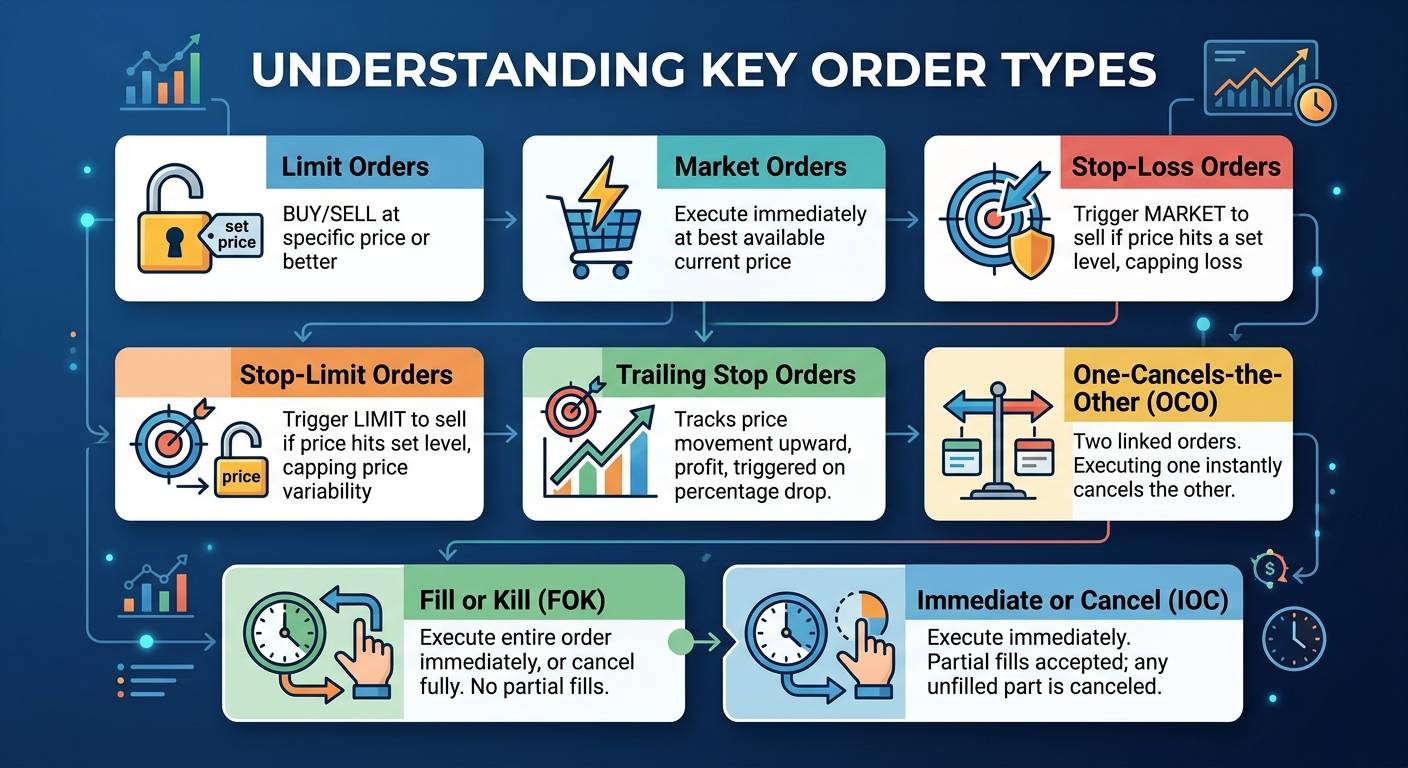
Order types are specific instructions given to an exchange or a broker to buy or sell financial assets. It dictates when or how the order should be executed. There are eight common order types. These are:
- Limit Orders
- Market Orders
- Stop-Loss Orders
- Stop-Limit Orders
- Trailing Stop Orders
- One-Cancels-the-Other (OCO) Orders
- Fill or Kill (FOK) Orders
- Immediate or Cancel (IOC) Orders
Limit Orders
Limit order is perfect for traders who like more control over their trades. In this order type, the traders specify the exact price at which they would like to buy or sell their digital asset. A limit order to buy will only be executed if the price of the asset is exactly at the chosen price and vice versa.
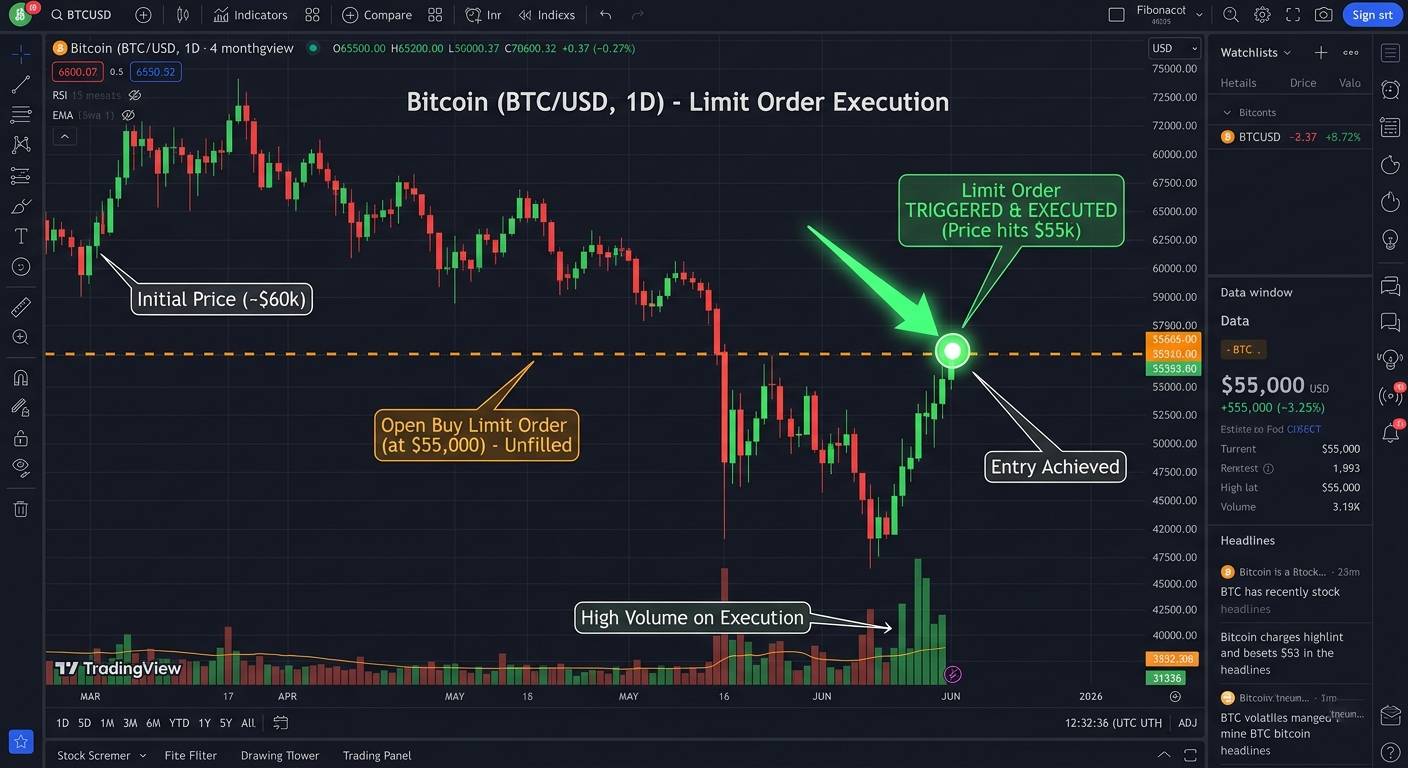
Let’s take the example of Bitcoin (BTC). If BTC is trading at $60K and the trader wishes to buy the crypto when it reaches $55K, they will place the buy limit at that price. The order will remain open until the price of the crypto reaches that specific price or if the trader cancels the order.
Precision is the biggest advantage of this order type. This stops the traders from selling for less or paying more than they originally intended. However, execution of the order is not guaranteed. If the crypto market never reaches that specific set price, the order will not be executed.
Market Orders
A market order is the simplest and most common type of order in crypto trading. In market order, the exchange will buy or sell an asset immediately at the best available price. The biggest advantage of this order type is the speed. However, in the case of low liquidity tokens or highly volatile markets, slippage can happen. Suppose market volatility occurs when the actual execution price is slightly different from what you expect due to rapid price changes.
Let’s take the example of Bitcoin again. If the premier cryptocurrency is trading at $50K and you place a market order to buy it, the exchange will instantly purchase BTC at the current market price.
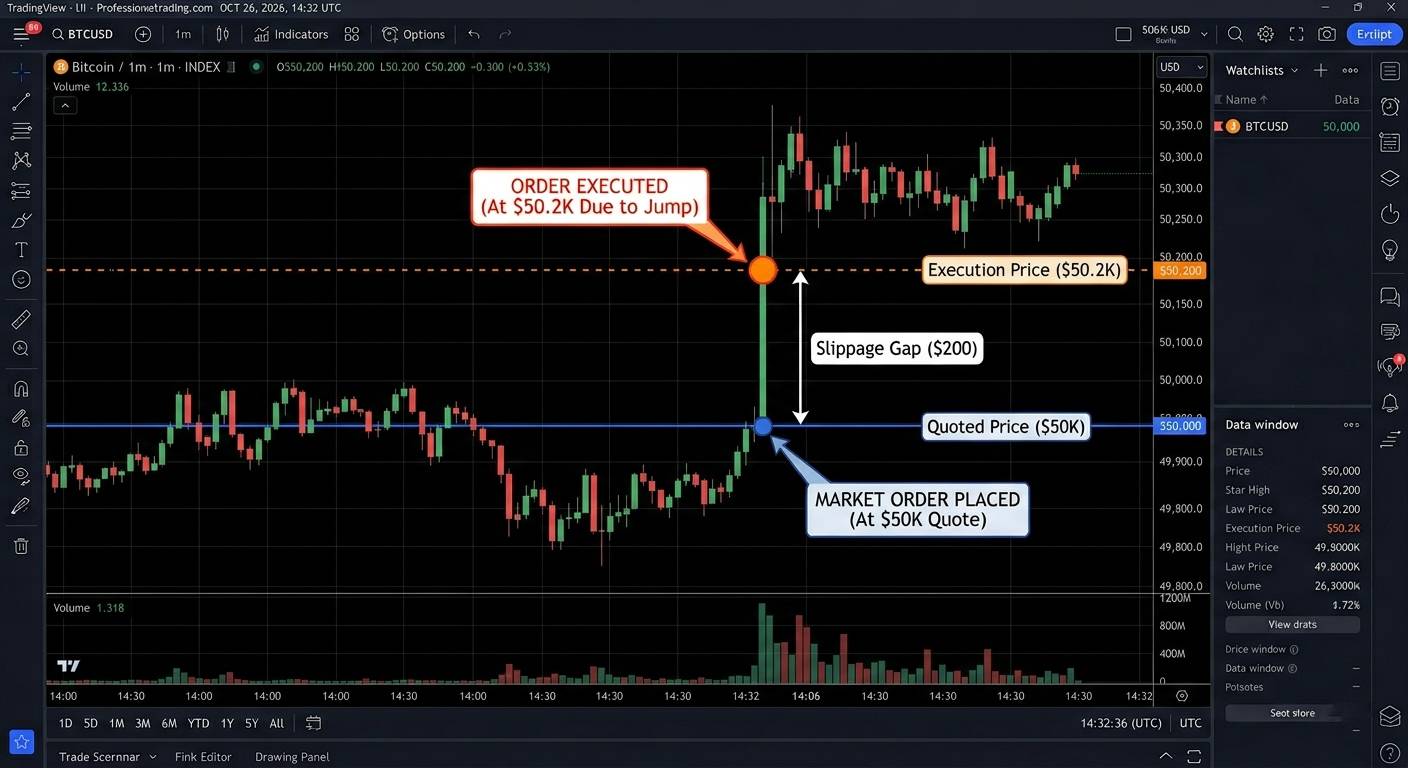
For example, if a market order is placed at $50K, but the price fluctuates and jumps to $50.2K, you will end up buying the asset at $50.2K, despite placing the market order when the quoted price was $50K.
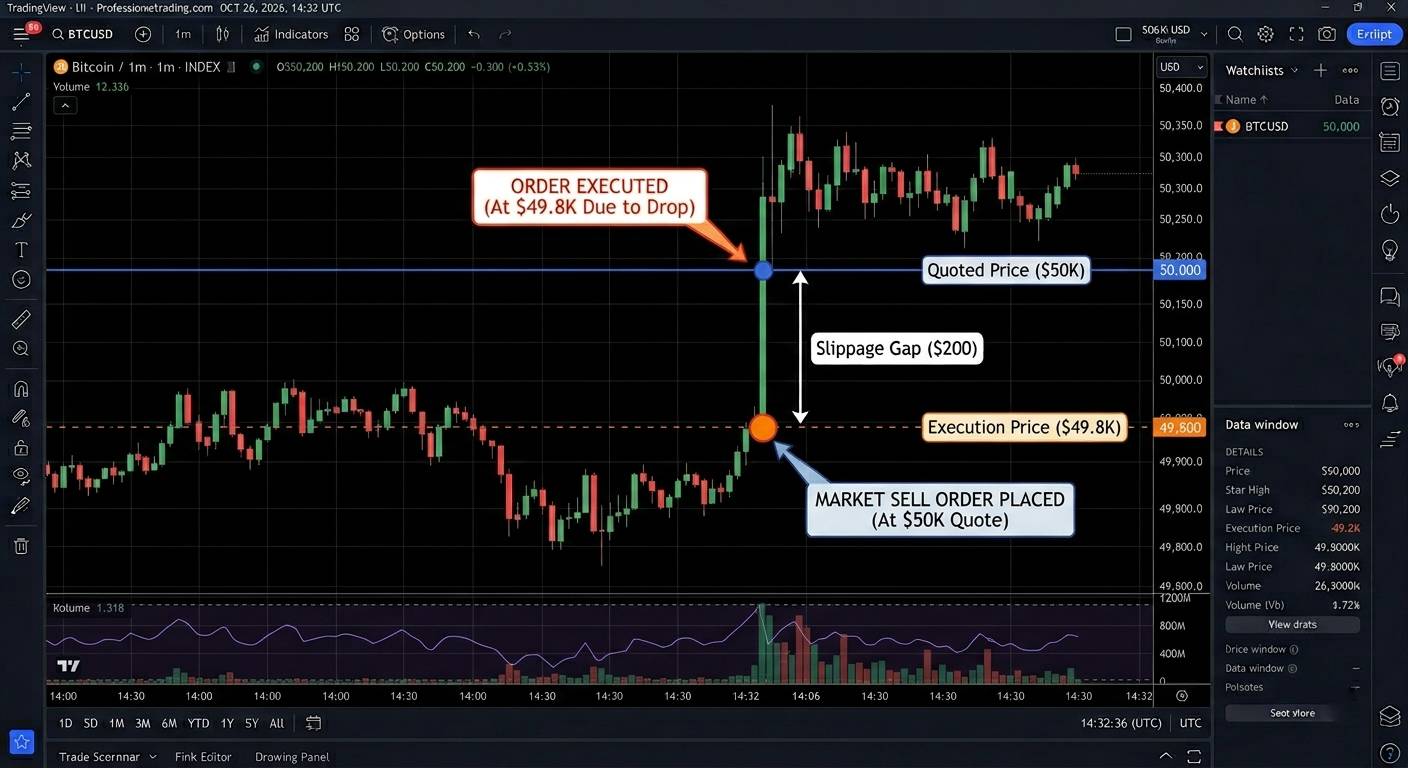
Similarly, if a market order is placed to sell an asset at $50K, but the price fluctuates and drops to $49.8K, you will end up selling the asset at $49.8K, despite placing the market order when the quoted price was $50K.
This order type is best for traders who prioritize execution over price control.
Stop-Loss Orders
Stop-loss orders are an essential risk management tool. This order type allows the traders to prevent losses by setting a price to sell the assets automatically. This order type helps traders ensure they don’t hold onto a position longer than they originally planned and prevents emotional decision-making. However, the actual execution price may be lower than expected due to slippage, flash crashes, or sharp market declines.
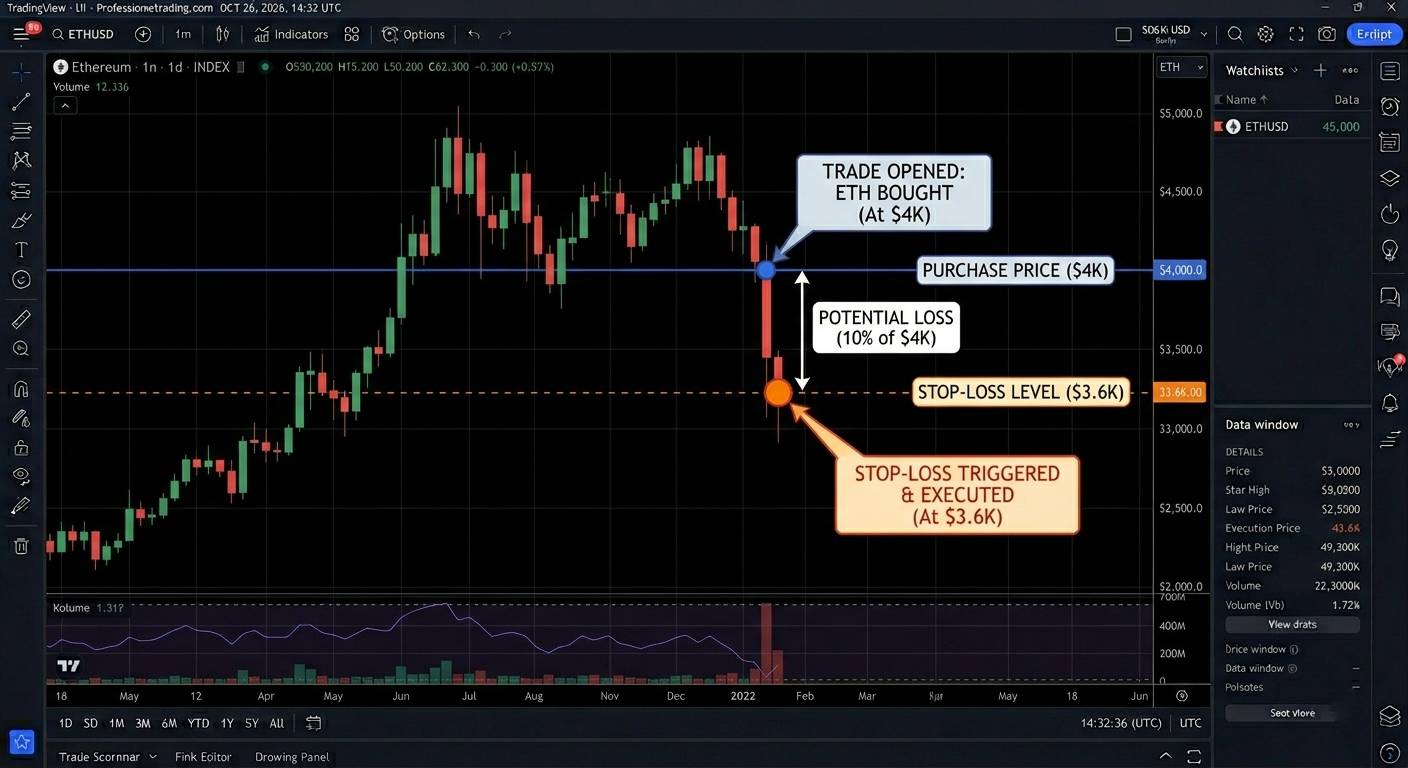
In this case, let’s take the example of Ethereum (ETH). Imagine you purchased ETH for $4K and want to limit the potential loss to 10%. In this case, you will set a stop-loss order at $3.6K. When the price of ETH falls to this level, the stop-loss order will be triggered, and the asset will be sold immediately.
Stop-Limit Orders
A stop-limit order has the combination of both a stop and a limit order. A trader sets two prices with this kind of order: a stop price that starts the order, and a limit price that shows the lowest possible price they are willing to pay for the order (buy stop-limit order) or the lowest possible price they are willing to sell the order (sell stop-limit order) for.
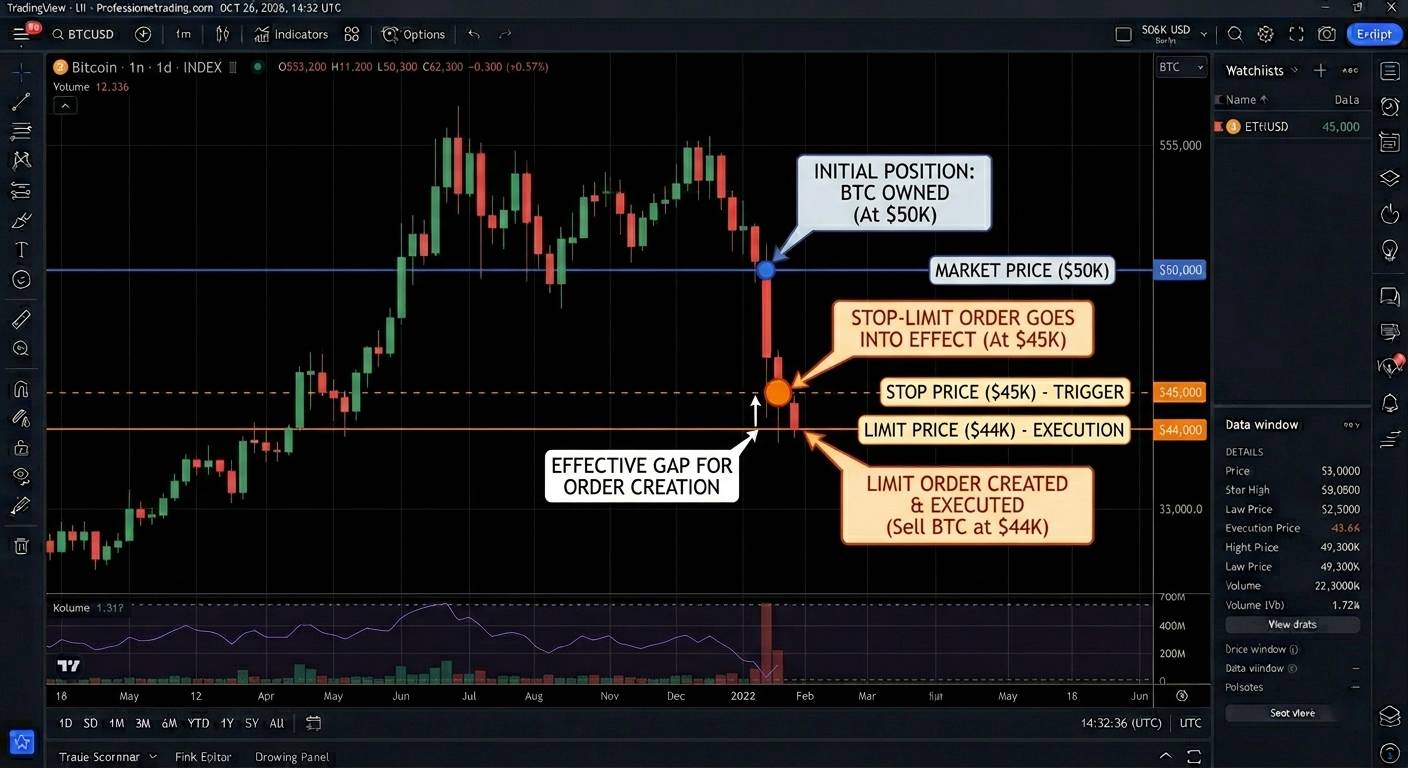
Let's say Bitcoin is worth $50K. A trader puts a stop price at $45K and a limit price at $44K. The order goes into effect when Bitcoin dips to $45K. A limit order is automatically created to sell BTC when it falls to $44K.
This method gives you more control than a typical stop-loss order since it keeps you from selling at a very bad price when the market drops quickly. However, the disadvantage is that execution isn't guaranteed. If the market drops too quickly below the maximum price, the order might not be completed.
Trailing Stop Orders
Trailing stop orders are dynamic stop-loss orders that adjust automatically as the market moves in the trader’s favor. Instead of setting a fixed stop price, traders set a trailing distance, either as a percentage or a fixed amount.
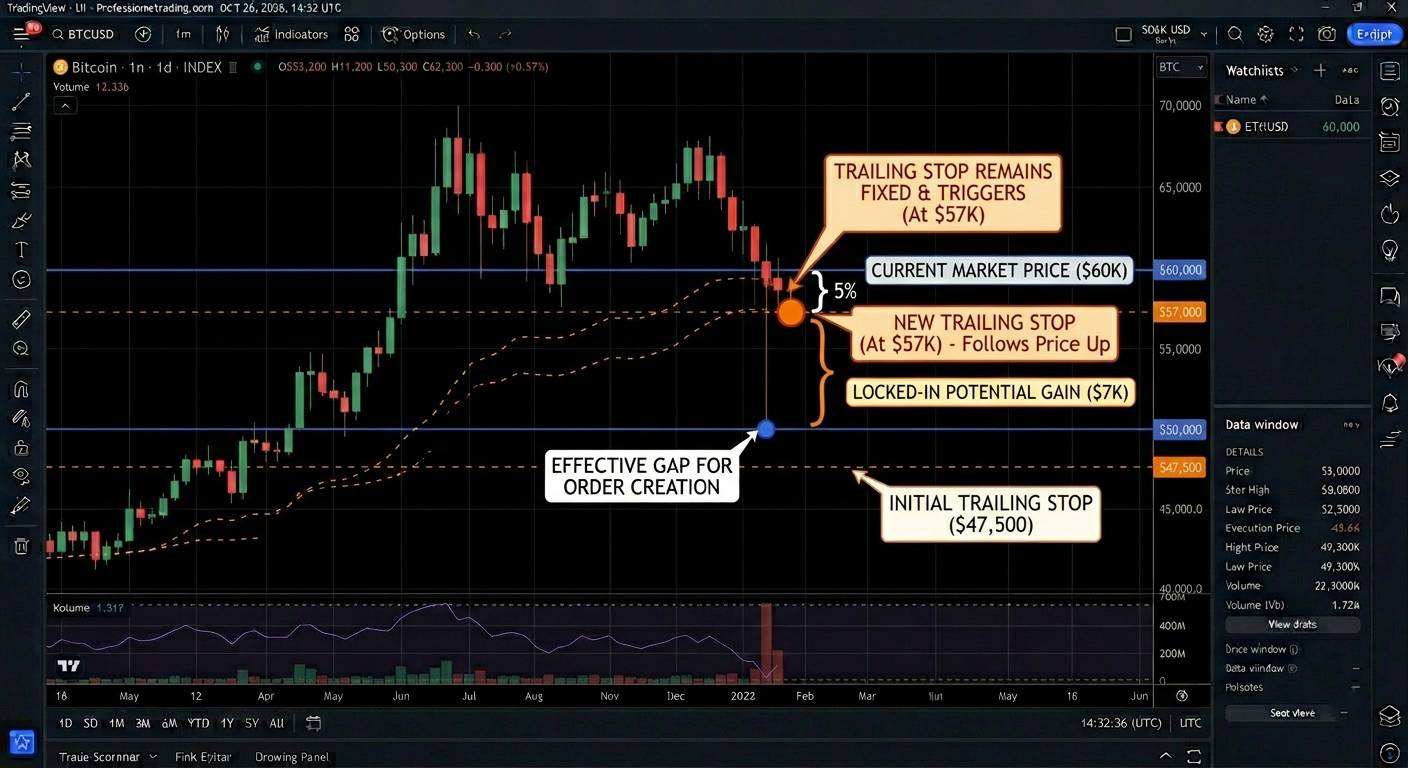
For instance, if a trader buys Bitcoin at $50K and sets a trailing stop of 5%, the stop price will initially be at $47,500. If Bitcoin rises to $60K, the trailing stop will move up to $57K, locking in potential gains. However, if the price falls, the stop remains fixed and will trigger once the 5% decline is reached.
Trailing stops are powerful tools for protecting profits while allowing trades to capture upside potential. They are especially useful in trending markets where assets make sustained moves in one direction.
One-Cancels-the-Other (OCO) Orders
An OCO order is a pair of linked orders where the execution of one automatically cancels the other. Traders often use OCO orders to plan for both breakout and breakdown scenarios simultaneously.
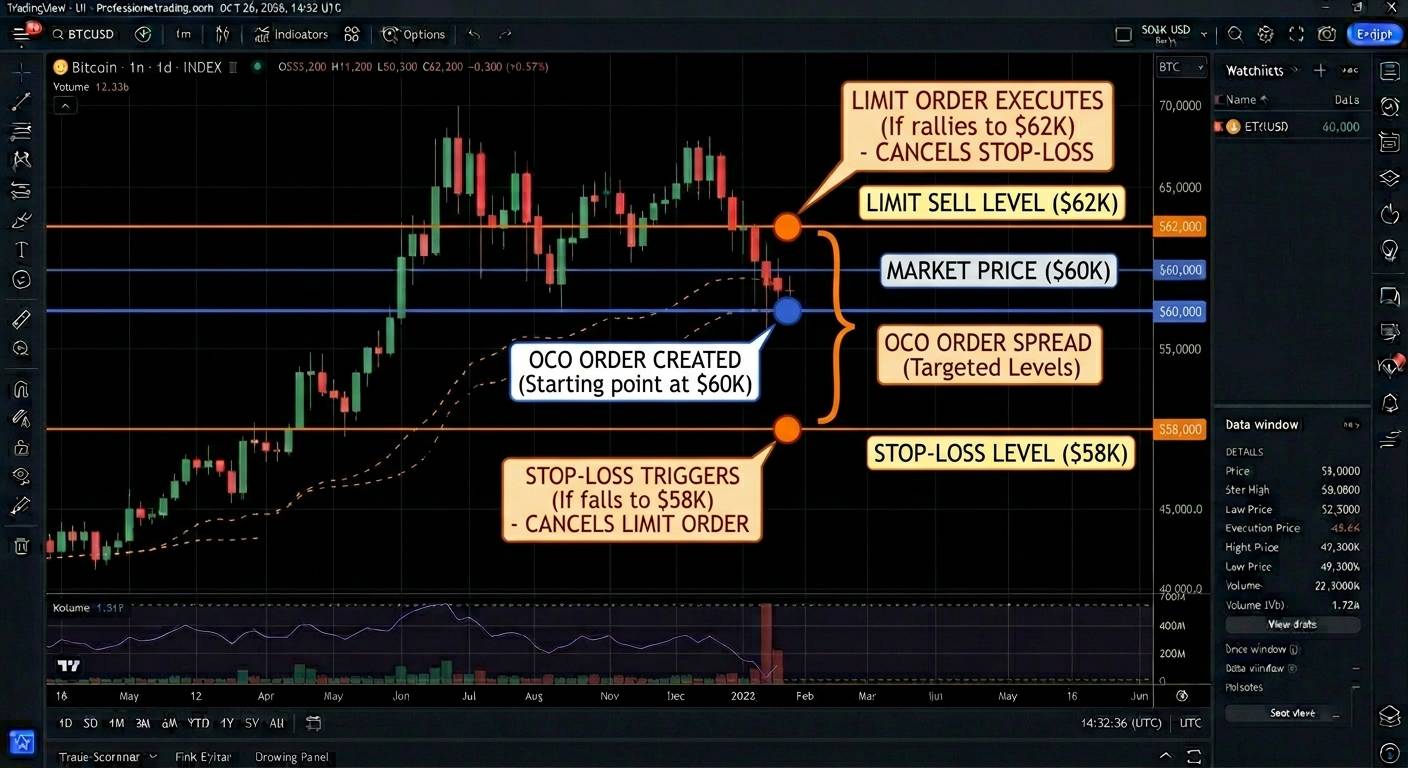
For example, if Bitcoin is at $60K, a trader can place a sell limit order at $62K and a stop-loss order at $58K within an OCO setup. If Bitcoin rallies to $62K, the sell order executes, and the stop-loss is canceled. If it instead falls to $58K, the stop-loss triggers, and the limit order is canceled.
This order type provides flexibility, reduces the need for constant monitoring, and ensures that only one of the two scenarios will execute.
Fill or Kill (FOK) Orders
A fill or kill order demands immediate execution of the entire trade at the specified price or not at all. If the order cannot be filled instantly in full, it is canceled.
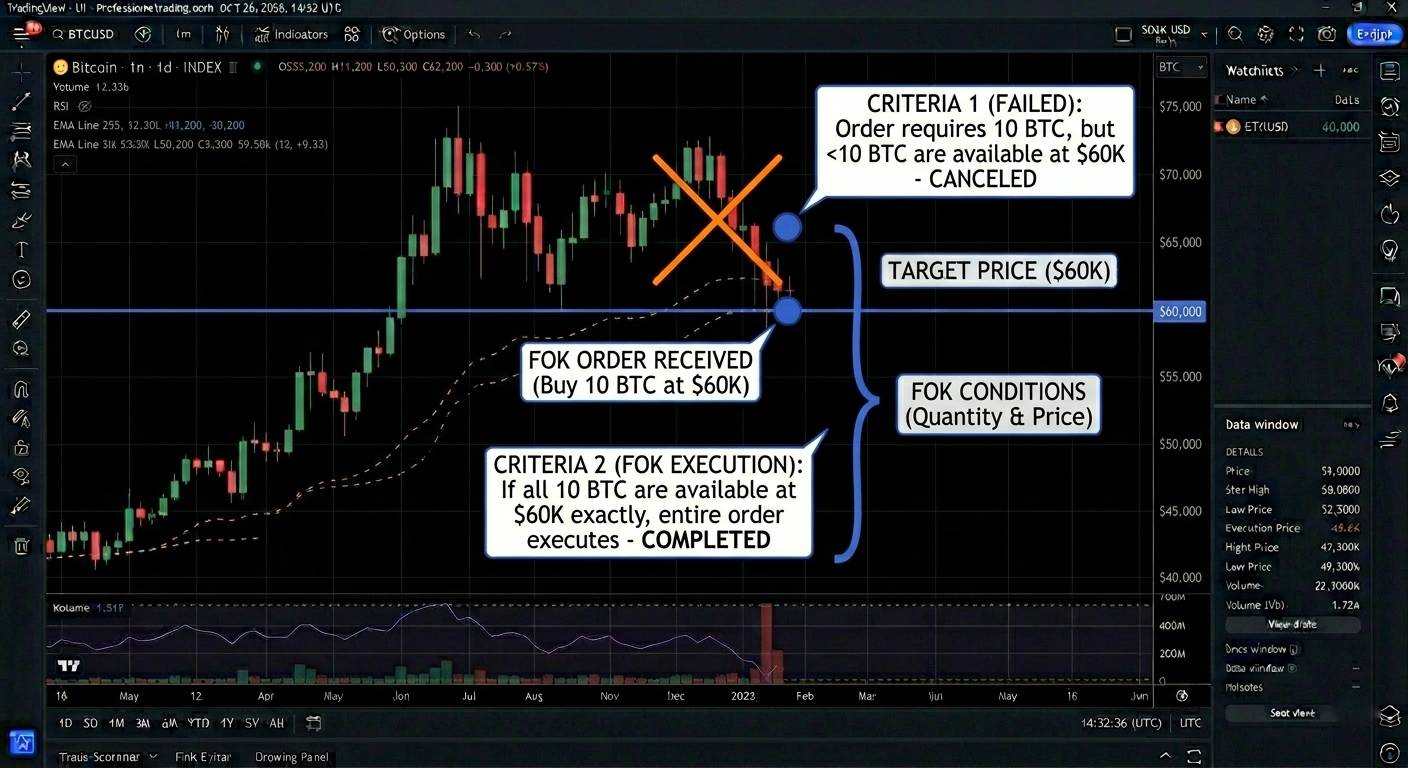
For instance, if a trader places an FOK order to buy 10 BTC at $60K, the trade will only execute if all 10 BTC are available at that exact price. If only 8 BTC are available, the order will be canceled.
This order type is used by traders who need certainty and do not want partial fills, often in large trades where precision is critical. It helps avoid slippage but may result in missed opportunities if liquidity is insufficient.
Immediate or Cancel (IOC) Orders
Similar to fill or kill, immediate or cancel (IOC) orders require instant execution, but with one difference: partial fills are allowed. Any portion of the order that cannot be filled immediately is canceled.
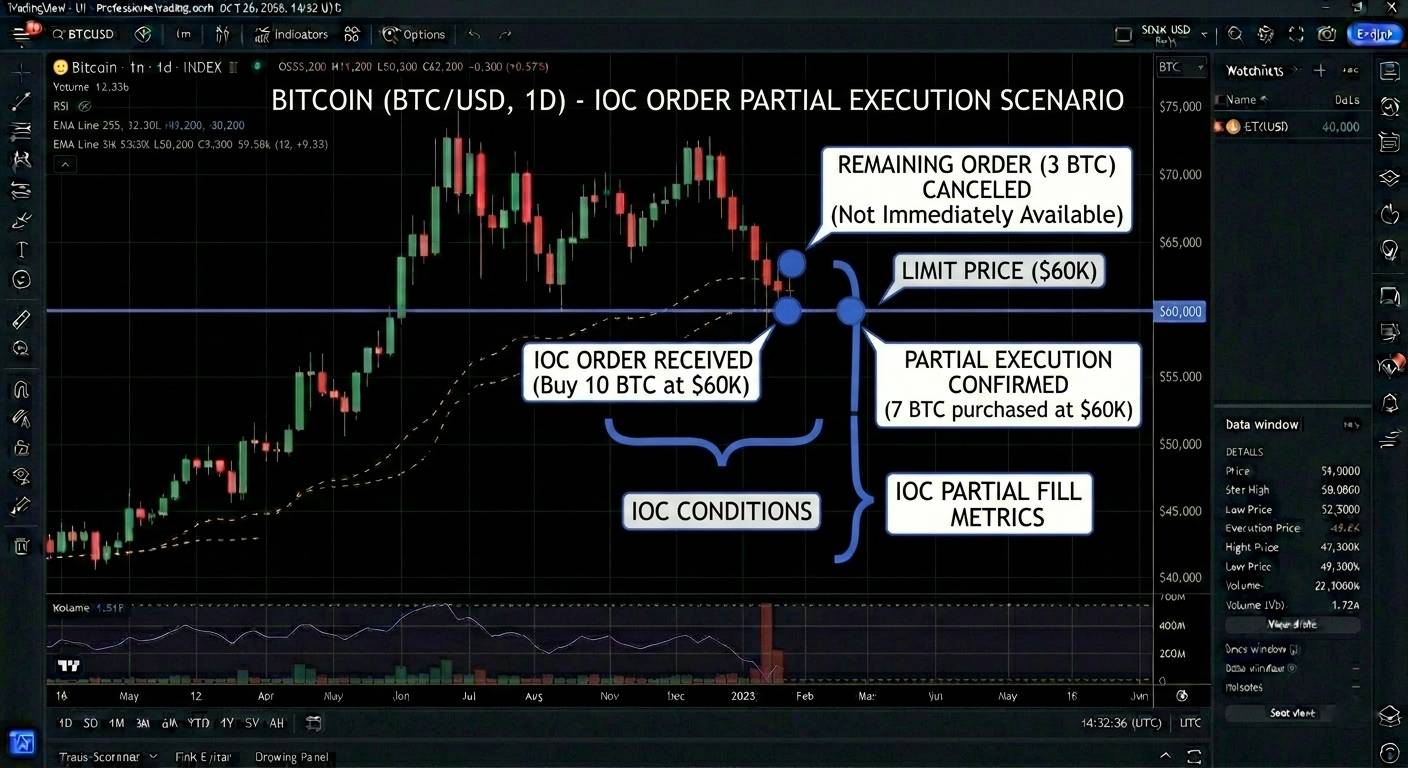
For example, if a trader places an IOC order to buy 10 BTC at $60K, but only 7 BTC are available, the exchange will execute the purchase of 7 BTC and cancel the rest of the order.
IOC orders are useful when traders want quick execution but are flexible about receiving only part of the trade. They balance speed and precision, making them suitable for active strategies in volatile markets.
Double your advantage on Bybit: 10% off trades + $30,000 up for grabs! Sign up now and claim these exclusive rewards. Offer expires soon!
How Do I Choose the Right Crypto Order Type?
The right order type depends on your goal, which is why traders need to be sure of what they want. They should use the market order for speed, a limit order for price control, a stop-loss for risk protection, and advanced orders such as OCO, FOK, or IOC for more specific trading strategies.
Are Market Orders Risky in Crypto Trading?
Yes, market orders can be risky in volatile markets because the final execution may be at a different price from the price you saw before placing the order. This is called slippage.
Can trading orders guarantee profit?
No order type can guarantee profits. Each order type has strengths and limitations, and results depend on market conditions, liquidity, volatility, and the trader’s strategy.
What Crypto Order Type is Best for Beginners?
Market orders and limit orders are usually easier for beginners to understand. While market orders execute immediately at the best price available, a limit order gives more price control to the traders.
Final Takeaways
Understanding the different crypto order types is essential for any trader looking to succeed in the digital asset markets. Market orders offer speed but little control. Limit orders and stop-limit orders provide precision but no guarantees of execution. Stop-loss and trailing stops serve as critical risk management tools, while OCO orders add flexibility for dual scenarios. Advanced order types like fill or kill and immediate or cancel give traders control over execution certainty and speed.
Each order type has its strengths and weaknesses, and the right choice depends on the trader’s goals, risk tolerance, and market conditions. By mastering these order types, traders can craft strategies that maximize profits, minimize risks, and navigate the volatility of cryptocurrency markets with confidence.
Disclaimer: All content on The Moon Show is for informational and educational purposes only. The opinions expressed do not constitute financial advice or recommendations to buy, sell, or trade cryptocurrencies. Trading involves significant risk and may result in substantial losses. Always seek independent financial advice before making investment decisions. The Moon Show is not responsible for any financial losses or decisions made based on the information provided.
Please view the full disclaimer at: https://themoonshow.com/disclaimer

How to Buy Bitcoin for Beginners – A Step-by-Step Guide
When you are new to crypto, buying Bitcoin (BTC) can feel complicated. In practice, the process...

How to Choose a Crypto Exchange in 2026: Fees, Security, Regulation
Over the years, cryptocurrency exchanges have evolved considerably. What first began as simple ...

All-time Highs: A Detailed Guide for Crypto Traders
All-time high is the highest price an asset hits since it starts trading. To learn more about A...